If you're in the oil and gas industry, you need specialized pressure washers to tackle heavy contamination like oil and grease. Standard models won't cut it; you need equipment with explosion-proof features to guarantee safety in hazardous areas. Look for high-pressure ratings (2,000 to 3,500 PSI) and flow rates of at least 4 GPM for effective cleaning. Durable materials and easy maintenance are vital for long-term use. Continue exploring the essential factors that make certain your selection meets all industry demands.
In the oil and gas industry, you face hazardous atmospheres and significant explosion risks that demand specialized pressure washers. Standard equipment can't handle the heavy contamination caused by oil, grease, and chemical residues that accumulate during continuous industrial operations. Utilizing the right pressure washer guarantees safety, efficiency, and compliance with stringent regulations. The FDE-EX Series offers explosion-proof features that ensure reliable operation in these challenging environments.
Given the unique challenges of the oil and gas industry, the presence of flammable gases and vapors creates a critical need for specialized pressure washers.
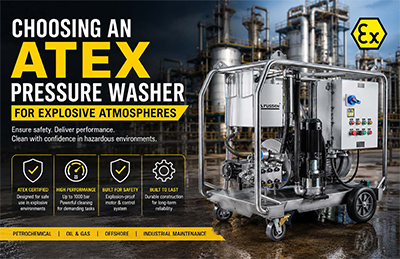
You must consider that hazardous location cleaning requires equipment designed to minimize ignition sources. Using ATEX certified equipment guarantees compliance with safety regulations, greatly reducing explosion risks in volatile environments.
These pressure washers are engineered to operate safely in areas where flammable materials are present, preventing potential ignition from sparks or electrical components. The FAE-EX Series offers explosion-proof motors and control boxes, ensuring reliable performance in hazardous settings.
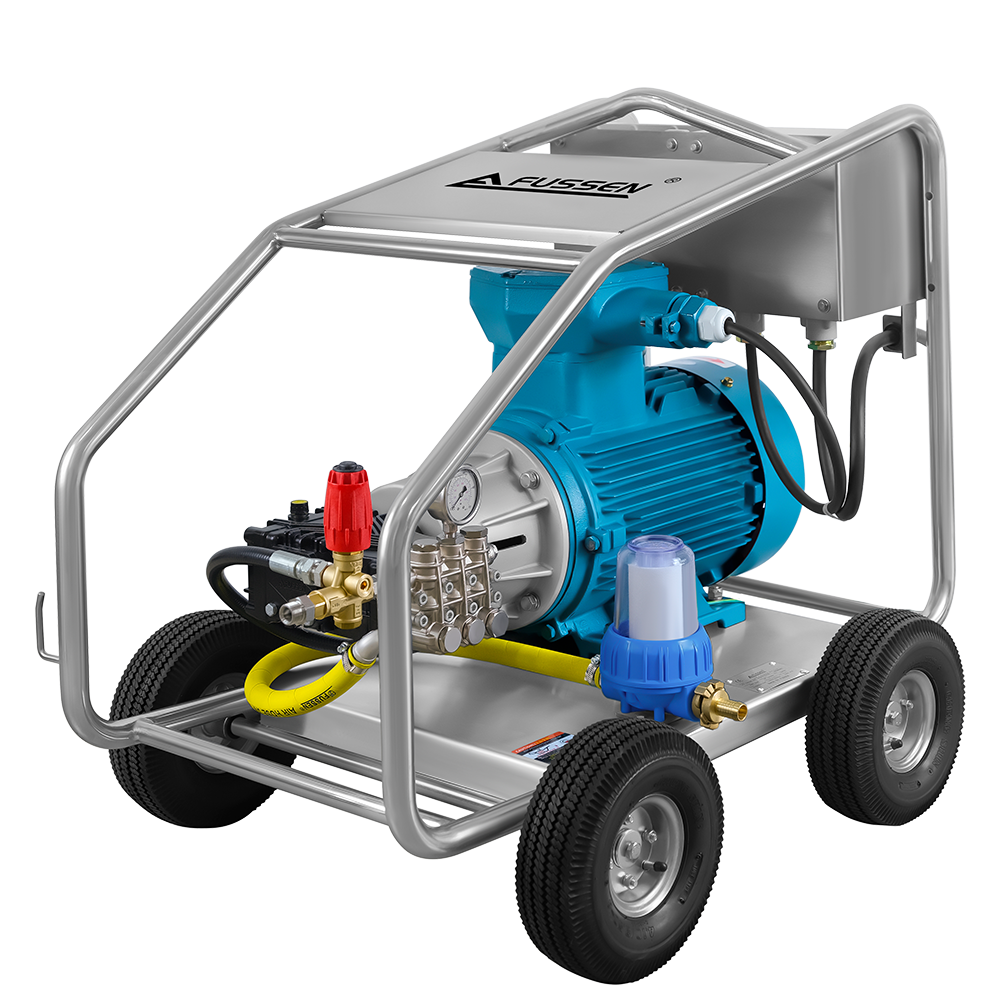
Adopting these specialized tools not only enhances operational efficiency but also protects workers and equipment from dangerous accidents.
In such high-risk settings, investing in the right pressure washing technology is essential for maintaining safety and operational integrity.
While standard pressure washers may handle everyday dirt and grime, the oil and gas industry faces unique challenges that require specialized cleaning solutions.
Heavy contamination from substances like crude oil, grease, paraffin, drilling mud, chemical residues, and salt deposits demands the use of a heavy-duty pressure washer.
These machines deliver high-pressure water streams combined with industrial degreasing agents, effectively breaking down and removing stubborn contaminants that ordinary washers can’t tackle.
The intense pressure and specialized formulations allow you to maintain equipment integrity and guarantee operational efficiency. Additionally, ultra high pressure washers are essential for ensuring thorough cleaning and safety in environments where traditional methods may fall short.
As the oil and gas industry operates continuously, the demand for specialized pressure washers becomes essential to guarantee equipment cleanliness and operational efficiency.
These devices are vital for effective industrial maintenance cleaning, ensuring that your operations run smoothly even under demanding conditions.
Here are three reasons why hydro blasting equipment is indispensable:

Oil and gas facilities operate in some of the harshest industrial environments, where equipment is exposed to hydrocarbons, drilling fluids, salt spray, chemical residues, and extreme temperatures. Cleaning requirements vary significantly depending on the facility, contamination type, and maintenance objective. Selecting the appropriate pressure washer helps improve cleaning efficiency while reducing downtime and protecting critical assets.
| Facility | Typical Cleaning Tasks | Common Contaminants | Recommended Pressure | Recommended Fussen Series |
|---|---|---|---|---|
| Oil Refineries | Pumps, valves, heat exchangers, process equipment | Heavy oil, grease, carbon deposits | 150–350 bar | FBE, FCE, FAE-EX, FBE-EX |
| Petrochemical Plants | Reactors, pipelines, production equipment | Chemical residue, polymers, solvents | 200–500 bar | FCE, FCE-EX |
| Offshore Oil & Gas Platforms | Decks, machinery, structural steel, drilling equipment | Salt deposits, rust, crude oil | 300–600 bar | FDE, FDE-EX, FED |
| LNG & Gas Processing Plants | Compressors, cooling systems, piping | Dust, hydrocarbons, ice buildup, grease | 200–500 bar | FBE, FCE, FAE-EX |
| Storage Tank Farms | Tank exteriors, containment areas, loading stations | Oil residue, sludge, weathering | 250–600 bar | FCD, FED |
| Pipeline Pumping Stations | Pumps, valves, manifolds, compressor units | Mud, grease, corrosion | 250–500 bar | FAD, FBD, FCD |
| Drilling Rigs | Drill pipes, mud pumps, rig floors | Drilling mud, cement, grease | 300–800 bar | FED, FKD |
| Ship Loading & Marine Terminals | Loading arms, docks, piping systems | Salt, marine growth, hydrocarbons | 300–600 bar | FDE, FWE |
| Maintenance Workshops | Mechanical parts, engines, hydraulic systems | Oil, grease, metal particles | 150–300 bar | FAE, FBE, FHE-P |
| Shutdown & Turnaround Projects | Equipment preparation before inspection, repair, or coating | Scale, rust, old coatings, heavy deposits | 500–2800 bar (depending on task) | FRE, FKD |
Different maintenance tasks require different cleaning approaches. Before selecting a pressure washer, you should evaluate:
When selecting a pressure washer, consider the specific cleaning task at hand to guarantee ideal results.
For equipment maintenance, a lower PSI might suffice, while heavy grease removal requires higher pressure and specialized nozzles.
Each task, from surface preparation to hydrodemolition, demands a tailored approach to effectively address unique contaminants and surface materials. Additionally, understanding pressure and flow rate is crucial for ensuring optimal cleaning performance for your specific needs.
Choosing the right pressure washer for equipment maintenance cleaning can greatly impact efficiency and effectiveness.
For tasks like refinery cleaning equipment and pipeline cleaning, consider the following:
Additionally, choosing a manufacturer that emphasizes pump technology can significantly enhance the reliability and performance of your pressure washer.
To tackle heavy grease removal effectively, selecting the right pressure washer is essential. For offshore platform cleaning, you’ll need a washer that delivers high pressure and flow rates.
Opt for a unit with at least 3,000 PSI and a minimum of 4 GPM. This combination guarantees that the water can penetrate thick grease layers, breaking them down efficiently.
Additionally, consider the nozzle type; a rotating turbo nozzle enhances cleaning power, making it ideal for stubborn grime.
Using hot water can further aid in heavy grease removal by dissolving oils faster. Always remember to use appropriate detergents designed for industrial applications to maximize your results. This is particularly important because hot water systems achieve higher cleaning efficiency compared to cold systems, allowing for a more effective cleaning process.
This strategic approach will guarantee that your offshore cleaning tasks are completed effectively and safely.
Heavy grease removal sets the stage for addressing another critical task: paint and coating removal.
When it comes to chemical plant cleaning, selecting the right pressure washer for this specific job is essential. Here are three key considerations:
Additionally, for tasks involving severe coating removal, a 2800 Bar high pressure washer can be vital in preserving substrate integrity.
Before inspection can take place, effective surface preparation is essential, as it guarantees that any underlying issues are accurately identified.
You need to choose a pressure washer equipped with an explosion-proof motor, especially in hazardous environments like oil and gas facilities. This guarantees safety while delivering high-pressure cleaning necessary to remove contaminants, dirt, and debris.
Select a washer based on the surface material; for instance, a higher PSI is suitable for metal surfaces, while a lower PSI works for delicate substrates. Additionally, the right nozzle type enhances cleaning efficiency.
Always assess the specific cleaning task to avoid damage during preparation, assuring a thorough inspection can follow without missed problems. Moreover, using certified explosion-proof equipment ensures compliance with safety regulations and reduces operational risk.
Prioritize safety and efficiency in your selection process.
When tackling hydrodemolition and concrete repair, selecting the right pressure washer is critical for achieving effective results.
You'll want to take into account several factors to guarantee you choose the ideal equipment for your specific tasks:

How do you determine the right pressure and flow rate for your oil and gas pressure washer?
Start by evaluating the nature of the contamination you need to remove. Higher pressure is essential for breaking down bonded contaminants, while the flow rate influences your cleaning speed.
For instance, a pressure of 3,000 to 4,000 PSI effectively tackles tough grime, but if the flow rate is too low, you'll spend more time cleaning.
Ideally, you should balance both parameters; a flow rate of 3 to 5 GPM complements higher pressures to enhance efficiency. Additionally, cleaning efficiency is determined by pressure, flow rate, and duty cycle, so ensure you match these settings to the specific surface materials for optimal results.
When choosing a pressure washer for oil and gas applications, you'll encounter various options like electric, diesel, hot water, and explosion-proof models. Each type offers distinct advantages depending on your specific requirements, such as power source availability, mobility, and cleaning efficiency. Understanding these differences will help you select the best pressure washer to meet industry standards and your operational needs. Additionally, considering the performance metrics such as pressure and flow rate is crucial for ensuring effective cleaning.
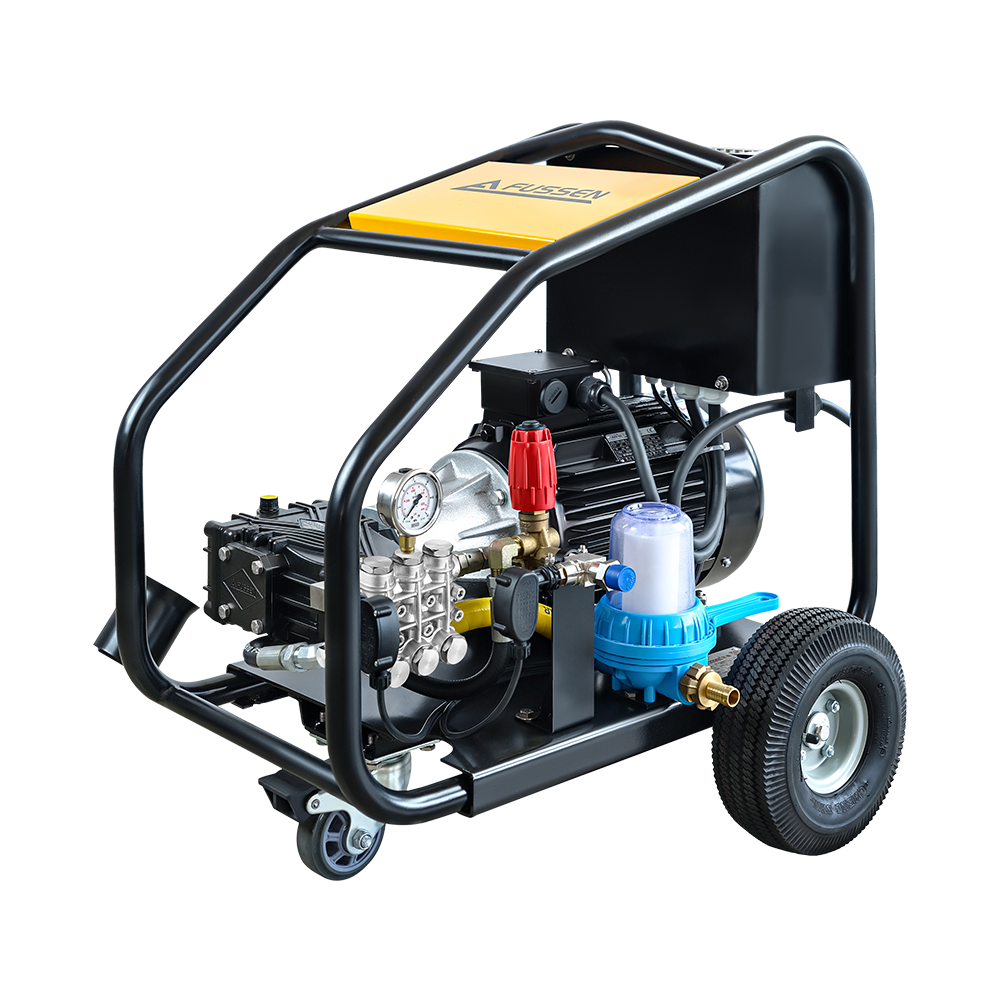
Electric pressure washers offer a versatile solution for a range of cleaning tasks, especially in environments where noise and emissions need to be minimized.
These units are perfect for indoor applications, providing stable power while keeping operational noise to a minimum.
Here are three key benefits of using electric pressure washers:
Additionally, the FBE Series electric high-pressure washer is specifically designed for heavy-duty cleaning tasks, making it an excellent choice for industrial applications.
For best results, consider the FBE Series or FCE Series, both designed to meet high-performance cleaning demands.
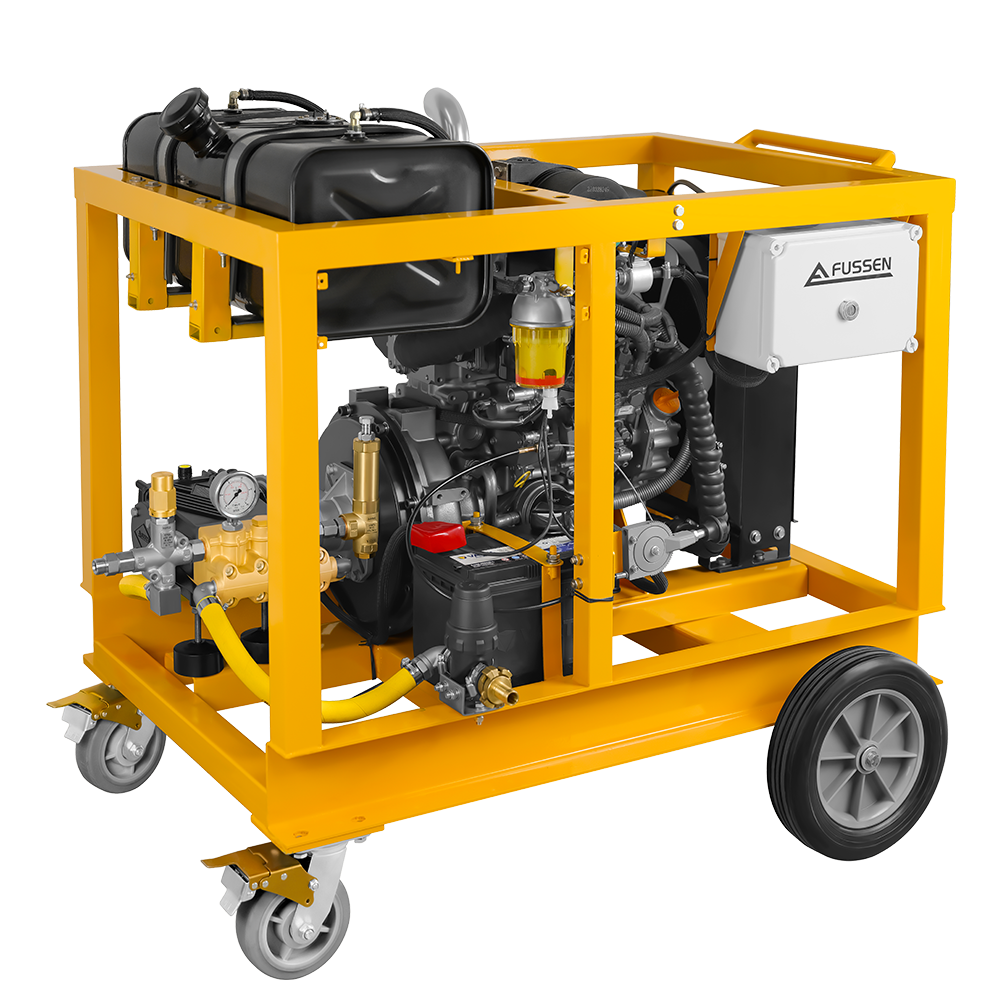
Diesel pressure washers are a robust choice for demanding outdoor applications, such as remote pipeline maintenance and construction work.
Their powerful diesel engines deliver high pressure and flow rates, making them ideal for heavy-duty cleaning tasks in rugged environments.
You’ll find models like the FCD Series and FED Series particularly effective, as they're designed to withstand harsh operating conditions while providing reliable performance.
These washers can easily tackle grease, grime, and stubborn dirt, ensuring efficient maintenance of equipment and facilities.
Additionally, their mobility allows you to transport them to various job sites without the need for electric power sources.
Investing in a diesel pressure washer means you’re equipped for efficiency and reliability in challenging outdoor settings. Furthermore, the high-quality plunger pump ensures consistent pressure for optimal cleaning results.
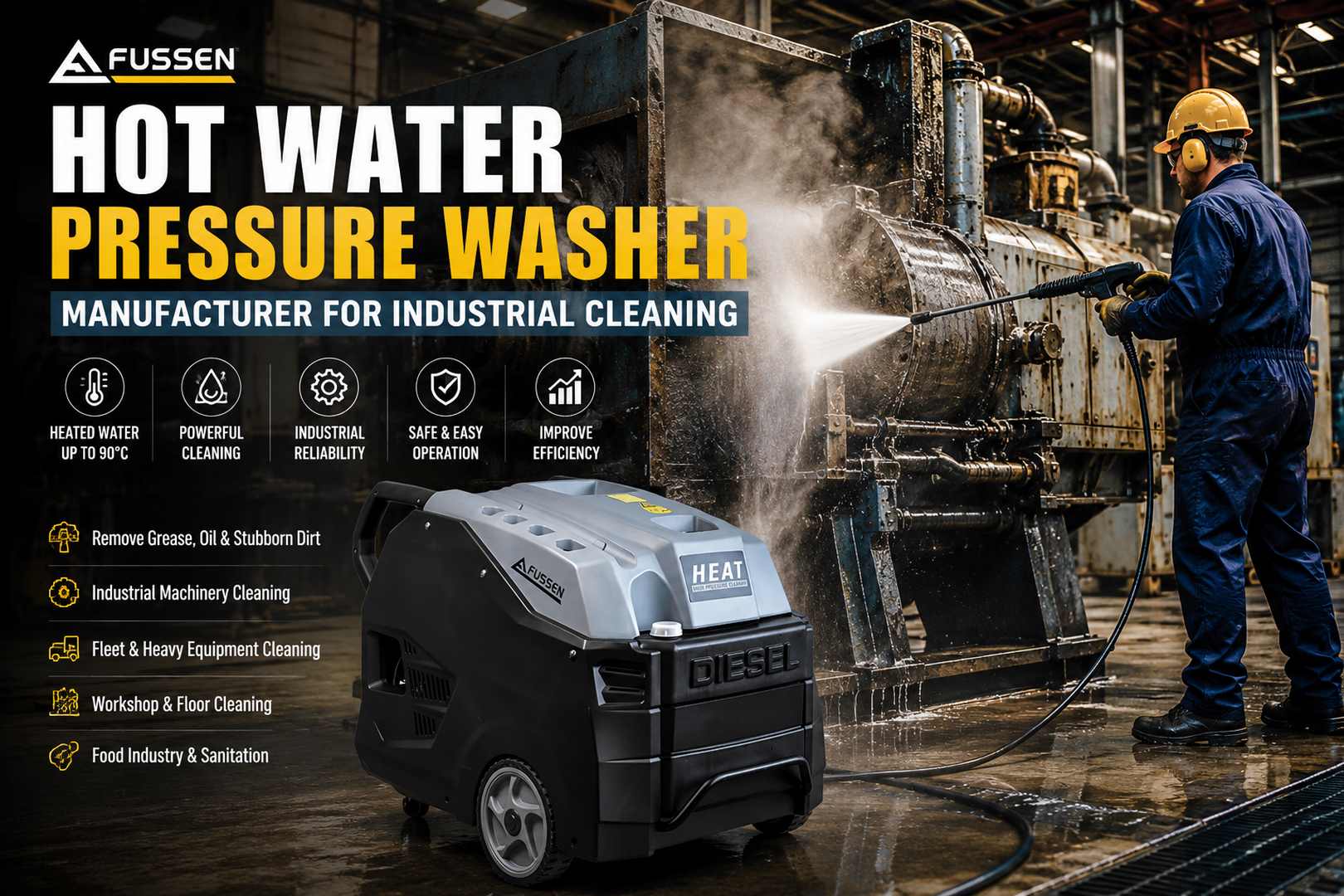
Hot water pressure washers offer a powerful solution for cleaning applications that involve heavy grease, hydrocarbon residues, and oil removal.
These machines excel in various environments, ensuring peak performance through high-temperature water.
Here are three key benefits of using hot water pressure washers:

In hazardous environments like refineries and chemical plants, explosion-proof pressure washers are essential for ensuring safe and effective cleaning.
These machines are designed to prevent ignition of flammable vapors, making them suitable for offshore platforms and other hazardous areas. Key models like the FAE-EX, FBE-EX, FCE-EX, and FDE-EX are specifically engineered to meet strict safety standards, ensuring reliability during operation. The FBE-EX Series, for example, is powered by an explosion-proof motor, allowing for high-pressure capabilities up to 350 bar and 21 L/min.
When selecting a pressure washer, consider the power source: electric, diesel, or hot water options are available, each tailored to different cleaning needs.
Electric models provide quiet operation, while diesel units offer high mobility. Regardless of the choice, ensuring compliance with safety regulations is vital for protecting personnel and equipment in explosive atmospheres.
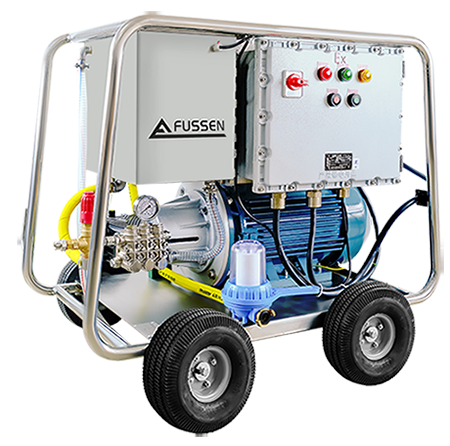
When evaluating oil and gas pressure washers, you need to prioritize essential features that enhance safety and performance.
Look for explosion-proof motors and control systems, as well as durable ceramic or alloy steel plunger pumps that guarantee longevity.
Additionally, consider stainless steel frames for corrosion resistance and intelligent soft start protection to safeguard your equipment. Furthermore, the FEK Series stainless steel pump is designed for high-pressure applications, making it a reliable choice for industrial cleaning tasks.

As you evaluate pressure washers for industrial applications, understanding the significance of explosion-proof motors and control systems is essential for guaranteeing safety and compliance.
These components protect against hazardous environments, especially in oil and gas sectors where flammable materials are prevalent. When selecting your equipment, consider the following features:
Selecting the right plunger pump is essential for optimizing the performance of your industrial pressure washer. When evaluating pumps, consider ceramic versus alloy steel options.
Ceramic plungers are known for their high wear resistance, offering longevity under abrasive conditions and ensuring consistent pressure output. They excel in applications with harsh chemicals, minimizing corrosion risks.
On the other hand, alloy steel plungers provide robust strength and durability, making them suitable for high-pressure applications. They can be more cost-effective but may require more maintenance over time.
Assess the specific requirements of your operation, including pressure levels and fluid types, to choose the most appropriate material. Ensuring compatibility with your system will enhance overall efficiency and reliability. Moreover, it is crucial to understand the impact of material selection on the lifespan and performance of your pump system.
Choosing the right materials extends beyond just the pump; the frame of your industrial pressure washer plays a pivotal role in its longevity and performance.
Opting for stainless steel frames offers superior corrosion resistance, enhancing durability in harsh environments. Here are three key features to evaluate:
When evaluating industrial pressure washers, incorporating intelligent soft start protection can greatly enhance both equipment longevity and operational efficiency.
This feature gradually ramps up the motor's power, reducing the initial surge that typically strains components. By minimizing mechanical stress during startup, you’ll extend the lifespan of critical parts, like the pump and motor.
Additionally, this technology helps prevent sudden pressure spikes that could lead to hose bursts or damage to fittings. You'll also experience smoother operation, allowing for more precise control during your cleaning tasks. Furthermore, understanding the high pressure washer operation can help you appreciate how soft start protection plays a vital role in maintaining consistent performance.
When selecting a pressure washer, make sure it includes this feature to optimize performance and reduce maintenance costs over time. Investing in intelligent soft start protection can pay off considerably in the demanding industrial environment.
Large water tanks are critical for industrial pressure washers, providing the necessary reservoir for sustained operation without frequent refills.
When evaluating these tanks, consider the following features to guarantee efficient performance:
While evaluating industrial pressure washers, ensuring easy maintenance accessibility and availability of spare parts is essential for minimizing downtime and maximizing productivity.
Look for models with strategically placed access points that simplify routine upkeep, such as filter changes and pump inspections. A modular design can facilitate quick disassembly, enabling technicians to reach critical components without excessive effort.
Additionally, verify that the manufacturer offers a thorough inventory of spare parts, ensuring you can quickly source any necessary replacements. Consider the warranty and support services provided, as these can greatly impact your machine's longevity and operational efficiency. Regular checks for oil or water leaks can help identify potential issues before they escalate, ensuring consistent performance and reliability.
When you're selecting an oil and gas pressure washer, it’s essential not to focus solely on PSI, as flow rate plays an equally important role in performance.
Many buyers make the mistake of opting for consumer-grade models that can't withstand industrial demands, and overlooking necessary hazardous-area certifications can lead to serious safety issues.
Additionally, ignoring factors like corrosion resistance can shorten the lifespan of your equipment, resulting in costly replacements down the line. It's crucial to consider the pump material choice based on the environmental conditions to ensure durability and reliability.
Many buyers mistakenly focus solely on PSI when selecting an oil and gas pressure washer, believing that higher numbers automatically translate to better performance.
While PSI (pounds per square inch) is important, it’s not the only factor you should consider. Here are three essential elements to evaluate:
Focusing solely on PSI can lead to overlooking another critical metric: flow rate. Flow rate, measured in gallons per minute (GPM), directly impacts cleaning efficiency. A high PSI with a low GPM may clean surfaces poorly, as water volume is insufficient to carry away dirt and debris.
Conversely, a balanced combination of PSI and GPM maximizes cleaning power, ensuring effective dirt removal. When selecting an oil and gas pressure washer, consider your specific cleaning tasks. For heavy-duty jobs, aim for equipment with at least 4 GPM, while lighter tasks may require only 2 GPM.
Ignoring flow rate can result in inadequate performance, wasted time, and increased wear on your machine. Always evaluate both metrics for ideal results, as operational advantages highlight the importance of having the right equipment for effective cleaning.
How do you know if you’re selecting the right oil and gas pressure washer for your needs? Choosing a consumer-grade machine can be tricky, especially if you overlook key factors.
Here are three critical considerations:
When purchasing an oil and gas pressure washer, it’s vital not to overlook hazardous-area certification, as this guarantees the equipment meets safety standards for operation in potentially explosive environments.
These certifications, such as ATEX or IECEx, guarantee that the washer is designed to prevent ignition sources, featuring components like explosion-proof motors and intrinsically safe controls.
Without this certification, you risk not only equipment failure but also severe safety hazards that can endanger personnel and affect operations.
Always verify that the pressure washer is rated for the specific hazardous zones you'll be working in.
Investing in certified equipment provides peace of mind and compliance with industry regulations, ultimately safeguarding your worksite and guaranteeing operational efficiency. Additionally, consider equipment that includes explosion-proof features to enhance safety and reliability.
Don't compromise on safety.

While you might prioritize power and pressure ratings when selecting an oil and gas pressure washer, ignoring corrosion resistance can lead to significant long-term costs and operational issues.
Corrosion can compromise the integrity of your equipment, leading to premature failures.
Here are three key factors to take into account regarding corrosion resistance:
Many buyers overlook maintenance costs, thinking primarily about the initial purchase price of an oil and gas pressure washer. However, ongoing expenses can greatly impact your overall budget.
Regular maintenance includes oil changes, filter replacements, and routine inspections, which can add up quickly. You should also consider wear and tear on components like hoses, pumps, and nozzles, as these may need replacement over time.
Neglecting these costs can lead to unexpected repairs that disrupt your work and inflate expenses. Additionally, using improper cleaning agents can accelerate wear, increasing maintenance frequency.
When budgeting for your pressure washer, factor in these ongoing costs to guarantee you're financially prepared for the long-term ownership of this essential equipment. Proper pressure settings can also help minimize wear and ensure efficient operation.
Neglecting to secure local technical support can lead to significant setbacks when purchasing an oil and gas pressure washer.
Without local expertise, you may face challenges like improper setup, inadequate maintenance, and delayed repairs. It’s vital to reflect on the following factors:
Additionally, local support can provide insights into industrial-grade motor features that enhance durability and efficiency.

Investing in equipment without this critical support might seem economical initially, but it could lead to significant long-term costs and operational inefficiencies.
Don't overlook the importance of local technical assistance.
Before buying an oil and gas pressure washer, you need to contemplate several critical factors.
Ask yourself if explosion-proof certification is necessary for your application, what pressure and flow rates will meet your needs, and whether continuous operation is required.
Additionally, determine if hot water is essential for your tasks and what spare parts are readily available for maintenance.
When evaluating whether an explosion-proof certification is necessary for your oil and gas pressure washer, it’s important to take into account the specific environments in which you'll operate.
Consider the following factors:
Selecting the right pressure and flow rate for your oil and gas pressure washer is key to ensuring effective cleaning and efficiency. Generally, a pressure range of 2,000 to 3,500 PSI is recommended for most tasks. For flow rate, aim for 2 to 4 GPM to optimize cleaning without wasting water. Regular maintenance and heat exchanger cleaning are essential for maintaining optimal performance.
| Task Type | Recommended Pressure (PSI) | Recommended Flow Rate (GPM) |
|---|---|---|
| Light Cleaning | 2,000–2,500 | 2–3 |
| Medium Cleaning | 2,500–3,000 | 3–4 |
| Heavy Cleaning | 3,000–3,500 | 4–5 |
Understanding whether your oil and gas pressure washer will run continuously is vital for determining its suitability for your cleaning needs.
Continuous operation is important, especially for large projects. Here are three key factors to take into account:
Considering the operational capabilities of your oil and gas pressure washer leads to important questions about its features, including whether hot water is necessary for your cleaning tasks.
Hot water can greatly enhance cleaning efficiency, especially when dealing with grease, oil, or stubborn stains. It helps to dissolve residues better than cold water, reducing the need for harsh chemicals. If you're primarily cleaning surfaces like concrete or equipment in industrial settings, hot water might be essential for ideal results.
However, for light-duty tasks or routine maintenance, cold water could suffice. Assess your specific cleaning requirements and the types of contaminants you'll encounter.
Ultimately, deciding on hot water usage will depend on your operational needs and budget constraints.
Before finalizing your purchase, it's important to inquire about the spare parts stocked for your oil and gas pressure washer.
Having access to replacement components can greatly minimize downtime and maintenance costs.
Here are three critical spare parts you should verify are available:
How well can the oil and gas pressure washer be tailored to your specific needs?
You’ll find that most models offer various customization options, including adjustable pressure settings, nozzle types, and cleaning attachments. You can select the right pressure range to suit different tasks, whether you're cleaning heavy machinery or delicate surfaces.
Additionally, some systems allow you to integrate specialized features like heated water options or specific chemical injectors for enhanced cleaning efficiency.
You can also choose mobility options, such as trailer-mounted or skid-mounted configurations, depending on your site requirements.
Before purchasing, verify the manufacturer provides detailed customization specifications to align the system perfectly with your operational demands, enhancing overall performance and productivity. Fussen Pump, a leader in high-pressure system development, offers both standard and tailor-made solutions to meet diverse customer needs.
Are you aware of the importance of operator training when it comes to using an oil and gas pressure washer?
Proper training guarantees safety, efficiency, and effective operation. Before purchasing, you should confirm if the manufacturer or dealer offers thorough training programs.
Here are three key aspects to take into account:
Investing in operator training not only enhances performance but also minimizes the risk of costly mistakes.
While considering the purchase of an oil and gas pressure washer, it’s important to inquire about the recommended maintenance schedule to guarantee peak performance and longevity. Regular maintenance guarantees your machine operates efficiently and prolongs its lifespan. Typically, you'll want to follow a structured schedule.
Here’s a concise maintenance guide:
| Maintenance Task | Frequency |
|---|---|
| Check Oil Level | Before each use |
| Change Oil | Every 50 hours of operation |
| Clean Air Filter | Every 25 hours of operation |
| Inspect Hoses and Nozzles | Monthly |
| Check Spark Plug | Every 100 hours of operation |
Oil and gas cleaning requirements vary widely between refineries, offshore platforms, pipeline stations, drilling sites, and petrochemical plants. The most suitable pressure washer depends on the operating environment, contamination type, power availability, pressure requirement, and hazardous-area classification.
Fussen offers electric, diesel, hot water, explosion-proof, and ultra-high-pressure systems that can be matched to different oil and gas maintenance tasks.
| Oil & Gas Application | Main Cleaning Requirement | Recommended Fussen Series | Why It Fits |
|---|---|---|---|
| Routine refinery equipment cleaning | Remove dirt, light oil, and process residue from pumps, valves, and machinery | FBE / FCE | Industrial electric units with stable output, ceramic plungers, filtration, and low-speed motors |
| Cleaning inside hazardous production areas | Safe cleaning where flammable gases or vapors may be present | FAE-EX / FBE-EX | Explosion-proof motors and control boxes, with optional ATEX and Ex protection configurations |
| Heavy-duty hazardous-area cleaning | Higher pressure for stubborn deposits in refineries and petrochemical plants | FCE-EX / FDE-EX | Explosion-proof construction with pressure options from approximately 350 to 1000 bar |
| Heavy grease and hydrocarbon removal | Remove oil, grease, and oily films more efficiently | FHE-P / FHE-S | Hot water systems heat water up to 90°C, helping loosen grease and hydrocarbon contamination |
| Offshore platform and marine terminal cleaning | Salt removal, corrosion control, deck and machinery cleaning | FWE / FME / FDE | Stainless steel pumps or frames provide improved corrosion resistance for marine environments |
| Pipeline and remote field maintenance | Mobile cleaning where electrical power is limited or unavailable | FBD / FCD / FED | Diesel-powered systems provide independent operation and higher mobility for remote sites |
| Drilling rig cleaning | Remove drilling mud, grease, cement residue, and heavy deposits | FCD / FED / FKD | Heavy-duty diesel power with higher pressure and flow options for demanding field conditions |
| Pipe and tube cleaning | Internal cleaning of pipes, drains, and selected process lines | FLE / FED / FKD | Compatible with pipe-cleaning nozzles, hose reels, foot valves, and high-pressure hoses |
| Paint, rust, and coating removal | Surface preparation before inspection, repair, or recoating | FDE / FKE / FED | 500–1000 bar options provide stronger removal power for rust and industrial coatings |
| Ultra-high-pressure surface preparation | Remove strongly bonded coatings, scale, and corrosion | FRE / FKD | Electric and diesel systems available from 1000 to 2800 bar for advanced water-jet work |
| Shutdown and turnaround cleaning | Multiple intensive cleaning tasks within a limited maintenance window | FCE-EX / FDE-EX / FRE / FKD | Suitable for high-duty operation, difficult deposits, and time-sensitive maintenance projects |
For refineries, petrochemical plants, tank farms, and gas-processing facilities, the first decision should be whether the cleaning area is classified as hazardous.
Fussen’s explosion-proof range includes:
These systems use explosion-proof motors and control equipment, with optional ATEX, Exd IIB T4 Gb, and Exd IIC T4 Gb configurations. Final equipment selection should always be based on the facility’s formal hazardous-area classification and project requirements.
Where the main problem is crude oil residue, lubricants, or heavy grease, temperature can be as important as pressure.
The FHE-P and FHE-S series combine:
These models are suitable for maintenance workshops, machinery cleaning, engine components, and non-hazardous areas where oily contamination is the main cleaning challenge.
Pipeline corridors, drilling sites, terminals, and outdoor maintenance areas may not have reliable electrical power. Fussen’s diesel series provides greater operating independence.
Suitable options include:
Diesel machines are particularly useful for remote maintenance, but they should not be used inside classified hazardous areas unless the complete system is specifically designed and approved for that environment.
For coating removal, rust removal, surface preparation, and other strongly bonded contamination, Fussen offers electric and diesel ultra-high-pressure systems.
These systems are better suited to specialist contractors, refinery shutdown teams, shipyards, and industrial maintenance companies that require more than conventional pressure washing.
A suitable oil and gas pressure washer should be selected according to:
Fussen can supply standard models as well as customized systems, allowing you to specify pressure, flow, power source, materials, controls, and accessories around the actual cleaning task rather than purchasing an oversized general-purpose machine.
When considering the use of pressure washers in oil and gas facilities, you might've several critical questions.
For instance, can a standard pressure washer operate safely in an oil refinery, and do you always need explosion-proof models?
Additionally, understanding the best practices for equipment cleaning and maintenance frequency is essential for peak performance.
Can a standard pressure washer effectively operate in an oil refinery environment? While it might seem convenient, using a standard pressure washer in such a setting poses significant risks.
Here are three critical considerations:
In oil and gas facilities, the use of explosion-proof pressure washers isn't merely a recommendation; it’s often a requirement. The presence of flammable vapors and high-pressure systems necessitates equipment designed to mitigate risks associated with explosions.
Explosion-proof pressure washers are constructed with sealed components, preventing ignition sources from escaping and minimizing the risk of combustion. These washers also comply with rigorous safety standards, guaranteeing they can operate in hazardous environments without posing a threat to personnel or equipment.
While you might be tempted to use standard washers, doing so could lead to catastrophic failures. Always consult safety regulations and industry guidelines to guarantee compliance and prioritize safety in your operations.
Choosing the right equipment is essential for minimizing risks in these volatile environments, especially considering the need for high-pressure impact to efficiently clean oil and grease residues.
While both hot and cold water pressure washers can effectively clean surfaces, hot water greatly enhances the removal of crude oil and grease. The elevated temperature helps break down thick, stubborn residues, making them easier to lift away. Additionally, hot water can improve the effectiveness of detergents and emulsifiers.
Here are three reasons why hot water is preferable:
Using hot water pressure washers can save you time and guarantee thorough cleaning in oil and gas facilities.
When cleaning refinery equipment, using the correct pressure is essential for effective results without causing damage.
Generally, a pressure range of 3,000 to 4,000 PSI is recommended for most cleaning tasks. This level effectively removes stubborn deposits and contaminants, ensuring safe operation of the equipment.
However, for sensitive components, you might consider reducing the pressure to around 2,000 PSI to prevent any risk of damage. Always assess the material and condition of the equipment before selecting the pressure.
Additionally, using adjustable nozzles can help you fine-tune the pressure for varying surfaces.
How frequently should you service industrial pressure washer pumps to guarantee peak performance? Regular maintenance is essential for making sure your equipment operates efficiently and lasts longer. Here’s a guideline to help you:
Verifying your oil and gas pressure washer has the right certifications is essential for compliance and safety in industrial applications.
Look for certifications from recognized organizations like the American National Standards Institute (ANSI) and Underwriters Laboratories (UL). These indicate that the equipment meets strict safety and performance standards.
Additionally, check for certifications specific to hazardous locations, such as the National Fire Protection Association (NFPA) or the Occupational Safety and Health Administration (OSHA) compliance markings.
If you’re using the washer in explosive environments, verify it has an Intrinsic Safety (IS) certification.
These certifications not only protect your personnel but also help you avoid costly fines and equipment failures.
Always verify documentation before purchase to confirm compliance.
In the oil and gas industry, having the right pressure washer is vital to keep operations running smoothly. By understanding your specific cleaning needs and evaluating essential features, you can avoid costly mistakes. Remember, the right equipment can make or break your efficiency. So, don’t put all your eggs in one basket; take the time to research and invest wisely. A tailored pressure washer will not only enhance productivity but also guarantee safety and compliance in your work environment.

 English
  Spanish
  French
  Russian
  Japanese
  Portuguese
  Arabic
  Korean