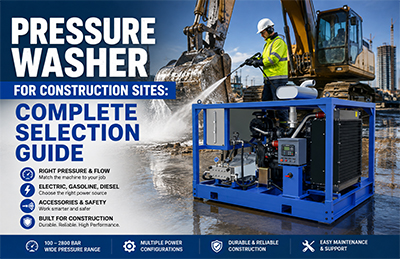
Construction sites place heavy demands on cleaning equipment. Mud and concrete residue build up on excavators and construction vehicles, dust and dirt accumulate across working areas, while renovation and surface preparation projects may require the removal of paint, rust, coatings, or other stubborn materials.
A professional pressure washer for construction sites provides the pressure and water flow needed to handle these jobs efficiently. Depending on the application, pressure washers can be used for:
The right machine, however, depends on more than pressure alone. Water flow, power source, mobility, available electricity, operating environment, and the material being removed all influence which pressure washer is suitable for a particular construction site.
For example, electric pressure washers can provide reliable continuous operation where three-phase power is available, while gasoline and diesel pressure washers offer greater independence for outdoor and mobile construction work. Higher-pressure systems can then be selected when conventional site washing develops into demanding surface preparation or material-removal applications.
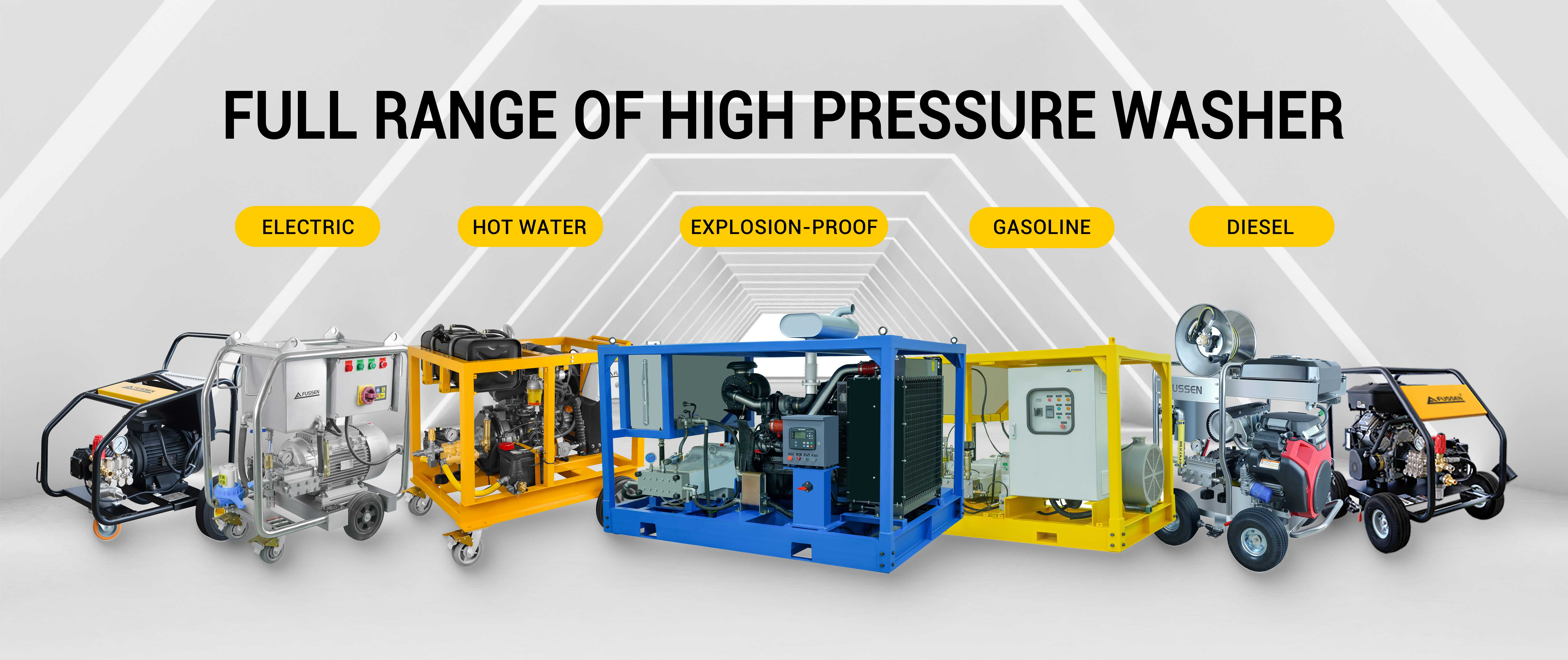
Fussen provides electric, gasoline, and diesel pressure washers across a broad range of pressure and flow configurations, including industrial systems reaching 1000 bar and ultra-high-pressure equipment up to 2800 bar. This allows contractors to select equipment around the actual job rather than relying on a single pressure washer for every construction application.
Explore Fussen pressure washer options for construction sites based on cleaning task, pressure requirement, water flow, mobility, and available power source.
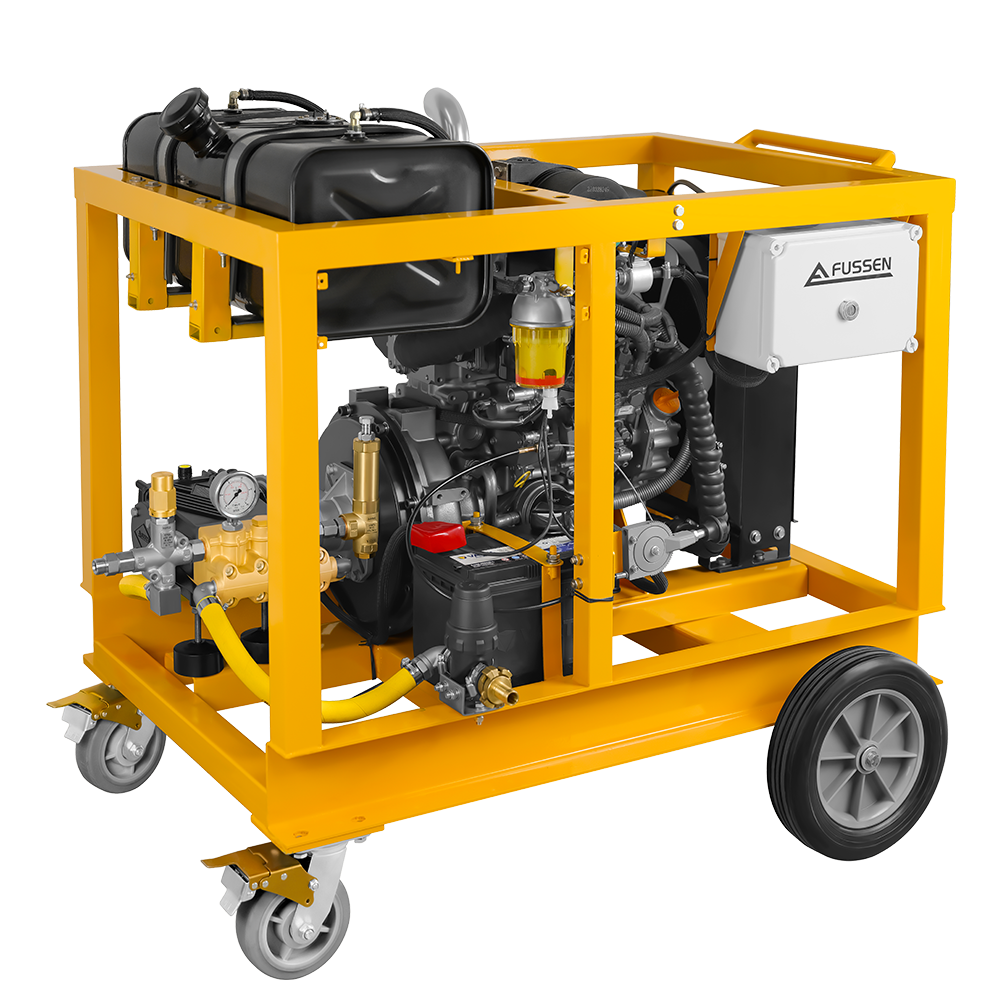
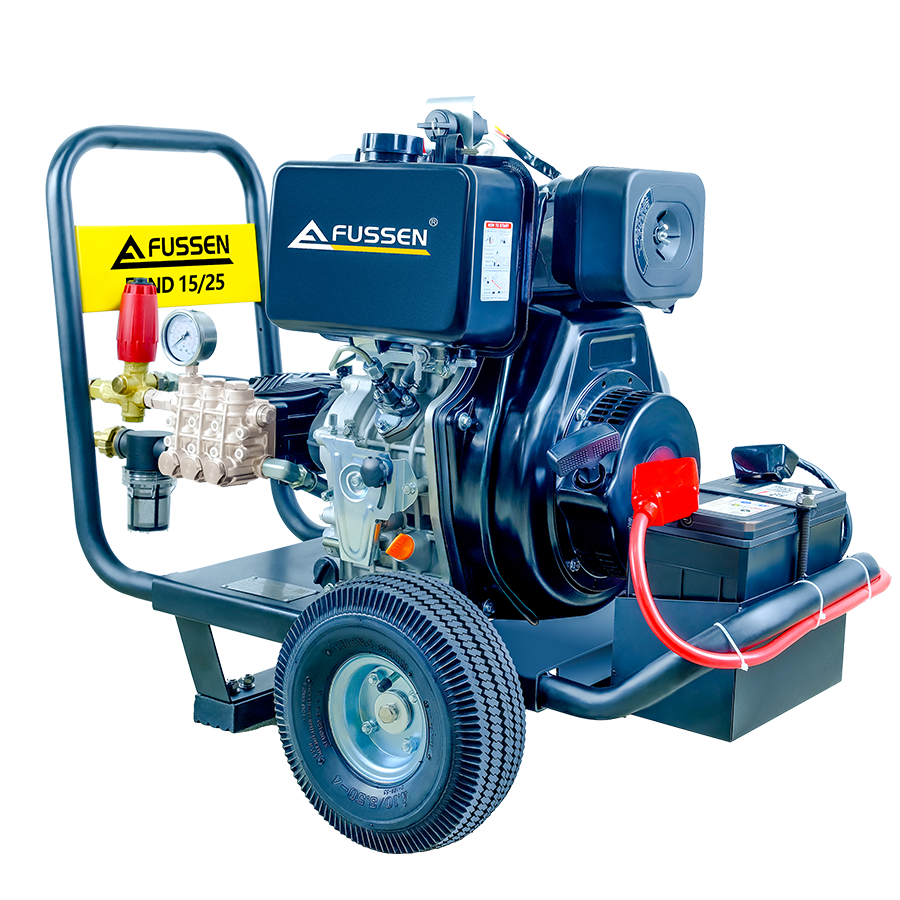
| Model | FlowRate(L/min) | Pressure(Bar/Mpa/PSI) | Power( kW ) | RPM | Weight( kg ) | Dimensions(L x W x H mm) |
| FCD 15/50 | 15 | 500/15/7250 | 15 | 1450 | 285 | 1170x920x1120 |
| FCD 21/35 | 21 | 350/20/2900 | 15 | 1450 | 285 | 1170x920x1120 |
| FCD 22/50 | 22 | 500/50/7250 | 22 | 1450 | 303 | 1170x920x1120 |
| FCD 18/60 | 18 | 600/60/8700 | 22 | 1450 | 303 | 1170x920x1120 |
| FCD 30/50 | 30 | 500/50/7250 | 30 | 1450 | 350 | 1170x920x1120 |
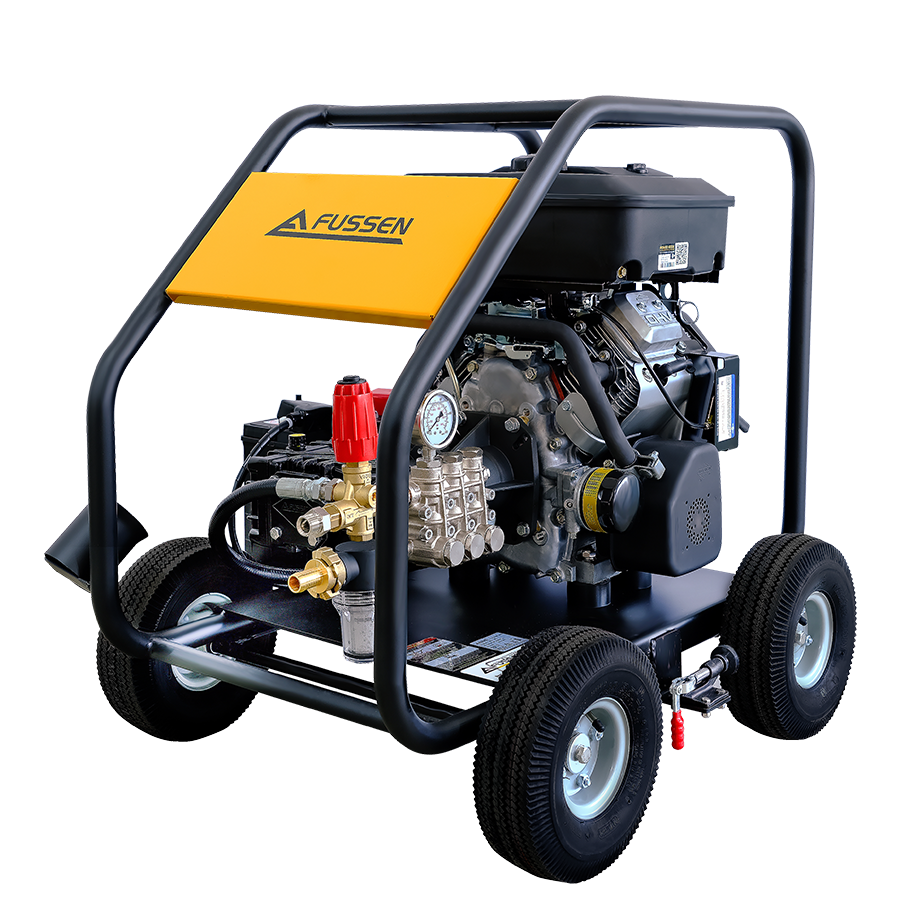
| Model | FlowRate(L/min) | Pressure(Bar/Mpa/PSI) | Power( kW ) | RPM | Weight( kg ) | Dimensions(L x W x H mm) |
| FAD 15/15 | 15 | 150/15/2175 | 4.5 | 1450 | 100 | 780 x 620 x 750 |
| FAD 15/20 | 15 | 200/20/2900 | 5.5 | 1450 | 100 | 780 x 620 x 750 |
| FAD 15/25 | 15 | 250/25/3625 | 7.5 | 1450 | 115 | 780 x 620 x 750 |
| FAD 18/20 | 18 | 200/20/2900 | 7.5 | 1450 | 115 | 780 x 620 x 750 |
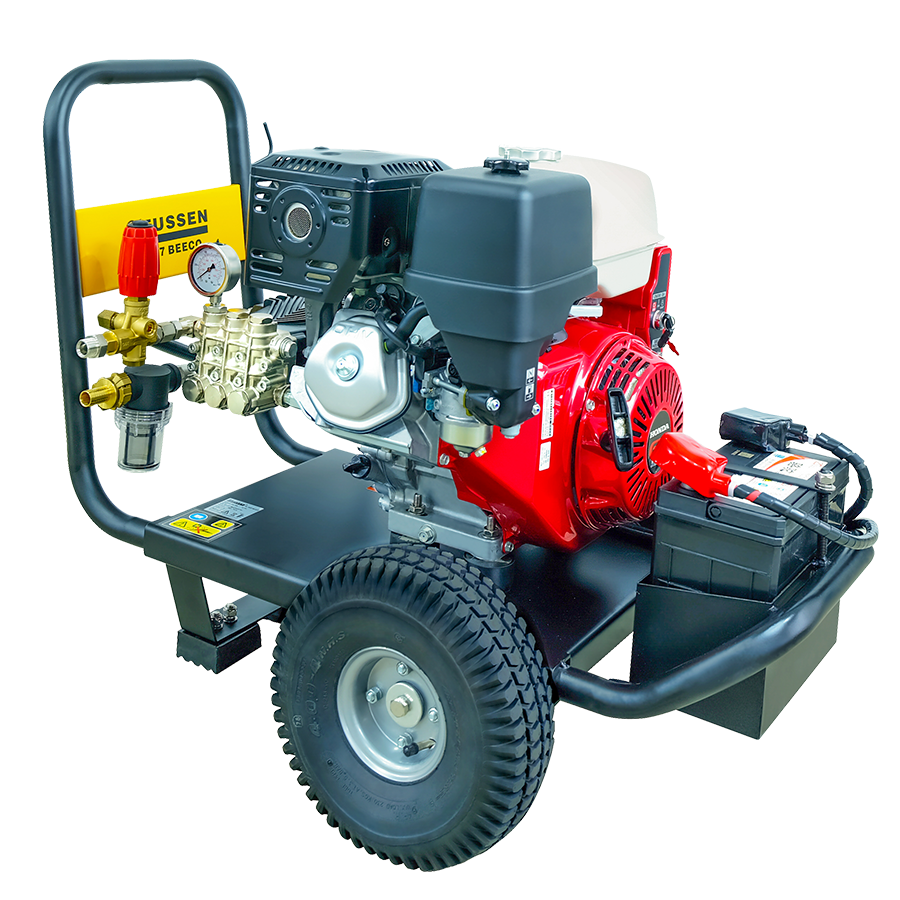
| Model | FlowRate(L/min) | Pressure(Bar/Mpa/PSI) | Power( kW ) | RPM | Weight( kg ) | Dimensions(L x W x H mm) |
| FBG 15/30 | 15 | 300/30/4350 | 9.2 | 1450 | 120 | 890 x 650 x 920 |
| FBG 15/35 | 15 | 350/35/5075 | 11 | 1450 | 120 | 890 x 650 x 920 |
| FBG 18/28 | 18 | 280/28/4060 | 11 | 1450 | 120 | 890 x 650 x 920 |
| FBG 21/25 | 21 | 250/25/3625 | 11 | 1450 | 120 | 890 x 650 x 920 |
| Model | FlowRate(L/min) | Pressure(Bar/Mpa/PSI) | Power( kW ) | RPM | Weight( kg ) | Dimensions(L x W x H mm) |
| FAG 15/15 | 15 | 150/15/2175 | 4.0 | 1450 | 100 | 780 x 620 x 750 |
| FAG 15/20 | 15 | 200/20/2900 | 5.5 | 1450 | 100 | 780 x 620 x 750 |
| FAG 15/25 | 15 | 250/25/3625 | 7.5 | 1450 | 100 | 780 x 620 x 750 |
| FAG 18/20 | 18 | 200/20/2900 | 7.5 | 1450 | 100 | 780 x 620 x 750 |
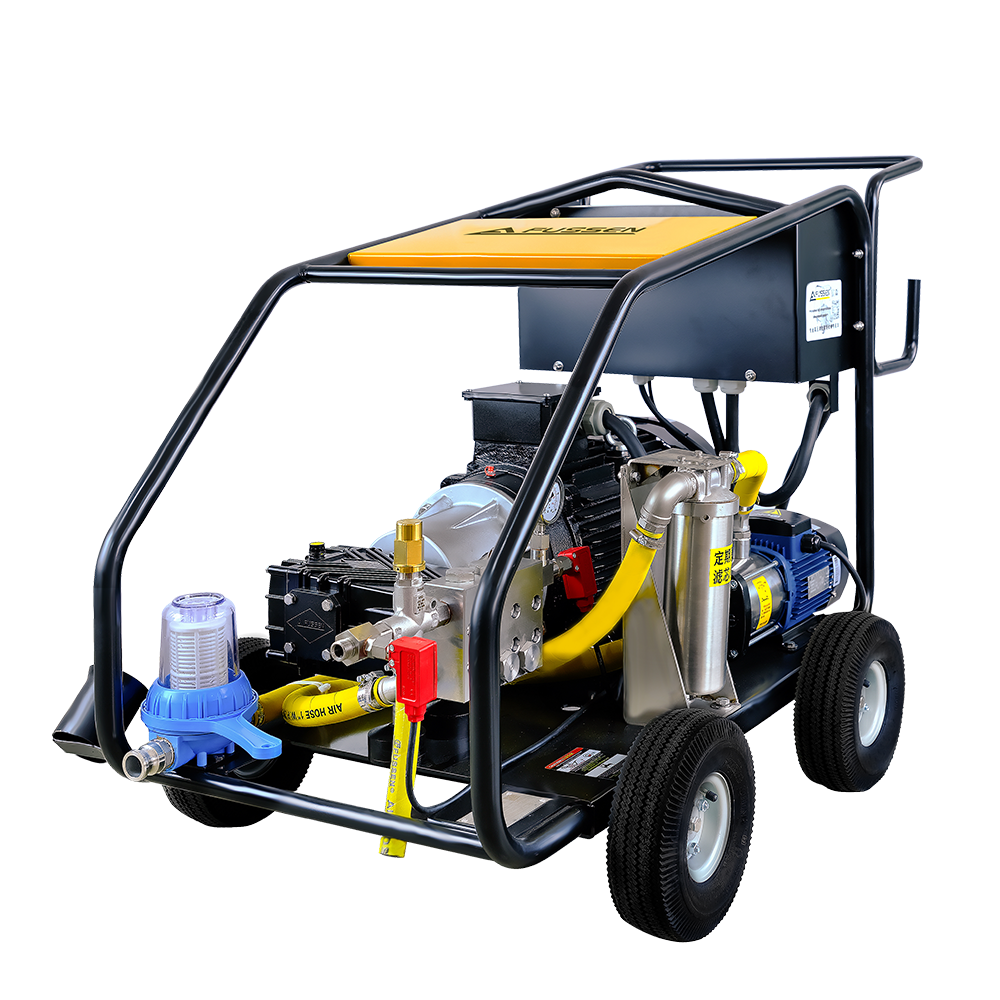
| Model | Voltage(Ph/V/Hz) | FlowRate(L/min) | Pressure(Bar/Mpa/PSI) | Power( kW ) | RPM | Weight( kg ) | Dimensions(L x W x H mm) |
| FLE 40/20 | 3/380/50 | 40 | 200/20/2900 | 15 | 1450 | 250 | 950 x 700 x 900 |
| FLE 50/20 | 3/380/50 | 50 | 200/20/2900 | 22 | 1450 | 280 | 980 x 700 x 920 |
| FLE 60/18 | 3/380/50 | 60 | 180/18/2610 | 22 | 1450 | 280 | 980 x 700 x 920 |
| FLE 70/16 | 3/380/50 | 70 | 160/16/2320 | 22 | 1450 | 280 | 980 x 700 x 920 |

| Model | Voltage(Ph/V/Hz) | FlowRate(L/min) | Pressure(Bar/Mpa/PSI) | Power( kW ) | RPM | Weight( kg ) | Dimensions(L x W x H mm) |
| FRE 120/100 | 3/380/50 | 120 | 1000/100/14500 | 252 | 400 | 2800 | 3300 x 1900 x 2100 |
| FRE 90/140 | 3/380/50 | 90 | 1400/140/20300 | 150 | 400 | 2800 | 3300 x 1900 x 2100 |
| FRE 50/150 | 3/380/50 | 50 | 1500/150/21755 | 300 | 400 | 2800 | 3300 x 1900 x 2100 |
| FRE 45/280 | 3/380/50 | 45 | 2800/280/40000 | 250 | 400 | 2800 | 3300 x 1900 x 2100 |
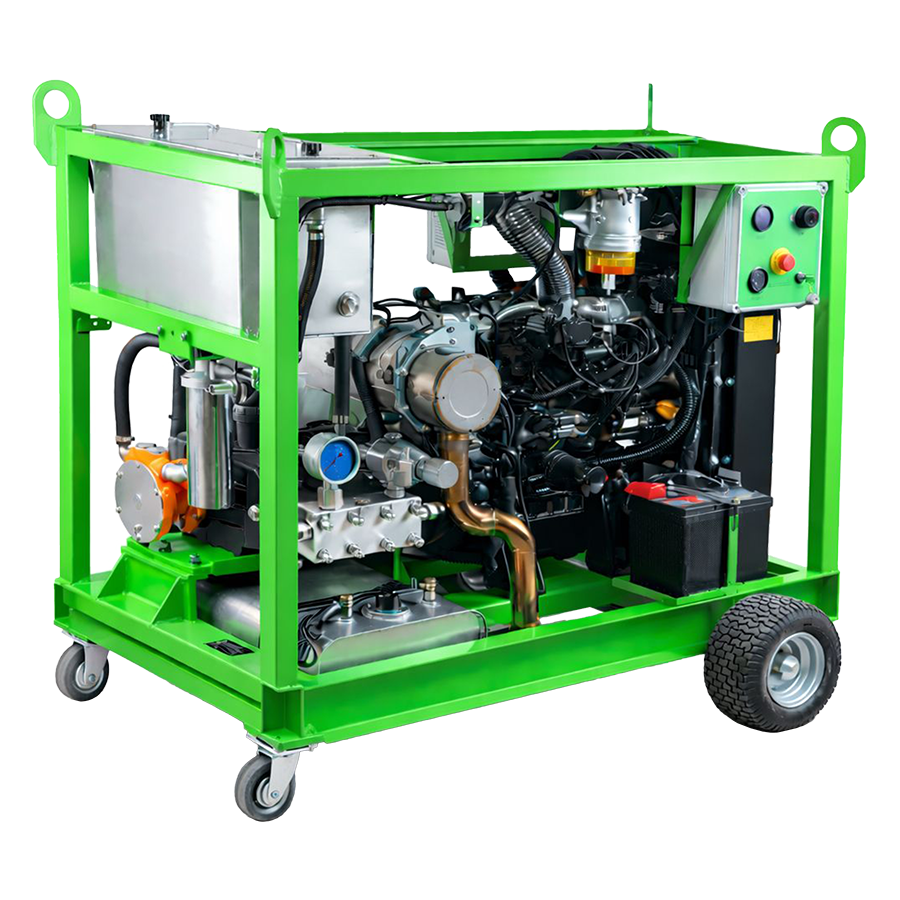
| Model | FlowRate(L/min) | Pressure(Bar/Mpa/PSI) | Power( kW ) | RPM | Weight( kg ) | Dimensions(L x W x H mm) |
| FED 20/100 | 20 | 1000/100/14500 | 50 | 1000 | 1350 | 1600 x 950 x 1200 |
| FED 25/100 | 25 | 100/100/14500 | 58 | 1000 | 1650 | 1600 x 950 x 1200 |
| FED 35/80 | 35 | 800/80/11600 | 56 | 1000 | 1350 | 1600 x 950 x 1200 |
| FED 40/60 | 40 | 600/60/8700 | 50 | 1000 | 1350 | 1600 x 950 x 1200 |

| Model | Voltage(Ph/V/Hz) | FlowRate(L/min) | Pressure(Bar/Mpa/PSI) | Power( kW ) | RPM | Weight( kg ) | Dimensions(L x W x H mm) |
| FKE 40/60 | 3/380/50 | 40 | 600/60/8700 | 45.0 | 1000 | 850 | 1550x1050x1350 |
| FKE 25/80 | 3/380/50 | 25 | 800/80/11600 | 37.0 | 1000 | 850 | 1550x1050x1350 |
| FKE 20/100 | 3/380/50 | 20 | 1000/100/14500 | 37.0 | 1000 | 850 | 1550x1050x1350 |
| FKE 25/100 | 3/380/50 | 25 | 1000/100/14500 | 45.0 | 1000 | 850 | 1550x1050x1350 |

| Model | Voltage(Ph/V/Hz) | FlowRate(L/min) | Pressure(Bar/Mpa/PSI) | Power( kW ) | RPM | Weight( kg ) | Dimensions(L x W x H mm) |
| FCE 21/35 | 3/380/50 | 21 | 350/35/5075 | 15 | 1450 | 240 | 950x700x900 |
| FCE 15/50 | 3/380/50 | 15 | 500/50/7250 | 15 | 1450 | 240 | 950x700x900 |
| FCE 22/50 | 3/380/50 | 22 | 500/50/7250 | 22 | 1450 | 265 | 950x700x900 |
| FCE 18/60 | 3/380/50 | 18 | 600/60/8700 | 22 | 1450 | 265 | 950x700x900 |

| Model | FlowRate(L/min) | Pressure(Bar/Mpa/PSI) | Power( kW ) | RPM | Weight( kg ) | Dimensions(L x W x H mm) |
| FKD 120/100 | 120 | 1000/100/14500 | 264 | 400 | 2800 | 2530 x 1770 x 1830 |
| FKD 150/70 | 120 | 700/70/10152 | 220 | 400 | 2800 | 2530 x 1770x 1830 |
| FKD 90/140 | 90 | 1400/90/20305 | 264 | 400 | 2800 | 2530 x 1770 x 1830 |
| FKD 30/250 | 30 | 2500/250/36260 | 160 | 400 | 2800 | 2530 x 1770 x 1830 |
| FKD 30/280 | 30 | 2800/280/40000 | 168 | 400 | 2800 | 2530 x 1770 x 1830 |
Choosing a pressure washer for construction work should start with the actual cleaning task rather than simply selecting the machine with the highest pressure. Contractors need to consider the material being removed, the size of the cleaning area, available utilities, mobility requirements, and how intensively the equipment will be used.
Pressure determines the force available to remove stubborn material. Routine machinery and vehicle washing generally requires less pressure than removing hardened deposits, rust, paint, or coatings.
Fussen's range extends from approximately 100–250 bar for general cleaning, through 300–600 bar for heavier industrial applications, to 800–1000 bar systems and ultra-high-pressure equipment reaching 2800 bar for specialist applications.
The objective should therefore be to choose sufficient pressure for the application without unnecessarily specifying a more powerful system.
Pressure helps break contamination from the surface, while flow rate (L/min) determines how effectively loosened material can be flushed away.
Higher flow can be particularly useful for:
For example, Fussen's FLE electric series provides flow rates of 40–70 L/min at 160–200 bar, making it a different type of solution from machines designed primarily around very high pressure.
The available power source is often one of the first practical decisions on a construction site.
Electric pressure washers are suitable where a dependable electrical supply is available. Fussen offers electric models ranging from compact single-phase machines to much larger three-phase industrial systems.
Gasoline pressure washers provide greater mobility when electrical power is unavailable and are suitable for outdoor and changing work locations.
Diesel pressure washers are designed for independent, heavy-duty operation and include configurations ranging from general construction cleaning machines to systems operating at 1000 bar and above.
More details: High pressure Washer Comparison: Gas Vs Electric Vs Diesel
Consider where the pressure washer will actually operate.
A compact mobile machine may be preferable when workers regularly move between different areas of a construction site. Larger high-pressure systems are better suited to demanding applications where cleaning performance takes priority over easy manual movement.
Also consider:
Before choosing a machine, confirm that the site can supply the required water flow and electrical power.
Some Fussen industrial models incorporate water tanks, booster pumps, filtration systems, and low-water protection to maintain a more stable water supply and protect the high-pressure pump.
For remote sites without suitable electrical infrastructure, gasoline or diesel-powered equipment may be the more practical choice.
A machine used occasionally for vehicle washing has very different requirements from equipment operating for extended periods on an industrial construction project.
For frequent or demanding use, buyers should pay particular attention to:
Fussen's industrial machines use high-pressure plunger pumps with ceramic or alloy-steel plungers depending on the application, together with high-quality sealing systems designed for stable operation.
Finally, match the machine to the contamination rather than treating all construction cleaning as the same job.
| Cleaning Task | Main Selection Priority |
|---|---|
| Mud and loose dirt | Good water flow + adequate pressure |
| Construction vehicles | Pressure + flow + mobility |
| Heavy machinery | Durable industrial machine + good flow |
| Concrete and masonry contamination | Higher pressure |
| Paint and rust | Higher pressure + suitable nozzle |
| Coatings and stubborn deposits | Very high pressure |
| Specialist surface preparation | Very high / ultra-high pressure |
Defining the material to be removed, required cleaning speed, working location, and available utilities gives contractors a much better basis for selecting the appropriate pressure washer than PSI or bar alone.
Different construction tasks place very different demands on a pressure washer. Some jobs require higher water flow to remove large volumes of mud and debris, while others depend more heavily on pressure for surface cleaning, coating removal, or specialist water jet work.
| Construction Application | Main Requirement | Suitable Fussen Type |
|---|---|---|
| Machinery & excavator cleaning | Balanced pressure and water flow | Electric / Gasoline / Diesel |
| Mud removal | Higher flow rate for faster rinsing | FLE / mobile engine-driven models |
| Concrete & masonry cleaning | Higher cleaning pressure | FCE / FCD |
| Paint & rust removal | Higher pressure + suitable nozzle | FDE / FED |
| Remote construction sites | Independent power source and mobility | Gasoline / Diesel |
| Heavy surface preparation | Very high pressure | FKE / FED |
| Specialist water jet work | Ultra-high pressure | FRE / FKD |
For routine construction equipment cleaning, contractors may only need moderate pressure combined with sufficient flow. The FLE series, for example, is designed around relatively high flow rates of 40–70 L/min at 160–200 bar, making it suitable where washing and flushing capacity is important.
For more demanding concrete, masonry, paint, or rust removal, Fussen offers progressively higher-pressure equipment. The FCE and FCD series reach up to around 600 bar, while the FDE, FKE, and FED ranges extend into the 800–1000 bar level for heavier industrial work.
At the highest end, the FRE electric and FKD diesel series are designed for specialist ultra-high-pressure applications, with available configurations from 1000 bar up to 2800 bar. These systems are more appropriate where conventional pressure washing develops into demanding surface preparation or water jet work.
The key is therefore not to choose the highest-pressure machine available, but to match pressure, flow rate, power source, and mobility to the actual construction application.
The best power source often depends on where the pressure washer will operate, whether electricity is available, and how demanding the cleaning work is. Fussen offers electric, gasoline, and diesel configurations for different construction-site conditions.
| Power Type | Best Suited For | Main Consideration |
|---|---|---|
| Electric | Fixed cleaning areas, indoor or semi-enclosed locations | Requires a suitable electrical supply |
| Gasoline | Mobile outdoor cleaning and changing work locations | Provides independence from site electricity |
| Diesel | Heavy-duty outdoor work and larger construction projects | Suitable for demanding and higher-pressure applications |
Electric models are a practical choice when the construction site has a reliable electrical supply, particularly for fixed equipment-cleaning stations or indoor and semi-enclosed working areas.
Fussen's electric range covers everything from compact FSE and FAE machines to higher-pressure FCE, FDE, FKE, and FRE systems, allowing electric power to be used for considerably more than light-duty cleaning.
Gasoline models are useful when contractors need to move between different areas without depending on electrical connections. They are well suited to outdoor construction work, machinery cleaning, and other mobile applications.
Fussen's FAG, FBG, FCG, and FDG series cover different combinations of pressure and flow, with available models reaching up to 500 bar.
Diesel models are better suited to larger construction sites and demanding outdoor operations where independent power and heavier-duty performance are priorities.
Fussen's diesel range extends from FAD and FBD models for general high-pressure cleaning through FCD and FED machines for heavier applications. The FKD series extends further into ultra-high-pressure water jet work, with configurations reaching 2800 bar.
For contractors, the decision is therefore relatively straightforward: choose electric where reliable power is readily available, gasoline where mobility is the priority, and diesel for demanding outdoor applications requiring greater independence and higher-pressure capability.
Pressure and flow rate perform different jobs during construction cleaning, so higher pressure does not automatically mean faster or better cleaning. The right balance depends primarily on what needs to be removed and how much material needs to be washed away.
Pressure (bar/PSI) provides removal force. Higher pressure is useful for breaking the bond between stubborn contamination and the underlying surface. Applications such as rust removal, paint and coating removal, concrete cleaning, and heavy surface preparation therefore tend to place greater emphasis on pressure.
Flow rate (L/min) provides washing and rinsing capacity. Once contamination has been loosened, sufficient water is needed to carry it away. Higher flow can therefore be particularly valuable when cleaning mud-covered excavators, construction vehicles, large machinery, and extensive working surfaces.
Fussen's product range illustrates this difference clearly. The FLE series provides 40–70 L/min at 160–200 bar, prioritizing higher water volume, while the FDE series offers configurations reaching 1000 bar at lower flow rates for more demanding high-pressure applications. At the specialist end, the FRE series reaches up to 2800 bar for ultra-high-pressure work.
| Construction Task | Pressure Priority | Flow Priority |
|---|---|---|
| Mud removal | Medium | High |
| Excavator & machinery washing | Medium | High |
| General concrete cleaning | Medium–High | Medium |
| Rust & paint removal | High | Medium |
| Coating removal | High | Medium |
| Heavy surface preparation | Very High | Application-dependent |
For contractors, the goal should therefore be to select the right combination of pressure and flow, rather than simply purchasing the machine with the highest PSI or bar rating. A high-flow machine may complete large-volume washing more efficiently, while stubborn surface removal may require substantially greater pressure.
Learn more: High Pressure Vs High Flow: Which Matters More for Industrial Cleaning Pressure Washers?
The right accessories can make a pressure washer more effective for specific construction tasks. Instead of relying on one nozzle or gun configuration for every job, contractors can select accessories according to the surface, contamination, working distance, and operating pressure.
| Accessory | Construction Use |
|---|---|
| Rotating nozzle | Concentrated cleaning for stubborn dirt and surface contamination |
| Fan-shaped nozzle | General machinery, vehicle, and surface washing |
| Dump gun | Operation with Fussen's higher-pressure industrial systems |
| High-pressure hose | Extends the working radius around machinery and construction areas |
| Hose reel | Helps organize and manage high-pressure hose on site |
| Pipe-cleaning nozzle | Cleaning pipes and drainage applications |
| Flexible lance | Improves access when working around difficult or restricted areas |
Fussen offers different accessory configurations across its pressure washer range, including rotating nozzles, fan-shaped nozzles, dump guns, high-pressure hoses, hose reels, pipe-cleaning nozzles, foot valves, and flexible lances. Accessory availability varies by machine series and operating pressure.
For construction contractors, accessories should therefore be selected together with the pressure washer itself. The nozzle, gun, hose, and other components must be suitable for the machine's operating conditions and the intended construction application.
Related article: High Pressure Washer Accessories: What’s Included and Why They Matter
High-pressure cleaning equipment must be operated with particular care on construction sites, especially where workers, vehicles, and other equipment are moving nearby.
Before operation, make sure the nozzle, hose, gun, and fittings are rated for the machine's working pressure and inspect them for visible wear or damage. High-pressure hoses should not be used if they show cuts, leaks, damaged couplings, or other signs of deterioration.
Operators should also:
Additional controls are required for very-high-pressure and ultra-high-pressure water jet operations. Access to the work zone should be restricted and operating procedures should reflect the much greater hazards involved.
This is especially important within the Fussen range because available systems extend from conventional high-pressure cleaners to FRE and FKD ultra-high-pressure equipment reaching 2800 bar.
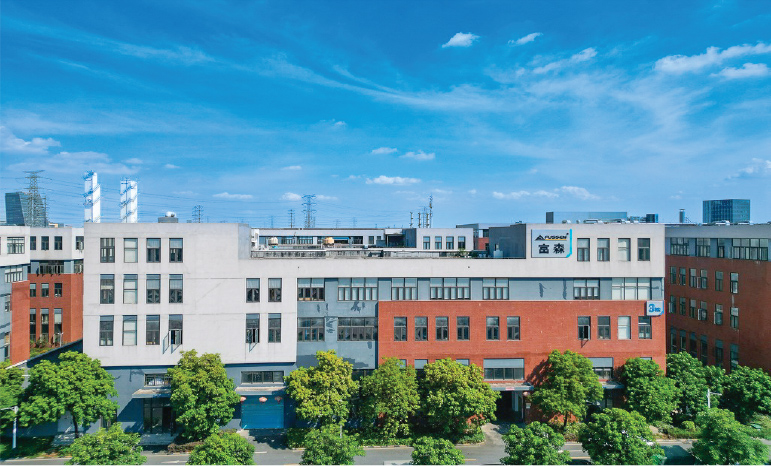
Construction applications can range from routine machinery washing to demanding surface preparation, so equipment requirements can vary considerably. Fussen manufactures pressure washing systems covering electric, gasoline, and diesel configurations, with pressure options ranging from standard industrial cleaning equipment to ultra-high-pressure systems reaching 2800 bar.
With more than 20 years of experience in high-pressure plunger pump technology, Fussen develops pumps using ceramic or alloy-steel plungers, precision machining, and sealing systems for different operating conditions. The company operates under the ISO 9001 quality management system, its products are CE certified, and customized configurations are available for applications requiring specific pressure, flow, materials, or operating conditions.
Not sure which pressure and flow configuration fits your application? Send Fussen your cleaning application, required pressure and flow (if known), available power source, working environment, and expected operating hours.
Our team can help you compare suitable electric, gasoline, or diesel configurations and select a pressure washer matched to your construction requirements.
Tell us about your construction cleaning application and get a recommended pressure washer configuration.

 English
  Spanish
  French
  Russian
  Japanese
  Portuguese
  Arabic
  Korean