
Una hidrolimpiadora de ultraalta presión es un sistema industrial de chorro de agua que opera a presiones que suelen ir desde los 1000 bar (15 000 PSI) hasta los 2500-3000 bar en aplicaciones especializadas. A estos niveles de presión, el agua ya no se utiliza solo para la limpieza de superficies, sino que se convierte en una herramienta de eliminación de precisión capaz de cortar, decapar y desintegrar materiales adheridos, como revestimientos, corrosión, depósitos endurecidos y hormigón.
Las hidrolimpiadoras estándar (generalmente por debajo de 500 bares) se basan principalmente en la fuerza de impacto y el caudal para eliminar la contaminación suelta. Los sistemas de ultraalta presión, en cambio, utilizan una velocidad de chorro extrema para generar fuerzas de corte que rompen la unión entre el sustrato y el contaminante. Esto permite que las hidrolimpiadoras realicen tareas que las hidrolimpiadoras convencionales no pueden, como la hidrodemolición, la eliminación de revestimientos sin abrasivos y la limpieza interna de tuberías.
Los sistemas de ultraalta presión utilizan bombas especializadas, mangueras reforzadas, boquillas de precisión y estrictos controles de seguridad. La densidad energética a estas presiones presenta un grave riesgo si se utiliza incorrectamente, lo que requiere operadores capacitados, procedimientos regulados e infraestructura de calidad industrial. Por esta razón, las hidrolimpiadoras de ultraalta presión están diseñadas exclusivamente para aplicaciones profesionales en sectores como la construcción, la marina, la petroquímica, la generación de energía y la industria pesada.
Las hidrolimpiadoras se seleccionan no solo por su presión máxima, sino también por el tipo de eliminación de material o tratamiento de superficie requerido. Las diferentes bandas de presión ofrecen capacidades industriales muy diversas.
Sistemas que operan en el rango de 1.000 a 1.500 bares Se utilizan comúnmente para la limpieza industrial pesada y la preparación de superficies donde el equipo convencional de alta presión es insuficiente pero aún así se requiere una eliminación controlada.
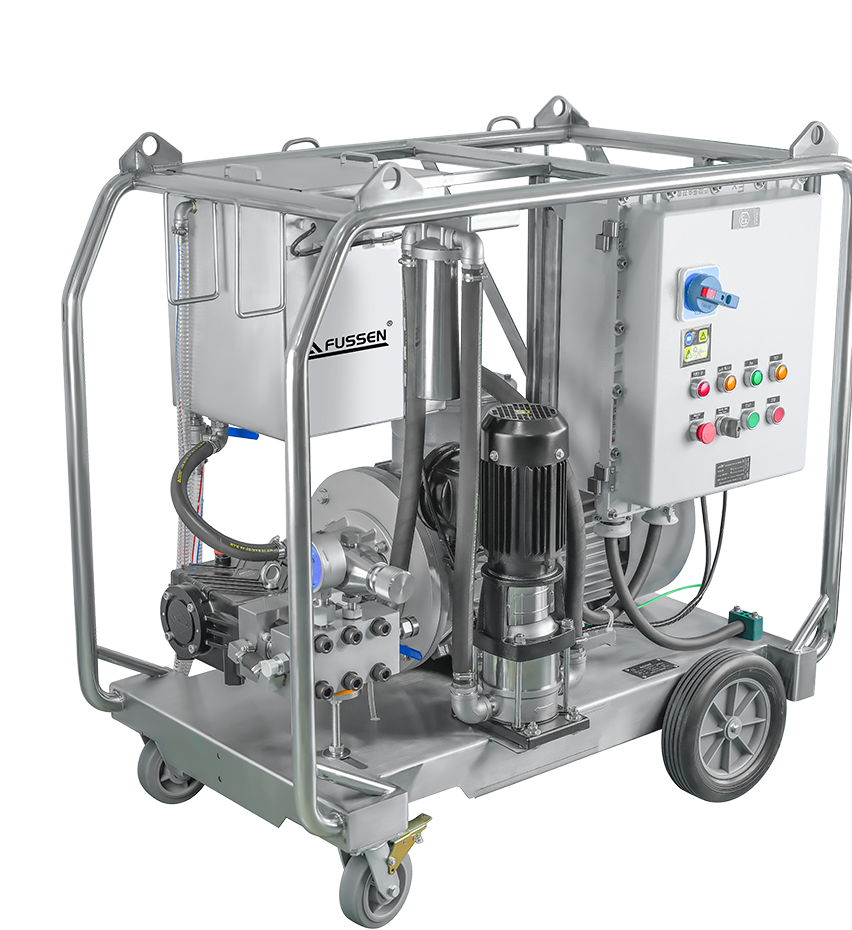
Las aplicaciones típicas incluyen:
Este rango de presión ofrece un fuerte equilibrio entre potencia de remoción y capacidad de control, lo que lo hace adecuado para operaciones de mantenimiento donde se debe preservar la integridad del sustrato.
En 1.500–2.000 bares, El chorro de agua va más allá de la limpieza, abarcando la separación de materiales y el tratamiento agresivo de superficies. La velocidad del chorro a este nivel permite una ruptura eficaz de la adhesión entre recubrimientos, capas de corrosión y materiales base.
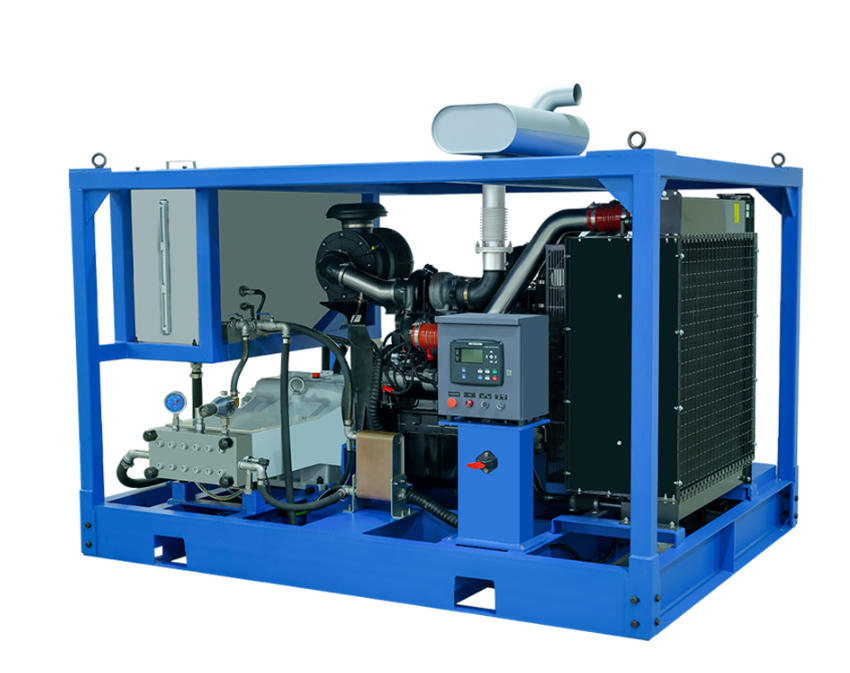
Los usos comunes incluyen:
Esta gama es ampliamente adoptada en mantenimiento marino, petroquímico y de infraestructura debido a su capacidad para eliminar materiales rebeldes sin medios abrasivos.
Sistemas que funcionan a 2.000–3.000 bar Se utilizan para tareas especializadas de construcción y demolición. A estas presiones, el agua se convierte en una herramienta de precisión capaz de eliminar material de forma controlada.

Las aplicaciones típicas incluyen:
Debido a la energía extrema involucrada, estos sistemas requieren protocolos de seguridad estrictos, accesorios especializados y operadores capacitados, y generalmente se implementan en proyectos de construcción e infraestructura a gran escala.
Mientras que la presión determina la capacidad de corte y penetración, el caudal controla la productividad y la velocidad de remoción. A presiones ultraaltas, un caudal insuficiente puede provocar un avance lento, una limpieza irregular o un tiempo de permanencia excesivo en un solo punto.
Los sistemas de ultra alta presión efectivos equilibran:
En aplicaciones industriales, seleccionar la presión sin tener en cuenta el caudal a menudo conduce a sistemas de bajo rendimiento o a tiempos de funcionamiento excesivos, lo que aumenta los costos laborales y operativos.
El chorro de agua a ultraalta presión se utiliza ampliamente en la preparación de superficies, donde se requiere la eliminación controlada de material sin introducir abrasivos ni contaminación secundaria. En comparación con el chorreado o los métodos mecánicos, los sistemas UHP ofrecen mayor precisión, menos residuos y una mejor integridad de la superficie.
Las hidrolimpiadoras de ultraalta presión eliminan pintura, epoxi y recubrimientos protectores rompiendo la unión adhesiva entre el recubrimiento y el sustrato. Esto permite una limpieza completa sin incrustar partículas abrasivas en la superficie, lo que las hace especialmente adecuadas para:
El proceso preserva el material base al tiempo que produce una superficie limpia, lista para inspección o repintado.
Para el acero corroído, los chorros de ultraalta presión penetran bajo las capas de corrosión y eliminan el óxido de la superficie sin necesidad de rectificado ni aplicación de calor. Este método se aplica comúnmente en:
La limpieza UHP elimina la corrosión y minimiza la pérdida de material, lo que ayuda a prolongar la vida útil de los activos.
El chorro de agua a ultraalta presión permite crear un perfil superficial controlado que mejora la adhesión del recubrimiento. A diferencia del chorro abrasivo, el perfil resultante es uniforme y libre de partículas incrustadas, lo que reduce el riesgo de fallos y contaminación del recubrimiento.
Esto hace que los sistemas UHP sean adecuados para:
Para aplicaciones de preparación de superficies, Fussen ofrece soluciones de presión ultra alta diseñadas para lograr un rendimiento estable, durabilidad y funcionamiento industrial, que incluyen:
Estos sistemas se pueden configurar con boquillas apropiadas, regulación de presión y características de seguridad para adaptarse a los requisitos específicos de preparación de superficies.
La hidrodemolición utiliza chorros de agua a ultraalta presión para eliminar el hormigón deteriorado de forma controlada y selectiva, preservando la integridad estructural y preparando las superficies para su reparación o refuerzo. Se utiliza ampliamente en proyectos de ingeniería civil donde la precisión y la protección del sustrato son cruciales.
La hidrodemolición a presión ultraalta elimina el hormigón debilitado o dañado, dejando intacto el refuerzo de acero incrustado. A diferencia de la demolición mecánica, el proceso no genera vibraciones ni microfisuras, lo que reduce el riesgo de daños estructurales secundarios. Esto hace que la hidrodemolición sea especialmente adecuada para proyectos de reparación que requieren un estricto control de calidad.
La hidrodemolición se utiliza comúnmente en:
El método permite la eliminación específica del hormigón dañado manteniendo al mismo tiempo la resistencia de unión entre los materiales de reparación existentes y los nuevos.
En comparación con los martillos neumáticos y los equipos de fresado, la hidrodemolición ofrece varias ventajas operativas:
Estos beneficios contribuyen a prolongar la vida útil de las reparaciones y a reducir las repeticiones de trabajos en proyectos de infraestructura críticos.
Para aplicaciones de hidrodemolición y remoción de hormigón pesado, Fussen ofrece sistemas de presión ultra alta diseñados para estabilidad de presión extrema, operación continua y movilidad en el sitio, que incluyen:
Estos sistemas se pueden configurar con lanzas, boquillas, controles de presión y características de seguridad adecuadas para cumplir con los requisitos de hidrodemolición específicos del proyecto.
El chorro de agua a presión ultraalta se utiliza ampliamente en la construcción naval y el mantenimiento marino. Gracias a su eficacia para eliminar recubrimientos, corrosión y crecimiento marino sin necesidad de medios abrasivos, el método permite una respuesta más rápida, reduce la manipulación de residuos y mejora la integridad de la superficie en entornos marinos hostiles.
Las hidrolimpiadoras de ultraalta presión se utilizan para eliminar recubrimientos antiincrustantes, pinturas marinas y crecimiento biológico de los cascos de las embarcaciones. El chorro de agua de alta energía rompe la unión entre el recubrimiento y la superficie de acero sin incrustar partículas abrasivas, lo que las hace adecuadas para:
Este enfoque reduce la contaminación secundaria y simplifica la recolección de residuos en comparación con los métodos de voladura.
Dentro de los tanques de lastre y las bodegas de carga, los sistemas de ultraalta presión proporcionan una limpieza eficaz en espacios reducidos y propensos a la corrosión. La limpieza a presión ultraalta (UHP) elimina incrustaciones, óxido y residuos de recubrimiento, a la vez que evita las chispas y el calor, lo cual es fundamental para la seguridad y el cumplimiento normativo en entornos marinos cerrados.
Las hidrolavadoras también se utilizan para el mantenimiento de plataformas marinas, muelles y estructuras de acero expuestas constantemente al agua salada y a la intemperie. Este método permite la eliminación precisa de la corrosión y la preparación de superficies sin dañar los componentes estructurales, lo que contribuye a la protección de los activos a largo plazo.
Para aplicaciones marinas y offshore, Fussen ofrece soluciones de ultra alta presión diseñadas para soportar entornos corrosivos y funcionamiento continuo, que incluyen:
Estos sistemas se pueden configurar con accesorios de calidad marina, boquillas apropiadas y controles de seguridad para cumplir con los requisitos de construcción naval y mantenimiento en alta mar.
El chorro de agua a ultraalta presión se aplica ampliamente en plantas petroquímicas y refinerías, donde la acumulación de suciedad, los residuos endurecidos y las estrictas normas de seguridad hacen que los métodos de limpieza convencionales sean poco prácticos o riesgosos. Los sistemas UHP proporcionan una eliminación controlada del material sin chispas y con mínima contaminación secundaria.
Las hidrolimpiadoras de ultraalta presión se utilizan para eliminar incrustaciones, depósitos y residuos de proceso de intercambiadores de calor, reactores y recipientes a presión. Los chorros de agua de alta energía penetran en conductos estrechos y superficies internas, restaurando la eficiencia de la transferencia de calor sin abrasión mecánica ni exposición a productos químicos.
Este enfoque permite una respuesta más rápida durante las paradas y reduce el riesgo de daños a los equipos de proceso críticos.
En operaciones de refinería y petroquímica, la inyección UHP es eficaz para eliminar:
Estos materiales suelen resistir la limpieza química y el raspado mecánico. El chorro de agua a ultraalta presión rompe su adherencia a las superficies metálicas, evitando al mismo tiempo el estrés térmico y los riesgos de ignición.
La limpieza a ultra alta presión es adecuada para aplicaciones reguladas por ATEX y limpieza de áreas peligrosas Porque evita chispas, llamas abiertas y polvo abrasivo. Los sistemas pueden configurarse para operación remota, lo que permite realizar la limpieza a una distancia segura, manteniendo un control preciso de la presión y el caudal.
Para aplicaciones petroquímicas y de refinería, Fussen ofrece soluciones de ultra alta presión diseñadas para operación continua, alta confiabilidad y entornos centrados en el cumplimiento, que incluyen:
Estos sistemas se pueden integrar con protocolos de seguridad de planta, controles automatizados y boquillas especializadas para cumplir con los requisitos operativos específicos de la refinería.
El chorro de agua a ultraalta presión se utiliza ampliamente para la limpieza interna de tuberías, tubos e intercambiadores de calor, donde la suciedad, las incrustaciones y los bloqueos restringen el flujo y reducen la eficiencia operativa. Los sistemas UHP proporcionan una limpieza interna eficaz sin desmontar equipos ni introducir productos químicos.
Los chorros de ultraalta presión eliminan incrustaciones minerales, depósitos endurecidos y residuos de proceso de las paredes internas de tuberías y tubos. El chorro de agua de alta energía descompone los depósitos de la superficie de la tubería y los expulsa del sistema, restaurando la capacidad de flujo y mejorando el rendimiento del sistema.
Este método se aplica comúnmente en:
Para aplicaciones de limpieza interna, los sistemas de ultraalta presión suelen combinarse con boquillas rotativas o multichorro. Estas boquillas giran bajo la presión del agua, dirigiendo los chorros uniformemente alrededor de la circunferencia interna de la tubería o tubo. Esto garantiza una limpieza uniforme y reduce el riesgo de erosión localizada o eliminación desigual de material.
Se pueden seleccionar diferentes diseños de boquillas según el diámetro de la tubería, el tipo de depósito y la intensidad de limpieza requerida.
En comparación con la limpieza química, el chorro de agua a presión ultraalta ofrece varias ventajas operativas:
Estos factores hacen que la limpieza UHP sea especialmente adecuada para instalaciones que buscan minimizar el tiempo de inactividad, el impacto ambiental y la complejidad regulatoria.
Para tuberías, tubos y limpieza del intercambiador de calor, Fussen ofrece soluciones de ultra alta presión diseñadas para un control de precisión y una eficiencia de limpieza interna, que incluyen:
Estos sistemas se pueden configurar para cumplir con diámetros de tuberías, materiales y restricciones operativas específicos, manteniendo al mismo tiempo un rendimiento de limpieza seguro y constante.
El chorro de agua a ultraalta presión se utiliza ampliamente para la limpieza de maquinaria pesada y equipos industriales donde la contaminación es espesa, endurecida y difícil de eliminar con métodos convencionales. Los sistemas UHP permiten una limpieza eficaz, a la vez que reducen el tiempo de inactividad y evitan el desmontaje de equipos.
En operaciones de minería y construcción, se utilizan hidrolavadoras de ultraalta presión para eliminar lodo compactado, grasa, incrustaciones y acumulaciones de material en equipos como excavadoras, cargadoras, trituradoras y cintas transportadoras. El chorro de agua de alta energía penetra la contaminación densa sin dañar los componentes estructurales, lo que permite ciclos de mantenimiento más rápidos y una mayor disponibilidad de los equipos.
Los sistemas de ultra alta presión se aplican comúnmente en plantas de cemento, acerías e instalaciones de generación de energía para limpiar:
El chorro de UHP elimina los depósitos endurecidos que de otro modo requerirían un desbaste mecánico o un tratamiento químico, lo que mejora la seguridad y reduce la intensidad de la mano de obra.
Una de las principales ventajas de la limpieza a ultraalta presión es la capacidad de eliminar depósitos difíciles in situ, eliminando la necesidad de desmontar equipos grandes o complejos. Esto reduce el tiempo de inactividad, minimiza la exposición a espacios reducidos y disminuye los costos generales de mantenimiento, manteniendo resultados de limpieza eficaces.
Para la limpieza de maquinaria pesada y equipos industriales, Fussen ofrece soluciones de ultra alta presión diseñadas para movilidad, durabilidad y eficiencia en el sitio, que incluyen:
Estos sistemas se pueden configurar para adaptarse a tipos de equipos específicos, niveles de contaminación y condiciones del sitio.
El chorro de agua a ultraalta presión se utiliza cada vez más en el mantenimiento de infraestructuras públicas, donde se requiere durabilidad, precisión y mínimas interrupciones. Los sistemas UHP facilitan la eliminación eficaz de materiales desgastados, a la vez que preservan las estructuras subyacentes y reducen el impacto ambiental.
Las hidrolimpiadoras de ultraalta presión se utilizan en tableros de puentes, revestimientos de túneles y estructuras de soporte de hormigón para eliminar material deteriorado, corrosión y contaminación superficial. El proceso de eliminación controlada evita la vibración y la microfisura, lo que lo hace ideal para infraestructuras antiguas donde es necesario preservar la integridad estructural durante las tareas de mantenimiento y reparación.
Los sistemas UHP se utilizan para eliminar marcas viales, capas termoplásticas y revestimientos superficiales sin dañar los sustratos de asfalto ni hormigón. Este método permite una eliminación precisa con un desgaste mínimo de la superficie, lo que facilita proyectos de repavimentación, remarcación y gestión del tráfico donde la velocidad y la calidad de la superficie son cruciales.
En entornos urbanos, el chorro de agua a presión ultraalta se utiliza para renovar activos públicos como:
El proceso ofrece menos polvo, menos ruido en comparación con los métodos mecánicos y una mayor seguridad en áreas densamente pobladas.
Para aplicaciones de infraestructura y obras públicas, Fussen ofrece soluciones de ultra alta presión diseñadas para confiabilidad municipal, movilidad y operación continua, que incluyen:
Estos sistemas se pueden configurar para cumplir con los estándares municipales, las especificaciones específicas del proyecto y los requisitos de seguridad operativa.
El chorro de agua a ultraalta presión y el granallado abrasivo son métodos de tratamiento de superficies consolidados, pero difieren significativamente en la eliminación del material, la gestión de residuos y los costos a largo plazo. La elección entre ambos depende del estado de la superficie, las limitaciones ambientales y los objetivos del proyecto.
El chorro de agua a ultraalta presión elimina recubrimientos, corrosión y hormigón al romper la unión entre el material no deseado y el sustrato. Dado que el proceso no introduce abrasivos, preserva el material base y evita la incrustación de partículas extrañas en la superficie. Esto es especialmente importante para estructuras de acero, hormigón armado y componentes críticos donde la integridad de la superficie afecta el rendimiento a largo plazo.
El chorreado abrasivo, en cambio, se basa en el impacto mecánico. Si bien es eficaz, puede:
Para aplicaciones donde se requiere conservación de material y eliminación controlada, la inyección a presión ultra alta ofrece una clara ventaja técnica.
El chorro de agua a ultraalta presión genera residuos principalmente en forma de agua y material extraíble, que a menudo pueden filtrarse, contenerse y tratarse in situ. No se requieren medios abrasivos para recuperar, reciclar ni eliminar, lo que reduce significativamente el volumen de residuos y la complejidad de su manipulación.
El chorreado abrasivo produce grandes cantidades de medios usados mezclados con recubrimientos y contaminantes eliminados. Estos residuos suelen requerir:
En áreas ambientalmente sensibles o sitios industriales regulados, el chorro de agua simplifica el cumplimiento y reduce el impacto ambiental.
Si bien los sistemas de ultraalta presión pueden tener costos iniciales de equipo más altos, a menudo ofrecen un menor costo total de propiedad a largo plazo. Los factores que contribuyen a esto incluyen:
El granallado abrasivo puede parecer rentable para proyectos a corto plazo o de pequeña escala, pero el consumo continuo de medios, el manejo de desechos y la remediación de superficies pueden aumentar los gastos a largo plazo.
En aplicaciones industriales y de infraestructura donde la eficiencia, el control ambiental y la calidad de la superficie son fundamentales, el chorro de agua a presión ultraalta se selecciona cada vez más como el método preferido.
Tanto el chorro de agua a ultraalta presión como la limpieza química se utilizan para eliminar incrustaciones y depósitos difíciles en entornos industriales. Sin embargo, difieren significativamente en cuanto a seguridad, impacto ambiental y control operativo, lo que afecta directamente la selección del método en industrias reguladas.
El chorro de agua a ultraalta presión se basa en energía mecánica en lugar de una reacción química. Si bien se requieren procedimientos de seguridad estrictos y operadores capacitados debido a la alta energía involucrada, el proceso elimina los riesgos asociados con:
En muchas jurisdicciones, la limpieza ultrarrápida simplifica el cumplimiento de las normativas de salud y seguridad ocupacional, ya que evita el almacenamiento, el transporte y los controles de exposición a productos químicos. La limpieza química, en cambio, suele requerir una amplia tramitación de permisos, medidas de contención y procedimientos de manipulación especializados.
La limpieza a ultraalta presión produce aguas residuales con material eliminado, que normalmente se pueden filtrar, neutralizar y tratar mediante procesos industriales estándar. No hay productos químicos usados que neutralizar ni eliminar, lo que reduce la carga ambiental y la complejidad de la eliminación.
La limpieza química genera residuos líquidos que pueden contener ácidos, disolventes o inhibidores. Estos residuos suelen requerir:
Para las instalaciones que buscan reducir el impacto ambiental y la complejidad del tratamiento de aguas residuales, la inyección a presión ultraalta suele ser la opción preferida.
La limpieza química sigue siendo apropiada en determinadas situaciones donde:
En la práctica, muchas instalaciones adoptan un enfoque híbrido, utilizando chorro de agua a presión ultra alta para la eliminación de material a granel y limpieza química para el tratamiento final de residuos cuando sea necesario.
La elección entre sistemas de ultra alta presión eléctricos y diésel Depende del entorno de instalación, la disponibilidad de energía, los requisitos de movilidad y las expectativas del ciclo de trabajo. Ambas opciones se utilizan ampliamente en aplicaciones industriales, pero cada una satisface diferentes necesidades operativas.
Sistemas eléctricos de ultra alta presión Se suelen seleccionar para instalaciones fijas en refinerías, centrales eléctricas, plantas de fabricación y astilleros con infraestructura eléctrica confiable. Estos sistemas ofrecen una salida estable, niveles de ruido más bajos y cero emisiones in situ, lo que los hace adecuados para entornos interiores o con ambiente controlado.
Las unidades UHP accionadas eléctricamente a menudo se integran en estaciones de limpieza permanentes o sistemas de mantenimiento centralizados, donde se requiere un suministro de energía constante y un funcionamiento continuo.
Sistemas diésel de ultra alta presión Se prefieren para aplicaciones móviles, exteriores o remotas donde la energía eléctrica no está disponible o es poco práctica. Los casos de uso típicos incluyen proyectos de infraestructura, mantenimiento marino, minas y operaciones de reparación de emergencia.
Los sistemas diésel proporcionan energía autónoma, lo que permite un despliegue rápido y una operación flexible en múltiples ubicaciones. Las configuraciones montadas en remolques y camiones se utilizan comúnmente para respaldar proyectos a gran escala o geográficamente dispersos.
Tanto los sistemas eléctricos como los diésel pueden diseñarse para un funcionamiento continuo, pero la selección de la fuente de alimentación afecta el diseño y las características operativas del sistema. Los sistemas eléctricos se benefician de un suministro de energía constante y un mantenimiento simplificado, mientras que los diésel ofrecen independencia operativa a costa de la gestión del combustible y las emisiones.
Cuando especificando un sistema de ultra alta presión, evaluar la disponibilidad de energía, la duración de funcionamiento, las limitaciones ambientales y el costo total de propiedad es esencial para seleccionar la configuración de unidad más adecuada.
La ultraalta presión se refiere generalmente a sistemas de chorro de agua que operan a 1000 bar (15 000 PSI) o más. Muchas aplicaciones industriales utilizan sistemas en el rango de 1500 a 3000 bar, según la tarea, el tipo de material y la profundidad de remoción requerida.
En muchas aplicaciones, el chorro de agua a ultraalta presión puede sustituir al arenado, especialmente para la eliminación de recubrimientos, la limpieza anticorrosiva y la preparación de superficies. La limpieza UHP evita el uso de abrasivos, reduce los residuos y preserva el material base. Sin embargo, el chorro abrasivo también puede utilizarse cuando se requieren perfiles de rugosidad superficial específicos o una velocidad de producción muy alta.
Cuando se especifica y opera correctamente, el chorro de agua a presión ultraalta es seguro tanto para acero como para concreto. Presión, tipo de boquilla, La distancia de separación y el caudal deben ajustarse al material y al estado de la superficie. Una configuración incorrecta o una operación sin la capacitación adecuada pueden causar daños, por lo que los sistemas UHP solo deben ser utilizados por profesionales capacitados.
Los sistemas industriales de ultraalta presión están diseñados para un funcionamiento continuo, a menudo durante periodos prolongados durante paradas de mantenimiento o proyectos de infraestructura. La autonomía real depende del diseño de la bomba, la refrigeración, la lubricación y los programas de mantenimiento. Los sistemas bien diseñados pueden funcionar de forma fiable durante turnos de trabajo completos.
Las bombas de ultraalta presión requieren una inspección periódica de sellos, válvulas y sistemas de lubricación. Los intervalos de mantenimiento dependen de la presión de operación, la calidad del agua y el ciclo de trabajo. Usar agua limpia y filtrada, y seguir las instrucciones de servicio del fabricante, es esencial para mantener la vida útil y el rendimiento de la bomba.
Füssen Desarrolla sistemas de hidrolimpiadoras de ultraalta presión específicamente para aplicaciones industriales pesadas, de infraestructura y de procesos críticos, donde la estabilidad, el control y la fiabilidad a largo plazo son fundamentales. El diseño del sistema se centra en la robusta ingeniería de bombas de émbolo, la precisa regulación de la presión y configuraciones capaces de mantener un funcionamiento continuo bajo cargas extremas.
En lugar de ofrecer máquinas genéricas, Fussen ofrece soluciones UHP adaptadas a cada aplicación, desde unidades móviles diésel para operaciones de campo hasta estaciones de bombeo estacionarias de ultraalta presión integradas en plantas industriales. Cada sistema se configura según el rango de presión, los requisitos de caudal, el ciclo de trabajo y el entorno operativo para garantizar un rendimiento constante y una operación segura.
Al combinar la durabilidad de la bomba, la estabilidad de la presión y el diseño flexible del sistema, Fussen apoya a las industrias donde el chorro de agua a presión ultra alta se utiliza no solo como una herramienta de limpieza, sino como una tecnología controlada de eliminación y mantenimiento de material. Habla con nosotros ahora y vea cómo podemos ayudarle en su próximo proyecto.

 English
  Spanish
  Russian
  Korean
  Japanese
  Portuguese
  Arabic
[…] La hidrolimpiadora de alta presión de 2800 bar pertenece a la categoría de equipos de chorro de agua a presión ultraalta. A diferencia de las máquinas de limpieza de astilleros estándar, estos sistemas están diseñados para la eliminación de material, no […]
[…] Ultra-High Pressure Systems (1000 bar and above)Typically use specialized straight jet, rotating, or surface preparation nozzles for paint removal, heavy-duty descaling, and shipyard applications. […]