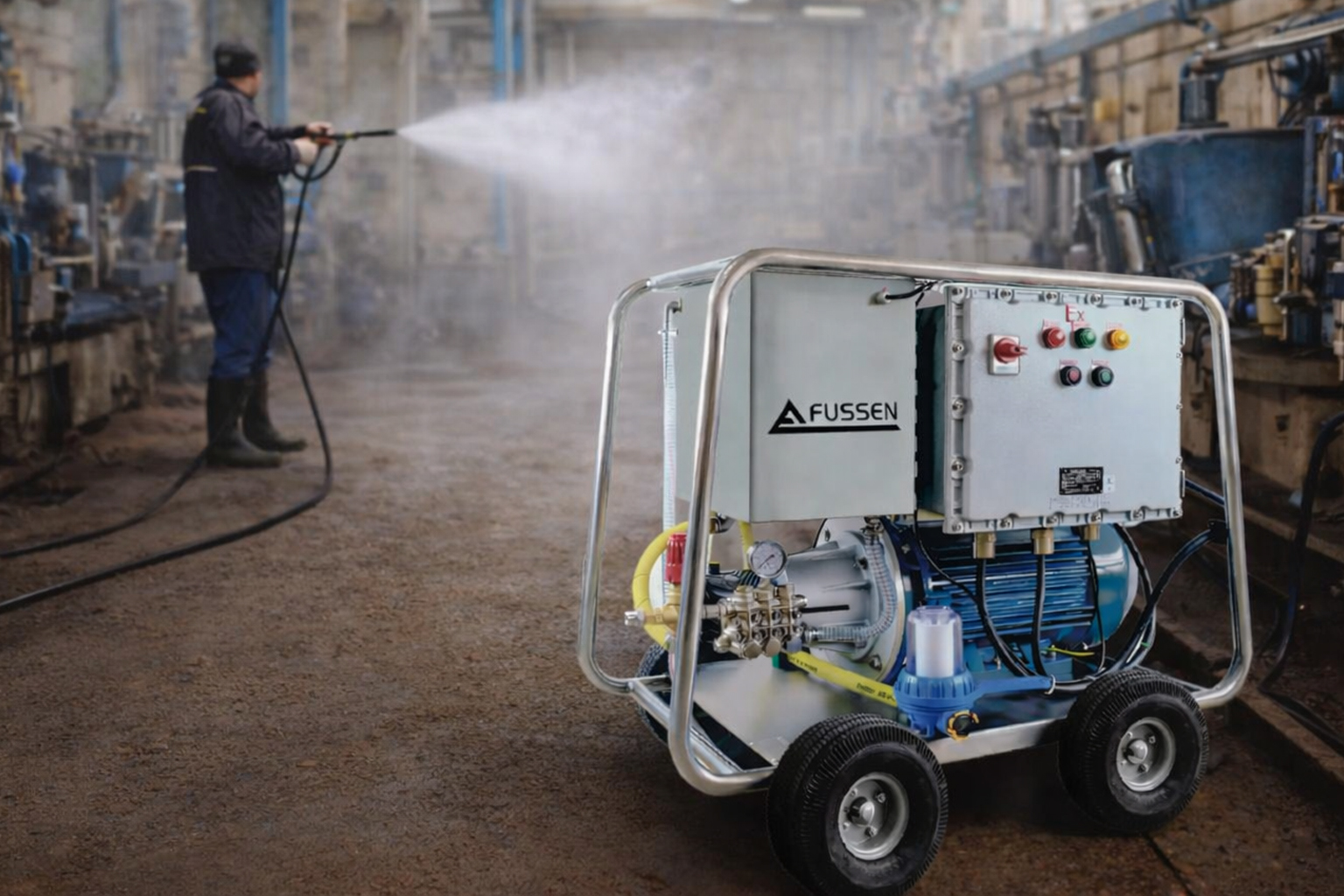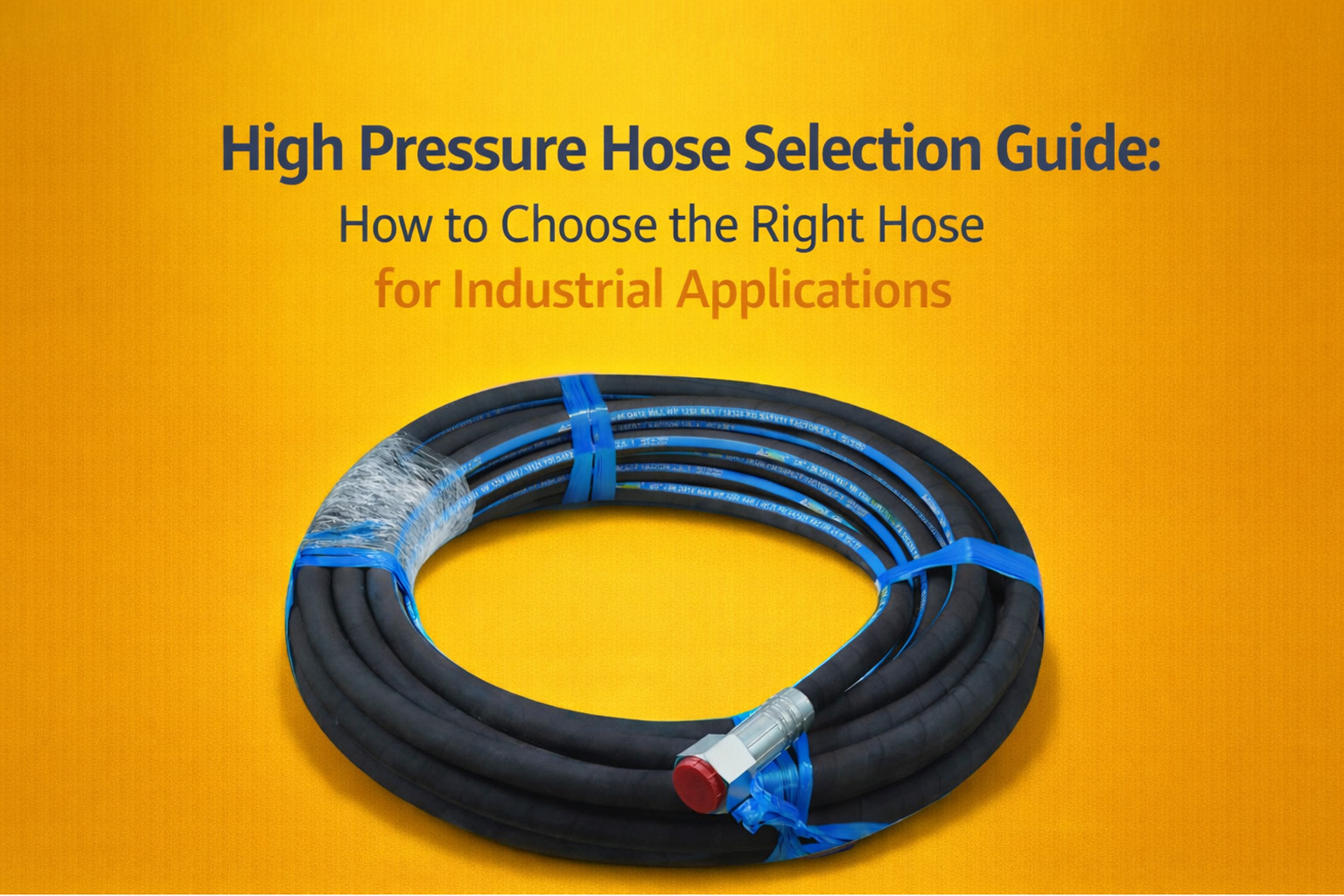

A high pressure washer is a cleaning machine designed to remove dirt, grime, oil, and other stubborn contaminants by forcing water out at significantly higher pressure than a standard water supply. Instead of relying on water volume alone, it uses a pump to compress incoming water and release it through a narrow nozzle, creating a powerful cleaning jet.
High pressure washers are widely used across residential, commercial, and industrial applications, including vehicle washing, equipment maintenance, road and pavement cleaning, construction site wash-downs, and industrial surface preparation. Depending on their configuration, they can be powered by electric motors or combustion engines and may operate with cold or heated water to suit different cleaning tasks.
A normal garden hose relies mainly on water flow, with very limited pressure—usually insufficient to break the bond between dirt and the surface. In contrast, a high pressure washer combines pressure and flow to deliver concentrated impact energy at the point of contact.
The effectiveness comes from three key factors:
This combination enables high pressure washers to clean faster, use less water overall, and tackle contaminants such as oil stains, mud, algae, and industrial residues that a normal hose simply cannot remove.
The working process begins at the water inlet, where water is supplied either from a mains connection or an onboard water tank. At this stage, the water is at low pressure, similar to a standard household supply. A filter is usually installed at the inlet to prevent debris or particles from entering the system, protecting internal components and ensuring smooth operation.
Once inside the machine, the water is driven into a high pressure pump, which is the core component of the system. The pump uses mechanical force to compress the water, dramatically increasing its pressure. In professional and industrial machines, plunger pumps are commonly used because they can deliver stable pressure and withstand continuous operation. This is where low-pressure water is transformed into high-energy cleaning power.
The pump is powered by either an electric motor or a diesel (or petrol) engine. Electric motors provide quiet, consistent performance and are ideal for indoor or urban environments with reliable power supply. Diesel engines offer greater mobility and higher output, making them suitable for outdoor, remote, or large-scale cleaning tasks. The choice of drive system directly affects performance, duty cycle, and application suitability.
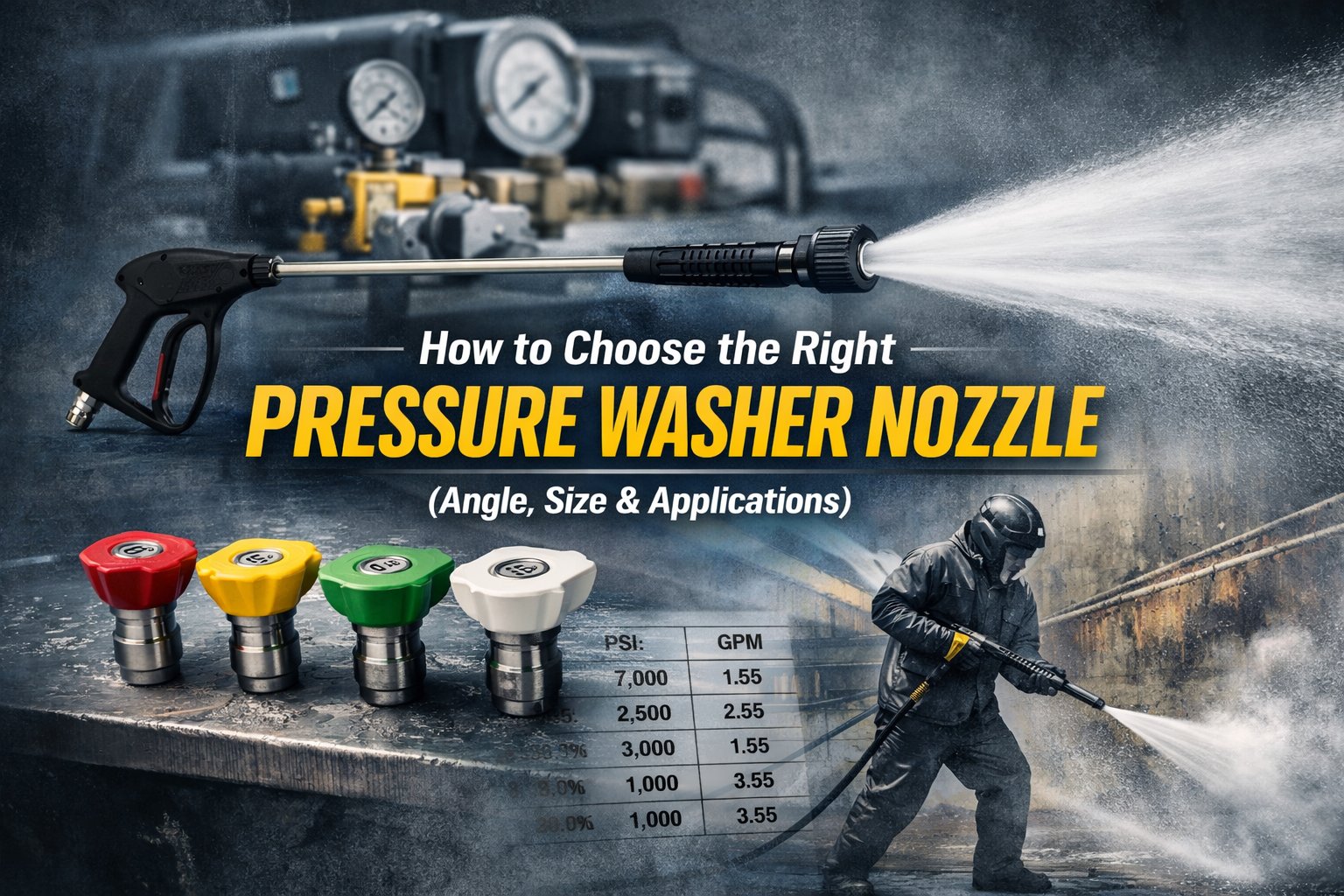
After pressurisation, the water flows through a high-pressure hose and exits via a nozzle. The nozzle’s narrow opening restricts the water flow, converting pressure into a high-velocity jet. Different nozzle angles and designs control spray width and impact force, allowing the operator to balance cleaning power and surface protection. This final stage is where pressure is translated into effective, controlled cleaning action.
The high pressure pump is the heart of a pressure washer, responsible for generating the pressure needed for cleaning. Two common pump types are used:
Axial pumps are typically found in domestic or light-duty machines. They are compact and cost-effective but are designed for intermittent use and shorter service life.
Plunger pumps are used in commercial and industrial pressure washers. They deliver stable pressure, higher flow rates, and continuous-duty performance, making them suitable for long operating hours and demanding applications.
The choice of pump largely determines the washer’s durability and suitability for professional use.
 Explore high pressure plunger pumps from Fussen
The motor or engine provides the mechanical energy required to drive the pump. Electric motors offer smooth, low-noise operation and are ideal for indoor or urban environments. Diesel or petrol engines provide independent power and higher output for outdoor or mobile applications.
Power is transmitted from the motor or engine to the pump via direct drive or belt drive systems, with belt drives often used in industrial machines to reduce vibration and extend pump life.
The unloader valve controls system pressure by redirecting water flow when the trigger gun is released. This prevents pressure buildup, protects the pump, and reduces wear on internal components.
In professional systems, pressure regulation allows operators to adjust output based on the surface being cleaned, improving safety and extending equipment life.
 More pressure rugulating valves from Fussen
 More safety valves from Fussen
High-pressure hoses, spray guns, and nozzles deliver pressurised water to the cleaning surface. Industrial-grade hoses are designed to withstand high pressure and abrasion, while spray guns provide operator control and safety.
Nozzles determine spray angle and impact force, with common types including fan nozzles for general cleaning and rotating nozzles for stubborn dirt. Selecting the correct combination ensures efficient cleaning while protecting surfaces.
 More accessories from Fussen
In industrial cleaning applications, performance is determined not by pressure alone, but by the combined effect of pressure and flow rate. Understanding how these two parameters interact is essential for selecting equipment that delivers effective, efficient, and surface-safe cleaning.
Pressure represents the force at which water impacts the surface. Measured in bar or PSI, it determines the washer’s ability to break the bond between contaminants and the substrate.
In industrial environments, pressure is primarily responsible for:
However, excessive pressure without adequate control can damage coatings, asphalt, concrete surfaces, or joints. For this reason, pressure must be matched carefully to surface type and application, rather than maximised indiscriminately.
Flow rate, measured in litres per minute (L/min) or gallons per minute (GPM), defines the volume of water delivered to the surface. In industrial cleaning, flow rate directly influences:
A higher flow rate allows contaminants to be removed and carried away more effectively, reducing the need for repeated passes and minimising re-deposition of debris.
In professional and municipal cleaning operations, cleaning efficiency is driven by flow rate as much as by pressure. While pressure initiates dirt removal, flow completes the process by transporting debris off the surface.
Industrial systems therefore prioritise:
This approach results in faster cleaning, reduced surface damage, lower operator fatigue, and improved cost efficiency—key reasons why industrial pressure washers are engineered around high-flow plunger pump systems rather than extreme pressure ratings alone.
In industrial cleaning, the choice between cold water and hot water pressure washers is determined by the nature of the contamination and the required cleaning efficiency. While both systems operate on the same hydraulic principles, the introduction of heat significantly changes how contaminants are removed.
Cold water pressure washers rely primarily on mechanical force to remove contaminants. High-pressure, high-velocity water impacts the surface, breaking the bond between dirt and the substrate. This method is effective for removing:
For many industrial wash-down and routine cleaning tasks, cold water systems provide sufficient performance with lower energy consumption and simpler system design.
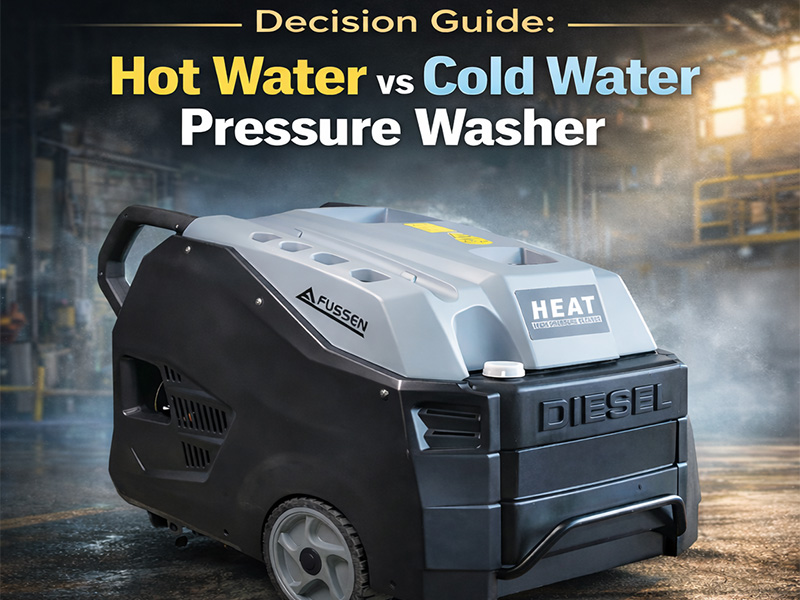
Hot water pressure washers introduce thermal energy into the cleaning process, which significantly enhances the removal of oil-based contaminants. Elevated water temperature reduces the viscosity of oils and grease, allowing them to separate from surfaces more easily.
Key advantages of hot water systems include:
This makes hot water pressure washers particularly effective in applications such as road cleaning, vehicle maintenance, and industrial facilities where oil contamination is common.

Heating systems are typically integrated into industrial pressure washers when cleaning tasks involve persistent or oil-based contamination.
Industrial heating systems are engineered to deliver stable temperature output while maintaining pressure and flow consistency, ensuring reliable performance during continuous operation. The decision to use a hot water system is therefore based on cleaning efficiency, operating cost, and contamination type, rather than pressure alone.
In industrial and municipal cleaning, the choice between electric-driven and diesel-driven high pressure washers directly impacts operational stability, mobility, and long-term performance. While both systems generate pressure through the same pump mechanism, the drive system determines how consistently and where the equipment can operate.
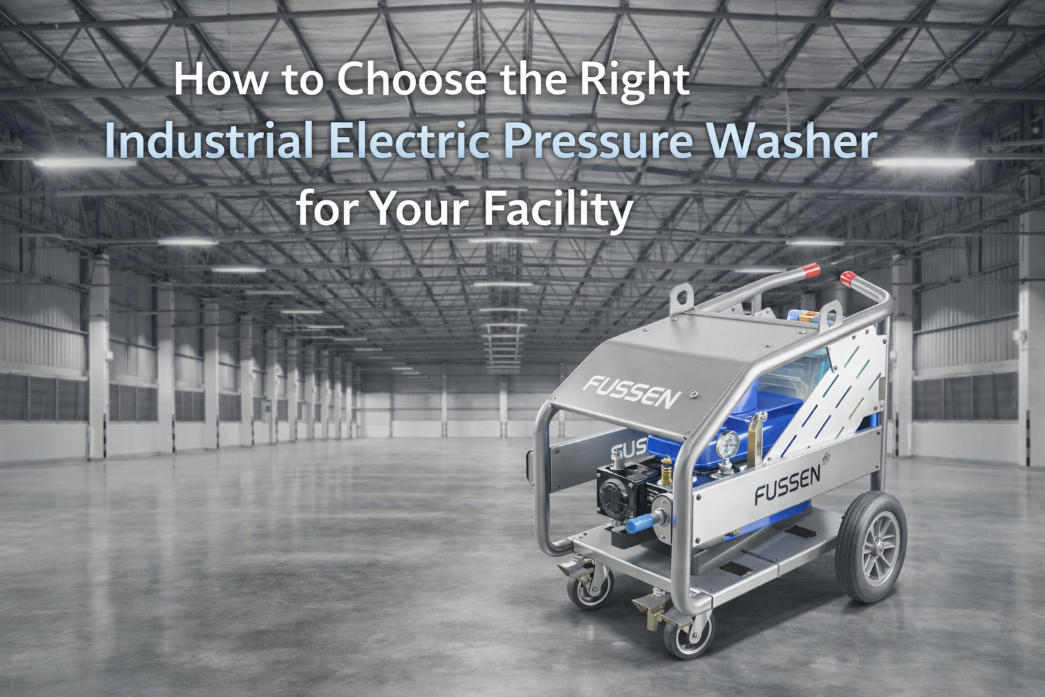
Electric high pressure washers use an industrial electric motor to drive the pump, delivering stable rotational speed and consistent pressure output. These systems are typically connected to three-phase power supplies and are well suited for environments where electrical infrastructure is readily available.
Key characteristics of electric systems include:
Electric pressure washers are commonly used in industrial facilities, workshops, food processing plants, and urban environments where continuous, controlled operation is required.
 View electric pressure washers from Fussen
Diesel pressure washers use a diesel engine to drive the high pressure pump, allowing complete independence from external power sources. This configuration enables operation in remote or outdoor locations where electricity is unavailable.
Key characteristics of diesel systems include:
Diesel-driven units are widely adopted for road cleaning, construction sites, municipal services, and large-scale outdoor cleaning operations.
 View diesel pressure washers from Fussen
For industrial applications, continuous-duty capability is a critical consideration. Electric systems excel in environments requiring long operating hours with consistent output, provided adequate power supply is available. Diesel systems, while requiring more engine maintenance, offer superior flexibility and high-output performance in field operations.
Industrial pressure washers are therefore selected based on:
Matching the drive system to the application ensures optimal performance, reduced downtime, and extended equipment service life.
High pressure washers clean through a combination of mechanical impact, shear force, and controlled water flow. Rather than relying on chemicals alone, the cleaning process uses physics to break, lift, and remove contaminants from surfaces efficiently.
When pressurised water exits the nozzle at high velocity, it strikes the surface with significant impact force. This force disrupts the bond between contaminants—such as dirt, grease, or residues—and the surface material.
At the same time, the angled spray creates a shear effect, which works laterally across the surface. This shearing action is particularly effective at:
Together, impact and shear form the primary mechanism by which high pressure washers loosen contaminants.
Once contaminants are detached, water flow rate becomes critical. Sufficient flow lifts the loosened dirt away from the surface and transports it off the cleaning area. Without adequate flow, contaminants may redeposit, reducing cleaning effectiveness.
In industrial cleaning, this flushing action:
This is why professional systems are designed to balance pressure with high flow output.
Surface cleaners enhance cleaning efficiency by maintaining a consistent cleaning distance and spray angle. Inside the housing, rotating spray arms distribute pressure evenly across a wide area, delivering uniform cleaning results.
Benefits of surface cleaners include:
For roadways, parking areas, and industrial floors, surface cleaners transform high pressure washing into a controlled, high-productivity cleaning process.
In industrial and municipal cleaning operations, safety and surface protection are as important as cleaning performance. Improper use of high pressure equipment can lead to surface damage, premature wear, and safety hazards, making correct pressure control and technique essential.
While higher pressure increases impact force, excessive pressure does not automatically improve cleaning results. Instead, it can cause:
In industrial environments, surface damage not only increases maintenance costs but may also create safety risks. For this reason, pressure should always be set to the lowest effective level required to remove contaminants.
Different surfaces tolerate different pressure levels. Effective and safe cleaning requires matching output to material characteristics:
Industrial pressure washers with adjustable pressure control allow operators to adapt settings based on surface type, ensuring consistent cleaning without compromising surface integrity.
Nozzle selection and operating distance play a critical role in balancing cleaning power and surface protection.
By combining correct nozzle choice with controlled distance and pressure settings, operators can achieve effective cleaning while maintaining a high level of operational safety.
A clear understanding of how a high pressure washer works allows engineers, facility managers, and procurement teams to make informed equipment decisions. Rather than selecting machines based on headline pressure figures alone, evaluating the working principle ensures performance, reliability, and cost-efficiency are aligned with real application needs.
Different cleaning tasks place different demands on a pressure washer. By understanding the relationship between pressure, flow rate, pump design, and drive system, users can select equipment that is properly matched to the application.
For example:
Matching design to application improves cleaning effectiveness while reducing unnecessary stress on equipment.
Selecting equipment without understanding its working principle often results in machines that are either underpowered or unnecessarily oversized.
Understanding how pressure washers generate and apply cleaning power helps users specify machines that deliver optimal performance with efficient resource use.
In industrial environments, reliability is as important as cleaning performance. Understanding the working principle highlights the importance of:
Selecting systems built around proven industrial principles, supported by professional service networks, ensures long-term operational stability and lower total cost of ownership.
Understanding how a high pressure washer works goes beyond basic operation—it provides the foundation for effective equipment selection, safe use, and long-term performance. By recognising how pressure, flow rate, pump design, and drive systems interact, users can achieve better cleaning results while protecting surfaces and equipment.
In industrial and municipal applications, cleaning performance depends not on maximum pressure alone, but on a balanced system design that delivers stable output, sufficient water volume, and continuous-duty reliability. Selecting equipment based on its working principle helps avoid common issues such as surface damage, inefficient cleaning, and premature component failure.
Ultimately, a pressure washer designed around proven hydraulic principles and matched to the real demands of the application will deliver consistent results, lower operating costs, and greater operational reliability over its service life.
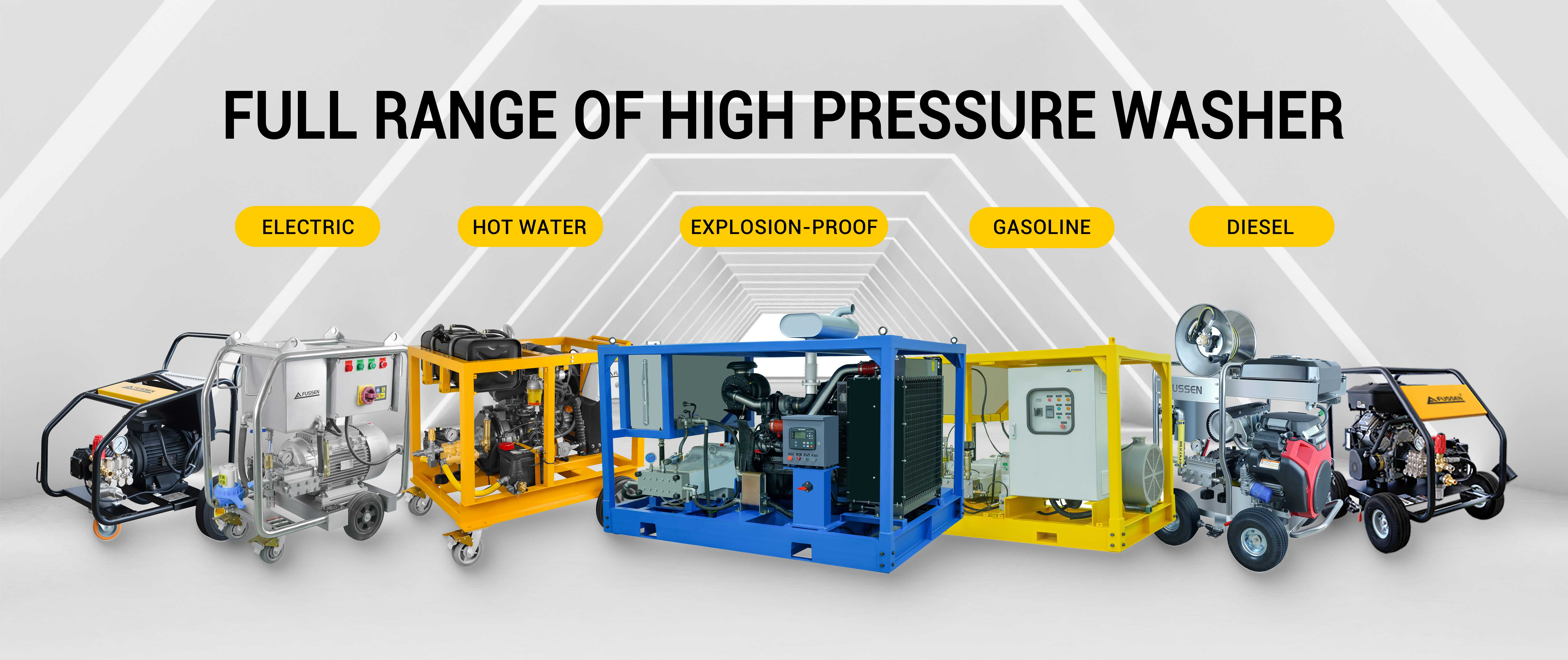
Fussen designs industrial high pressure washer systems based on a deep understanding of pump mechanics, pressure–flow balance, and continuous-duty operation. By focusing on stable output, durable plunger pump design, and application-matched configurations, Fussen systems are widely used in industrial cleaning, municipal maintenance, and professional cleaning operations where reliability and long service life are critical.
Rather than offering one-size-fits-all machines, Fussen supports application-specific system configuration, ensuring pressure, flow rate, power source, and accessories are aligned with real cleaning demands.
Contact Fussen to discuss your cleaning requirements and receive a tailored industrial high pressure washer solution built for continuous-duty performance.

 English
  Spanish
  Russian
  Korean
  Japanese
  Portuguese
  Arabic