
When your high pressure washer loses power, surges, or starts leaking, you don’t need guesswork—you need a method. You’ll look at water supply, pump, valves, seals, and pressure controls in a clear order, ruling out simple issues like clogged filters and kinked hoses before touching the pump. Once you see how each symptom points to a specific fault, you’ll know exactly where to start—and what to avoid doing next.
Check water supply first: fully open tap, unkink hose, and clean or replace clogged inlet filters to fix low or unstable pressure.
Inspect pump for leaks, unusual noise, pulsation, or milky oil; replace worn seals and valves as a kit and reassemble with even torque.
Examine gun, lance, hose, and nozzles for cracks, blockages, kinks, bubbles, or crushed sections; replace damaged components instead of taping or patching.
Diagnose no‑start issues by confirming power or fuel, correct voltage or choke settings, intact cords, and functional emergency stop or interlocks.
After any repair, test with full water flow, proper PPE, short trigger bursts, and recheck for leaks, stable pressure, and secure fittings.
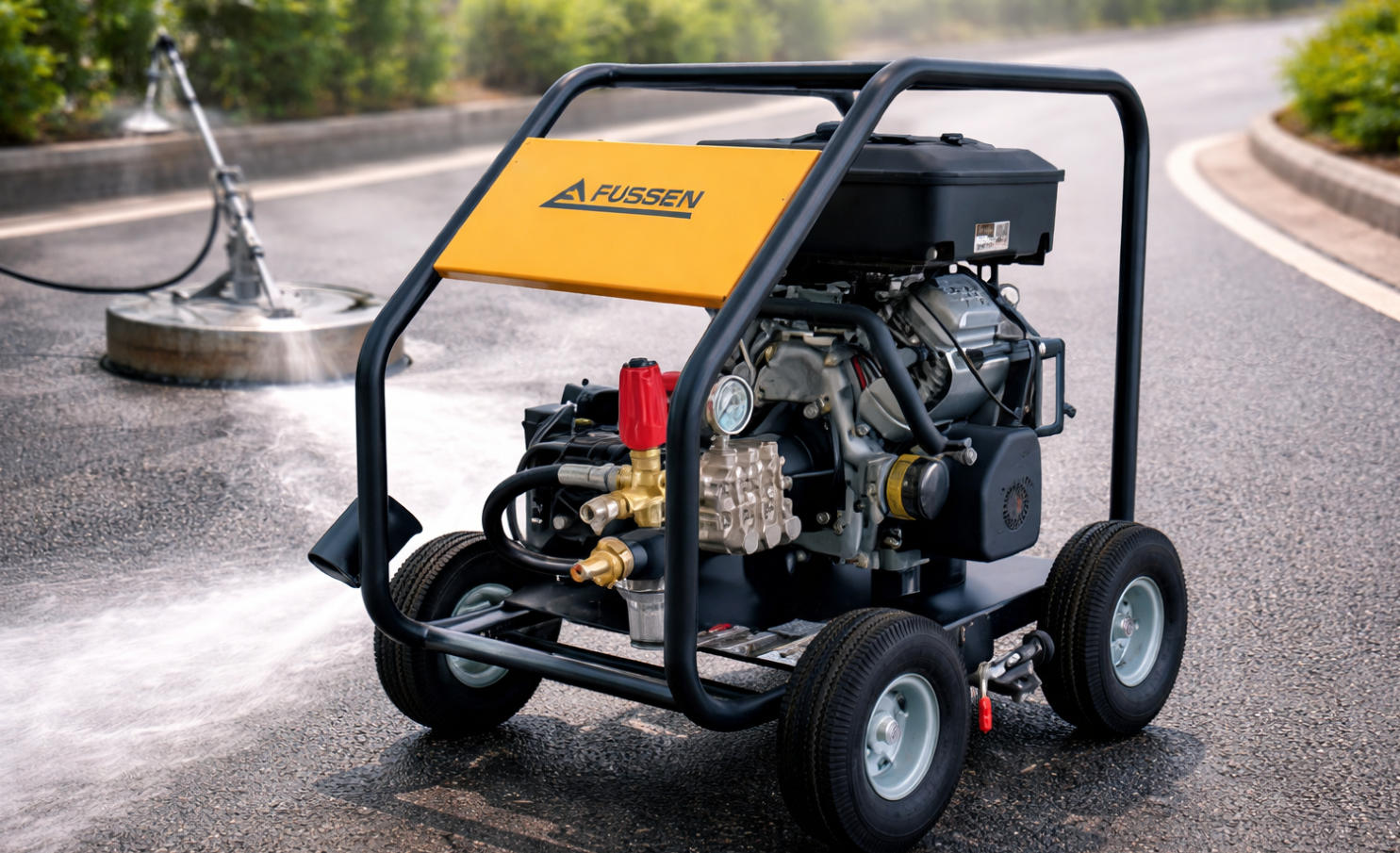
To repair a high pressure washer properly, you first need a clear picture of how water moves through the machine from inlet to nozzle.
You’ll see it starts at the water supply and filtration, then passes through the pump driven by a motor or engine, and finally out through the pressure control and spray system.
Once you understand how each of these parts should work together, it’s much easier to track down the cause of weak pressure, leaks, or unstable spray.
From the moment water enters the machine, your pressure washer depends on a steady, clean supply to work properly and avoid damage.
In real high pressure washer troubleshooting, we start by checking water flow and filtration before anything else.
A clogged inlet filter, dirty tank, or kinked hose will cause a pressure washer low pressure problem, pulsation, or even pump wear.
Confirm the supply tap is fully open and the hose is wide enough and unkinked.
Pull and clean the inlet filter; replace it if the mesh is torn.
If you see a pressure washer water leak at the inlet, inspect O‑rings and hose seals and change them as needed.
For industrial use, FUSSEN always recommends an added inline filter and regular flushing of tanks and lines.
Once you’ve confirmed the water supply is clean and steady, the next place problems usually come from is the “heartof the machine: the pump driven by a motor or engine.
In high pressure washer repair, you first listen and look. If the motor struggles to start, overheats, or trips breakers, stop and check power, extension cord size, and ventilation. On engine units, check fuel, oil level, air filter, and low‑oil shutdown.
For pressure washer pump repair, watch for leaks, unusual noise, or pulsing flow. These often point to worn seals, valves, or a damaged crankcase.
In industrial pressure washer repair, ignoring these signs leads to costly failures. Deal with small oil drips, vibration, or slow startups early, before internal parts are ruined.
Think of the pressure control and spray system as the “steering wheelof your high pressure washer—it decides how much force hits the surface and where it goes.
When pressure drops, surges, or the spray pattern looks weak or uneven, you start pressure washer troubleshooting here.
First, check the lance, trigger gun, and nozzles for leaks, cracks, or blockages.
A worn nozzle can drop pressure dramatically and overload the pump.
Replace damaged parts instead of forcing them.
Next, inspect the unloader/pressure regulator.
If it’s stuck, the machine may cycle, hammer, or stay in bypass.
Adjust it only as recommended and never screw it fully in “for more power.”
Regular cleaning, lubrication, and seal checks are key high pressure washer maintenance and reliable pressure washer repair.
When you use high pressure washers daily, the most common issues you’ll face are low or unstable pressure, water leaks, failure to start, and unusual noise or vibration. Each of these problems points to a specific part of the machine and can usually be narrowed down quickly with a few simple checks.
We’ll walk through what to look for and what you can safely do yourself before calling for service.
Low or unstable pressure is one of the most common issues you’ll face with a high pressure washer, and it almost always comes down to a restriction, a leak, or a supply problem somewhere in the system.
When you feel your pressure washer not working like it should, start with simple pressure washer maintenance: check that the inlet filter’s clean, the water supply is fully open, and the hose isn’t kinked.
Confirm you’re using the correct nozzle size and it’s not worn out or partially blocked.
For industrial pressure washer maintenance, also inspect the unloader valve adjustment and make certain the pump is getting enough clean water.
If pressure still hunts or drops, the unloader or internal pump components may need professional service.
Water leaking from the pump or hose is more than just a nuisance; it’s a clear sign that a seal, connection, or component has started to fail and needs attention. You’ll usually spot it at quick-connects, hose crimps, or around the pump head.
Start by tightening all fittings and checking O‑rings for cuts or flattening. Replace damaged seals immediately. Inspect the hose jacket for bulges, cracks, or pinholes; don’t tape or glue a high‑pressure hose—fit a new one.
On hot water pressure washer repair, look closely at coil connections and high‑temperature seals, which wear faster. As FUSSEN’s pressure washer repair guide experience shows, regular inspections, draining after use, and replacing worn seals early are key pressure washer maintenance tips to prevent bigger failures.
Leaks and worn seals are easy to spot, but a washer that won’t start can stop work altogether and feels more serious. Start with power: confirm the plug, breaker, and emergency stop. Check any phase indicator lamps on industrial units. For electric models, test the start switch and inspect the power cord and plug for heat damage or cuts.
On gasoline or diesel units, confirm fuel, open the fuel valve, and check the choke and throttle positions. Inspect the air filter and clean or replace if it’s clogged. If the engine cranks but won’t fire, look at the spark plug and fuel filter.
On all machines, make sure the water supply is open and the trigger gun isn’t locked, then try again.
Unusual noise or vibration usually means something’s loose, worn, or working under stress, and it’s your warning to stop and look before damage gets worse.
First, shut the washer down. Check all mounting bolts on the pump, motor, and frame; tighten anything that’s backed off. Inspect the high-pressure hose and gun for kinks or heavy pulsation that could point to a blocked nozzle.
Spin the motor and pump pulley (or coupling) by hand with power locked out. Any roughness, play, or scraping suggests worn bearings or misalignment.
Listen at the pump head: a rattling or knocking often means cavitation from a starved water supply or clogged inlet filter. Restore full inlet flow, clean filters, then test again before returning to service.
When you start basic repair on a high pressure washer, you should first rule out simple issues by checking filters, hoses, and fittings for blockages, kinks, or leaks.
From there, you move on to inspecting pump seals and valves, then perform targeted electrical or engine checks based on the symptoms.
After any adjustment or part replacement, you always test the machine under controlled conditions to confirm safe, stable operation.
Start from the outside and work your way in: filters, hoses, and fittings are the first places to check whenever your pressure washer loses power, pulses, or behaves unpredictably.
Shut the unit down, release pressure, and close the water supply.
Check the inlet water filter first. If it’s visibly dirty or blocked with sand, rust, or scale, clean it with clear water and a soft brush, or replace it if the mesh is damaged.
A starved pump never works correctly.
Next, inspect the high‑pressure hose along its full length. Look for cuts, bubbles, kinks, or crushed sections.
Replace any suspect hose; don’t tape or clamp it.
Finally, check all fittings for leaks, cracks, loose unions, or worn O‑rings, and tighten or replace as needed.
Often, once you’ve ruled out filters, hoses, and fittings, the real cause of pressure loss or pulsing sits inside the pump at the seals and valves. Shut the machine down, release pressure at the trigger, and lock out the power source. Never open a pump that’s still under pressure.
Remove the pump head according to the manual. Look for water or oil where it shouldn’t be, swollen or cracked seals, and scoring on plungers. Any damaged seal set should be replaced as a full kit, not one by one.
Next, check inlet and outlet valves. They must move freely and seat cleanly. Replace any valve that’s pitted, stuck, or worn. Clean all mating surfaces, reassemble carefully, and torque bolts evenly.
Once you’ve confirmed the pump, seals, and valves are in good order but the washer still won’t run right, it’s time to look at the power source.
For electric units, first check the supply: breaker on, correct voltage, no burned plugs, no loose terminals. Inspect the power cord for cuts, melted spots, or crushed sections. Verify the emergency stop, main switch, and any door or cover interlocks are fully engaged.
If you’re dealing with an engine-driven unit, confirm there’s clean fuel, the fuel valve is open, and the choke and throttle are set correctly.
Check oil level and air filter condition. Listen for hard starting, misfiring, or stalling under load; these point to ignition, carburetion, or low-voltage issues upstream.
Before you put the machine back into full service, you always need to test it in a controlled, safe way. Start with all covers fitted, connections tight, and the area clear of bystanders. Use proper PPE: safety glasses, gloves, and boots.
Connect water, open the supply fully, purge air by running the trigger with the engine or motor off. Then start the unit at low throttle or lowest pressure setting. Watch for leaks, hose movement, unusual vibration, or abnormal noise.
Check pressure gradually: short trigger bursts first, then longer runs. Confirm the unloader responds correctly and the pump doesn’t cycle or chatter. Finally, shut down, bleed off pressure, recheck fittings, and document what you adjusted. That’s how FUSSEN protects reliability and safety.
To cut down on breakdowns, you need steady habits: quick daily and weekly checks, correct shutdown, and full pressure release every time you stop work.
We’ll walk through how to store the washer safely, protect it in cold weather, and avoid damage from freezing or moisture.
We’ll also explain how to judge when a repair makes sense and when it’s safer and cheaper in the long run to replace the machine.
Regular, simple checks are the easiest way to keep a high pressure washer running reliably and avoid costly repairs.
Each day, walk around the unit before use: look for oil or water leaks, cracked hoses, loose fittings, and damaged power cords.
Check the inlet filter or strainer and clean out sand, rust, and leaves.
Confirm water supply is fully open and the hose isn’t kinked.
Once a week, go a bit deeper.
Inspect high‑pressure hoses for bulges, cuts, or exposed wire braid and tag any unsafe hose out of service.
Check pump oil level and color; milky oil means water contamination.
Verify all safety labels are readable and emergency stops work.
Tighten loose mounts, guards, and connectors.
At the end of every job, how you shut down the washer matters just as much as how you start it. A rushed shutdown leaves pressure trapped in the system, which is a common cause of burst hoses, leaking seals, and stuck unloader valves we see at FUSSEN.
First, release the trigger and let the machine idle for 200 seconds so pressure and temperature stabilize. Then switch off the burner (if fitted), followed by the motor or engine. Close the water supply.
Next, squeeze the trigger again to bleed off all remaining pressure. Keep the gun open until flow stops completely. Disconnect hoses only after pressure is fully released. This simple sequence protects the pump, seals, and fittings from shock loads and extends service life.
Good shutdown habits protect the system in the moment, but how you store the washer between jobs has just as much impact on breakdowns—especially in cold weather. If you let water sit in the pump, hoses, or gun and it freezes, you risk cracked housings, split hoses, and damaged valves.
For short-term storage above freezing, disconnect the hose, trigger gun, and lance, drain all lines, and coil hoses loosely without kinks. Store the machine dry, upright, and covered, away from dust and vibration.
For freezing conditions, run approved pump antifreeze or RV winterizing fluid through the suction side until it exits the gun. Tag the unit “winterized, store it indoors if possible, and keep electrical components dry and off the floor.
When a pressure washer starts giving you trouble, the real question isn’t just “Can I fix it?but “Is it worth fixing?
From FUSSEN’s experience in industrial cleaning, the decision usually comes down to a few practical checks: how old the machine is, how hard it’s been used, the cost of parts and labor versus a new unit, and whether the failure is minor (like seals, switches, hoses) or major (pump head, motor, or engine).
As a rule of thumb, repair it when the machine is under 5 years old, parts are readily available, and the repair cost is under 400% of a new unit.
Replace it when the frame’s corroded, the pump or motor’s failing repeatedly, or reliability and safety can’t be trusted.
When your pressure washer acts up, don’t guess—start with water supply, filters, hoses, and nozzles, then move to seals, valves, the unloader, and oil. You’ll isolate most faults fast and avoid damaging the pump. Stick to clean strainers, correct nozzles, proper oil, and off-season storage and you’ll prevent many failures. With a systematic approach and basic tools, you can keep your washer running at full pressure instead of in the repair shop.

 English
  Spanish
  Russian
  Korean
  Japanese
  Portuguese
  Arabic



Great site, i recommend it to everyone ArbSwap