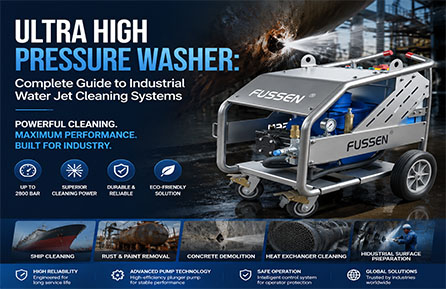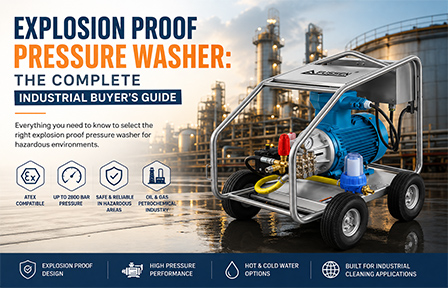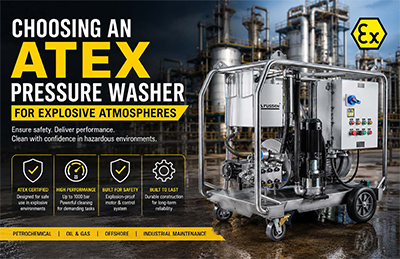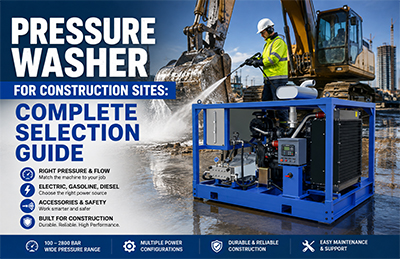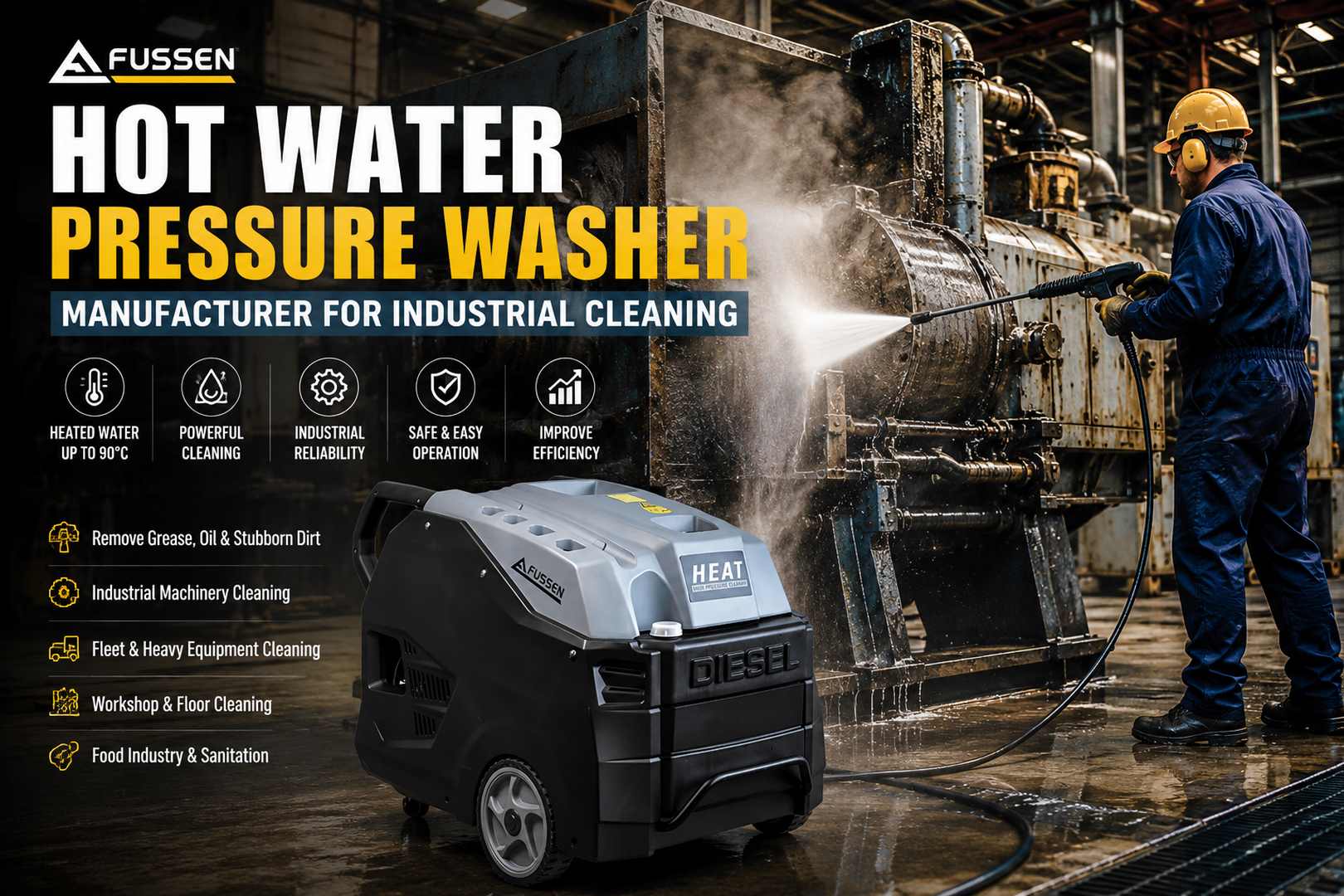
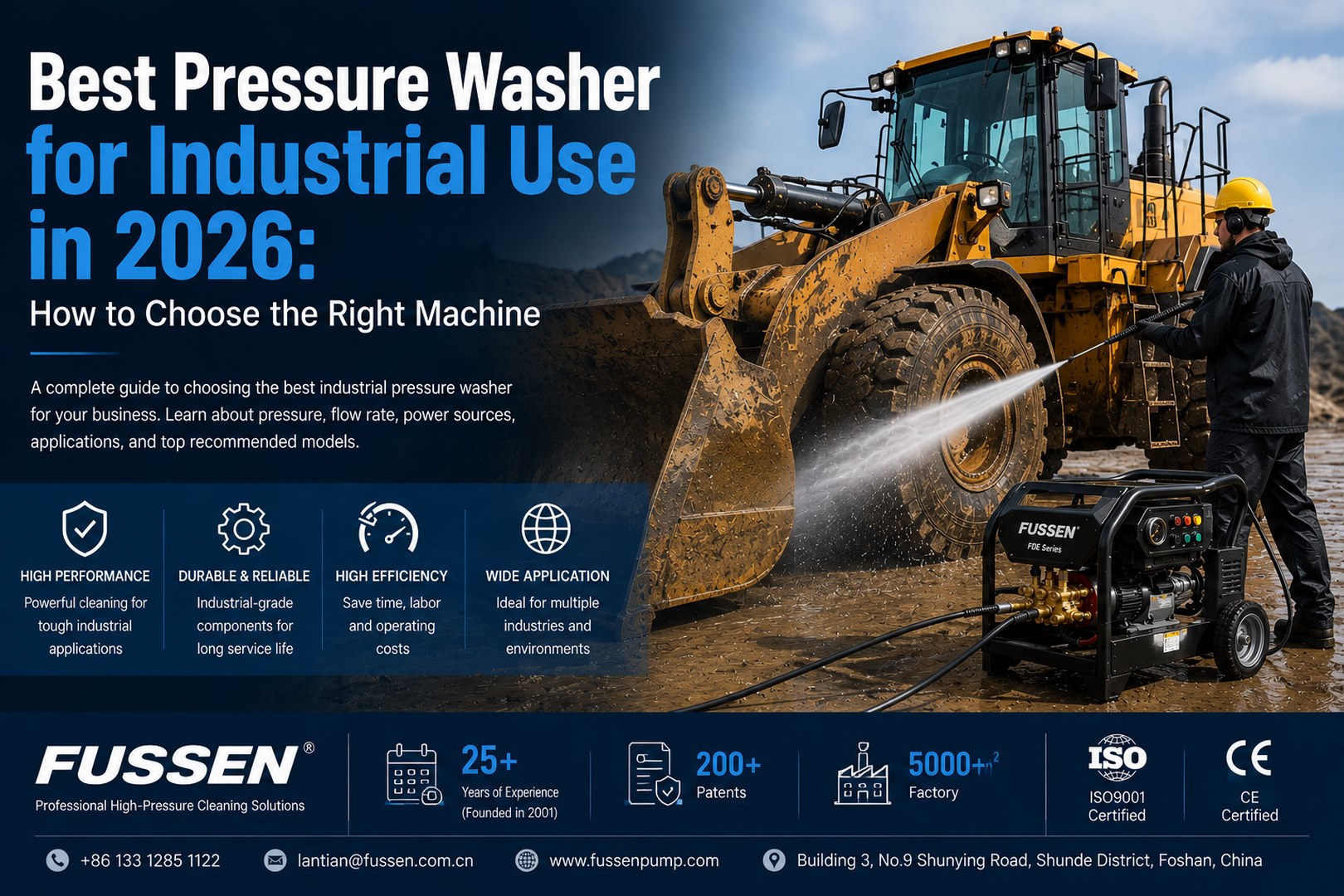
Os ambientes de limpeza industrial impõem exigências muito maiores aos equipamentos do que as aplicações residenciais ou comerciais leves. Desde fábricas e canteiros de obras até instalações de petróleo e gás, lavadoras de alta pressão industriais Deve apresentar desempenho consistente, suportar operação contínua e lidar com contaminantes difíceis, como graxa, tinta, ferrugem e sujeira pesada. Vários fatores-chave determinam se uma lavadora de alta pressão é realmente adequada para uso industrial.
Uma das características mais importantes de uma lavadora de alta pressão industrial é sua capacidade de gerar uma pressão de operação mais elevada. Medida em PSI ou bar, a pressão determina a força do jato de água e afeta diretamente a eficácia da limpeza.
Enquanto as lavadoras de alta pressão residenciais normalmente operam entre 100 e 180 bar, os modelos industriais geralmente variam de 200 a mais de 1.000 bar. Para aplicações exigentes, como remoção de tinta, remoção de ferrugem, preparação de superfícies e hidrojateamento, os sistemas de ultra-alta pressão podem ultrapassar 2.000 bar.
Uma pressão mais elevada permite que os operadores removam contaminantes persistentes mais rapidamente, reduzindo o tempo de trabalho e aumentando a produtividade.
A pressão por si só não determina o desempenho da limpeza. A vazão de água, medida em litros por minuto (L/min) ou galões por minuto (GPM), é igualmente importante.
A vazão determina a quantidade de material que pode ser removida durante a operação. Uma máquina com alta pressão, mas vazão insuficiente, pode ter dificuldades para limpar grandes superfícies de forma eficiente. As lavadoras de alta pressão industriais geralmente oferecem vazões significativamente maiores do que os equipamentos de uso doméstico, permitindo uma limpeza mais rápida de pisos de fábricas, máquinas pesadas, tanques de armazenamento e equipamentos de transporte.
O equilíbrio ideal entre pressão e vazão depende da tarefa de limpeza específica.
A limpeza industrial geralmente exige que os equipamentos funcionem por longos períodos todos os dias. Ao contrário das máquinas residenciais, projetadas para uso ocasional, as lavadoras de alta pressão industriais devem suportar operação contínua sem superaquecimento ou desgaste excessivo.
Características como motores industriais de baixa velocidade, transmissões reforçadas, sistemas de refrigeração avançados e projetos de bombas robustos ajudam a garantir um desempenho estável durante longas horas de operação. Essa confiabilidade é essencial para indústrias onde a inatividade dos equipamentos pode resultar em interrupções dispendiosas na produção.
A durabilidade de uma lavadora de alta pressão depende em grande parte da qualidade de seus componentes principais. As máquinas de uso industrial são construídas com materiais e seguindo padrões de engenharia que suportam alta pressão, ambientes agressivos e cargas de trabalho exigentes.
Os principais componentes comumente encontrados em lavadoras de alta pressão industriais profissionais incluem:
Esses componentes contribuem para uma vida útil mais longa, maior confiabilidade e menores custos operacionais ao longo do tempo.
Os requisitos de manutenção podem impactar significativamente o custo total de propriedade de equipamentos de limpeza industrial. Lavadoras de alta pressão projetadas para uso industrial devem proporcionar fácil acesso a componentes críticos de serviço, como filtros, bombas, vedações, válvulas e pontos de lubrificação.
Máquinas com design modular e peças de reposição facilmente disponíveis permitem que as equipes de manutenção realizem serviços de rotina rapidamente, minimizando o tempo de inatividade. Recursos como sistemas de filtragem de água, dispositivos de proteção contra baixo nível de água e sistemas de monitoramento inteligentes podem prolongar ainda mais a vida útil do equipamento e reduzir a frequência de manutenção.
Para empresas que dependem de lavadoras de alta pressão em suas operações diárias, a facilidade de manutenção se traduz diretamente em maior tempo de atividade e melhor eficiência operacional.
Escolher a lavadora de alta pressão ideal para uso industrial envolve muito mais do que simplesmente selecionar a classificação de pressão mais alta. Diferentes setores e aplicações de limpeza exigem diferentes combinações de pressão, vazão, fonte de energia e recursos operacionais. Compreender esses fatores-chave ajudará você a selecionar um equipamento que ofereça desempenho de limpeza ideal, produtividade e valor a longo prazo.
A pressão, medida em PSI (libras por polegada quadrada) ou bar, determina a força de impacto do jato de água na superfície a ser limpa. Uma pressão mais alta permite que os operadores removam contaminantes mais resistentes, mas mais pressão nem sempre é melhor. A pressão ideal depende da aplicação.
As lavadoras de alta pressão desta gama são adequadas para tarefas diárias de limpeza industrial, incluindo:
Máquinas como as da série Füssen FAE e FBE são comumente usadas para essas aplicações, proporcionando um equilíbrio eficaz entre poder de limpeza e eficiência operacional.
Para ambientes industriais mais exigentes, níveis de pressão mais elevados são frequentemente necessários para remover:
As lavadoras de alta pressão desta categoria são amplamente utilizadas em fábricas, estaleiros, canteiros de obras e operações de manutenção de equipamentos pesados.
Os sistemas de ultra-alta pressão são projetados para aplicações especializadas, tais como:
Essas aplicações exigem uma força de limpeza significativamente maior e são normalmente realizadas utilizando sistemas industriais de jato de água de alta pressão ou ultra-alta pressão.
Muitos compradores se concentram exclusivamente na classificação de pressão ao comparar lavadoras de alta pressão industriais. No entanto, a vazão de água costuma ser tão importante quanto — e, em muitos casos, até mais importante.
A vazão é medida em litros por minuto (LPM) ou galões por minuto (GPM) e determina a quantidade de água que chega à superfície a ser limpa.
Uma lavadora de alta pressão com alta pressão, mas baixo fluxo, pode remover eficazmente os contaminantes de uma pequena área, mas pode demorar muito mais tempo a limpar superfícies grandes. Por outro lado, uma máquina com pressão suficiente e alto fluxo de água pode remover a sujidade mais rapidamente e melhorar a produtividade geral da limpeza.
Como regra geral:
Para projetos de limpeza industrial em grande escala, selecionar a combinação correta de pressão e vazão é fundamental para maximizar a eficiência e minimizar os custos operacionais.
A fonte de energia ideal depende do ambiente de trabalho, das necessidades de mobilidade e do tipo de contaminação a ser removida.
| Tipo | Ideal para |
|---|---|
| Elétrico | Fábricas internas, plantas de produção, armazéns |
| Diesel | Locais de trabalho remotos, operações externas de grande porte |
| Gasolina | Aplicações de limpeza móvel e canteiros de obras |
| Água quente | Remoção de graxa, óleo e contaminantes industriais persistentes. |
Modelos elétricos São populares em instalações industriais onde há disponibilidade de energia confiável. Oferecem níveis de ruído mais baixos, requisitos de manutenção reduzidos e zero emissões do motor, tornando-os ideais para ambientes internos.
Lavadoras de alta pressão movidas a diesel São comumente utilizadas na construção civil, mineração, manutenção municipal e outras aplicações remotas onde não há disponibilidade de energia elétrica. Elas oferecem excelente mobilidade e desempenho em regime contínuo.
Unidades movidas a gasolina São adequadas para operações de limpeza móvel que exigem portabilidade e flexibilidade. São frequentemente utilizadas por empreiteiros, equipes de manutenção e operadores agrícolas.
Para limpeza de óleo, graxa, resíduos de combustível e outros contaminantes persistentes, lavadoras de alta pressão de água quente Muitas vezes, as máquinas de lavagem com água fria têm um desempenho superior. A combinação de calor e pressão ajuda a decompor os contaminantes mais rapidamente, reduzindo o tempo de limpeza e o consumo de detergente.
Selecionar a fonte de energia correta Garante que a lavadora de alta pressão atenda às suas necessidades operacionais, maximizando a eficiência da limpeza e o retorno do investimento.
Diferentes setores industriais enfrentam desafios de limpeza únicos, o que significa que não existe uma lavadora de alta pressão ideal para todas as aplicações. A melhor lavadora de alta pressão industrial depende de fatores como o tipo de contaminação, a frequência de limpeza, o ambiente operacional e os níveis de pressão necessários. Abaixo, apresentamos algumas das aplicações industriais mais comuns e as séries de lavadoras de alta pressão Fussen recomendadas para cada uma delas.
As instalações de produção frequentemente exigem limpeza diária das linhas de produção, máquinas, estações de trabalho e pisos da fábrica. Esses ambientes demandam equipamentos confiáveis, capazes de operação contínua e que mantenham um desempenho de limpeza consistente.
O Série FBE de Füssen É ideal para tarefas de limpeza industrial de média a alta intensidade, oferecendo pressões de até 350 bar com motores de nível industrial, sistemas de controle de partida suave e bombas de pistão duráveis.
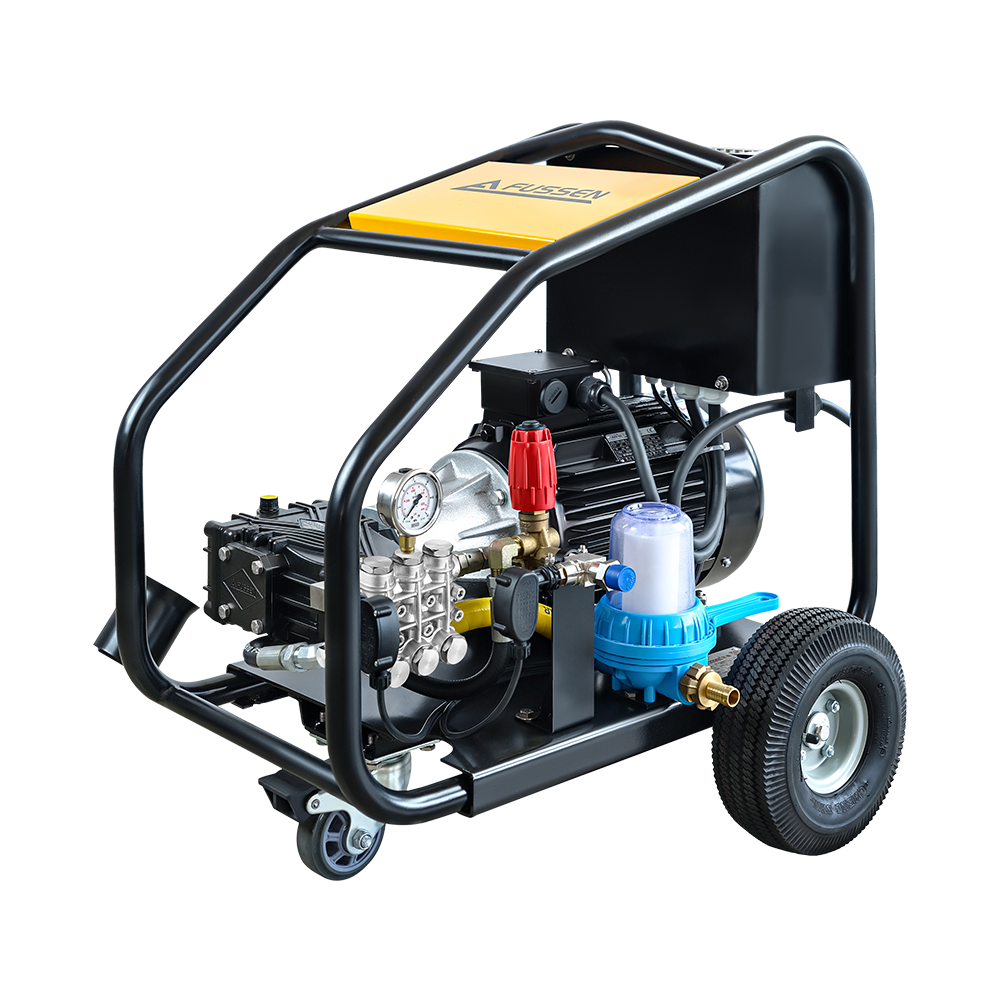
| Modelo | Tensão(Ph/V/Hz) | Vazão(L/min) | Pressão(Bar/MPa/PSI) | Poder( kC ) | RPM | Peso( kg ) | Dimensões(C x L x A mm) |
| FBE 15/27 | 3/380/50 | 15 | 270/27/3915 | 9.2 | 1450 | 145 | 880x650x900 |
| FBE 15/30 | 3/380/50 | 15 | 300/30/4350 | 9.2 | 1450 | 145 | 880x650x900 |
| FBE 15/35 | 3/380/50 | 15 | 350/35/5075 | 11.0 | 1450 | 160 | 880x650x900 |
| FBE 18/28 | 3/380/50 | 18 | 280/28/4060 | 11.0 | 1450 | 160 | 880x650x900 |
| FBE 21/25 | 3/380/50 | 21 | 250/25/3625 | 11.0 | 1450 | 160 | 880x650x900 |
Para aplicações mais exigentes que envolvem depósitos persistentes, contaminação severa ou limpeza de equipamentos em grande escala, o Série FCE da Füssen Oferece pressões de até 600 bar e maior produtividade de limpeza. Seu tanque de água de grande capacidade, estrutura robusta e sistema de filtragem avançado a tornam ideal para operações industriais intensivas.

| Modelo | Tensão(Ph/V/Hz) | Vazão(L/min) | Pressão(Bar/MPa/PSI) | Poder( kC ) | RPM | Peso( kg ) | Dimensões(C x L x A mm) |
| FCE 21/35 | 3/380/50 | 21 | 350/35/5075 | 15 | 1450 | 240 | 950x700x900 |
| FCE 15/50 | 3/380/50 | 15 | 500/50/7250 | 15 | 1450 | 240 | 950x700x900 |
| FCE 22/50 | 3/380/50 | 22 | 500/50/7250 | 22 | 1450 | 265 | 950x700x900 |
| FCE 18/60 | 3/380/50 | 18 | 600/60/8700 | 22 | 1450 | 265 | 950x700x900 |
Armazéns, centros de logística, instalações comerciais e departamentos de manutenção geralmente exigem equipamentos de limpeza versáteis que possam ser utilizados em pisos, docas de carga, áreas de armazenamento e fachadas de edifícios.
O Série Füssen FAE É uma excelente opção para a limpeza rotineira de instalações. Seu design compacto, motor industrial de baixa velocidade e pressão de operação de até 250 bar a tornam adequada para tarefas diárias de manutenção.

| Modelo | Tensão(Ph/V/Hz) | Vazão(L/min) | Pressão(Bar/MPa/PSI) | Poder( kC ) | RPM | Peso( kg ) | Dimensões(C x L x A mm) |
| FAE 15/15 | 3/380/50 | 15 | 150/15/2175 | 4.0 | 1450 | 68 | 640 x 640 x 500 |
| FAE 15/20 | 3/380/50 | 15 | 200/20/2900 | 5.5 | 1450 | 78 | 640 x 640 x 500 |
| FAE 15/25 | 3/380/50 | 15 | 250/25/3625 | 7.5 | 1450 | 85 | 640 x 640 x 500 |
| FAE 18/20 | 3/380/50 | 18 | 200/20/2900 | 7.5 | 1450 | 85 | 640 x 640 x 500 |
Para instalações que necessitam de uma solução portátil e econômica, o Série FSE de Fussen Oferece desempenho de limpeza confiável com dimensões compactas e fácil manobrabilidade. É particularmente adequado para limpeza industrial leve e manutenção geral de instalações.
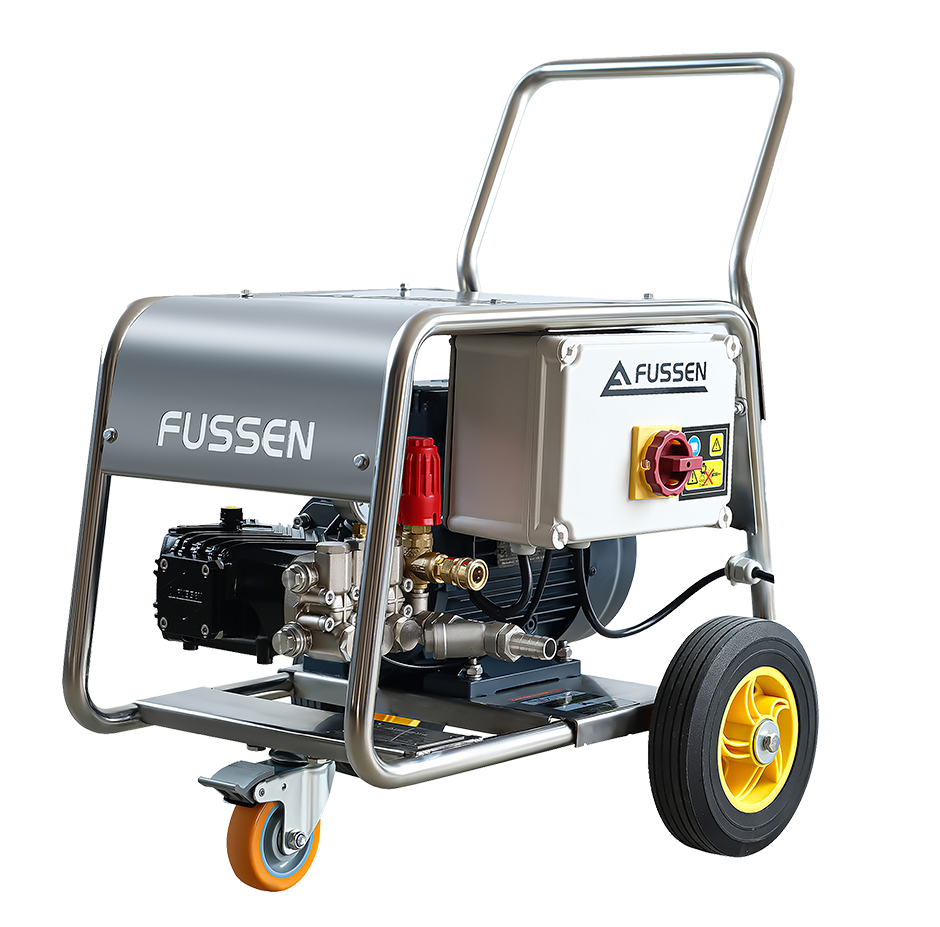
| Modelo | Tensão(Ph/V/Hz) | Vazão(L/min) | Pressão(Bar/MPa/PSI) | Poder( kC ) | RPM | Peso( kg ) | Dimensões(C x L x A mm) |
| FSE 10/11 | 1/220/50 | 10 | 110/11/1595 | 2.2 | 1450 | 48 | 650 x 550 x 430 |
| FSE 10/15 | 1/220/50 | 10 | 150/15/2175 | 3.0 | 1450 | 52 | 650 x 550 x 530 |
| FSE 12/13 | 1/220/50 | 12 | 130/13/1885 | 3.0 | 1450 | 52 | 650 x 550 x 530 |
| FSE 15/10 | 1/220/50 | 15 | 100/10/1450 | 3.0 | 1450 | 52 | 650 x 550 x 530 |
Máquinas de construção, equipamentos de mineração, máquinas agrícolas e frotas de transporte frequentemente acumulam espessas camadas de lama, graxa, óleo e detritos que exigem uma capacidade de limpeza significativamente maior.
O Série FDE de Fussen Projetada para aplicações de limpeza pesada, oferece pressões de até 1.000 bar e vazões de até 30 L/min. Sua bomba de aço inoxidável, tanque de água de grande capacidade e motor de nível industrial proporcionam a durabilidade necessária para condições operacionais exigentes.

| Modelo | Tensão(Ph/V/Hz) | Vazão(L/min) | Pressão(Bar/MPa/PSI) | Poder( kC ) | RPM | Peso( kg ) | Dimensões(C x L x A mm) |
| FDE 30/50 | 3/380/50 | 30 | 500/50/7250 | 30.0 | 1450 | 450 | 1350 x 680 x 1200 |
| FDE 20/80 | 3/380/50 | 20 | 800/80/11600 | 30.0 | 1450 | 455 | 1350 x 680 x 1200 |
| FDE 15/100 | 3/380/50 | 15 | 1000/100/14500 | 30.0 | 1450 | 455 | 1350 x 680 x 1200 |
| FDE 36/50 | 3/440/60 | 36 | 500/50/7250 | 36.0 | 1750 | 450 | 1350 x 680 x 1200 |
| FDE 24/80 | 3/440/60 | 24 | 800/80/11600 | 36.0 | 1750 | 455 | 1350 x 680 x 1200 |
| FDE 18/100 | 3/440/60 | 18 | 1000/100/14500 | 36.0 | 1750 | 455 | 1350 x 680 x 1200 |
Para operadores que necessitam de taxas de fluxo ainda maiores e desempenho em regime contínuo, o Série FKE da Füssen Oferece uma capacidade de limpeza robusta com tecnologia de bomba avançada e construção resistente, tornando-a adequada para a limpeza de máquinas de grande porte e equipamentos industriais.

| Modelo | Tensão(Ph/V/Hz) | Vazão(L/min) | Pressão(Bar/MPa/PSI) | Poder( kC ) | RPM | Peso( kg ) | Dimensões(C x L x A mm) |
| FKE 40/60 | 3/380/50 | 40 | 600/60/8700 | 45.0 | 1000 | 850 | 1550x1050x1350 |
| FKE 25/80 | 3/380/50 | 25 | 800/80/11600 | 37.0 | 1000 | 850 | 1550x1050x1350 |
| FKE 20/100 | 3/380/50 | 20 | 1000/100/14500 | 37.0 | 1000 | 850 | 1550x1050x1350 |
| FKE 25/100 | 3/380/50 | 25 | 1000/100/14500 | 45.0 | 1000 | 850 | 1550x1050x1350 |
Refinarias de petróleo, plantas petroquímicas, plataformas offshore e outros ambientes perigosos exigem equipamentos especializados que atendam a rigorosos requisitos de segurança.
Fussen's FAE-EX, FBE-EX, e Série FCE-EX São projetadas especificamente para operação em atmosferas potencialmente explosivas. Essas máquinas possuem motores à prova de explosão, sistemas de controle à prova de explosão e certificações ATEX opcionais.
Eles são projetados para limpar com segurança equipamentos, tubulações, tanques de armazenamento e instalações de processamento, reduzindo os riscos associados a gases inflamáveis, vapores e ambientes perigosos.
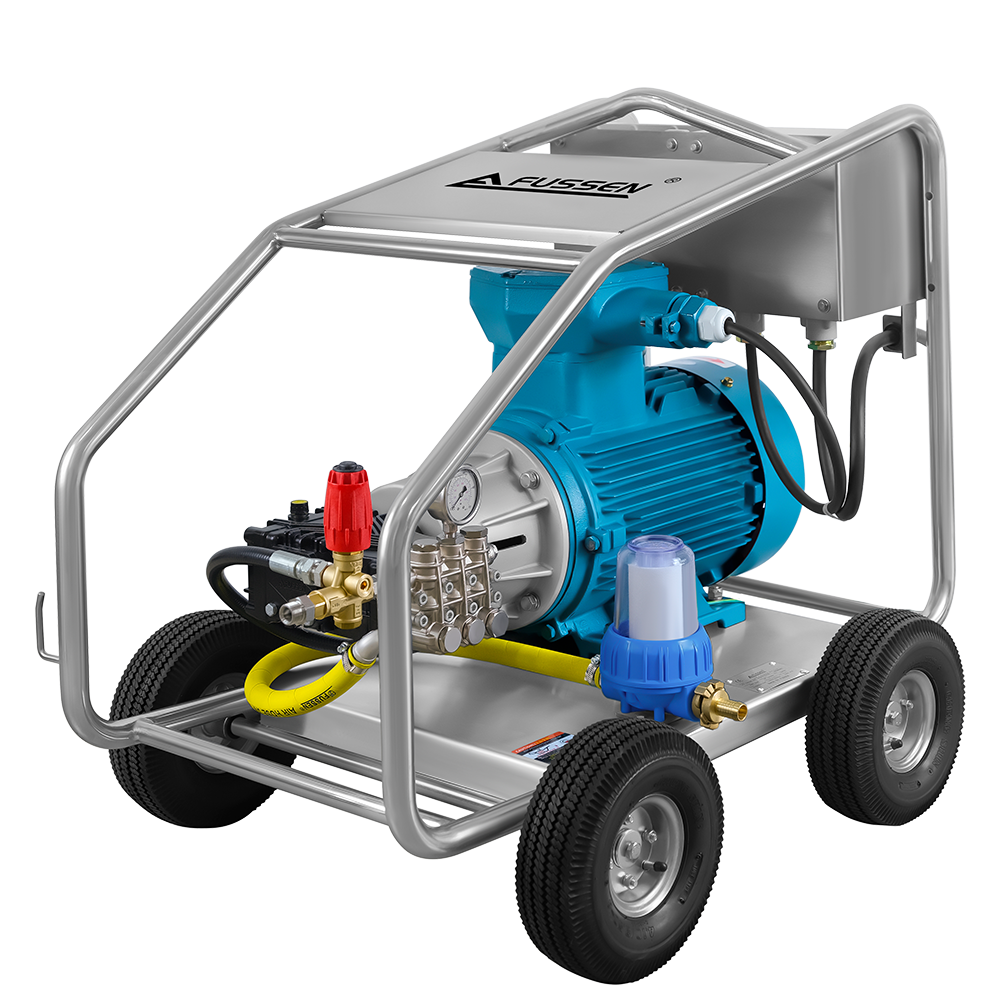
| Modelo | Tensão (Ph/V/Hz) | Vazão(L/min) | Pressão(Bar/MPa/PSI) | Poder( kC ) | RPM | Peso( kg ) | Dimensões(C x L x A mm) |
| FAE-EX 15/15 | 3/380/50 | 15 | 150/15/2175 | 5.5 | 1450 | 95 | 780x640x500 |
| FAE-EX 15/20 | 3/380/50 | 15 | 200/20/2900 | 5.5 | 1450 | 95 | 780x640x500 |
| FAE-EX 15/25 | 3/380/50 | 15 | 250/25/3625 | 7.5 | 1450 | 110 | 780x640x500 |
| FAE-EX 18/20 | 3/380/50 | 18 | 200/20/2900 | 7.5 | 1450 | 110 | 780x640x500 |
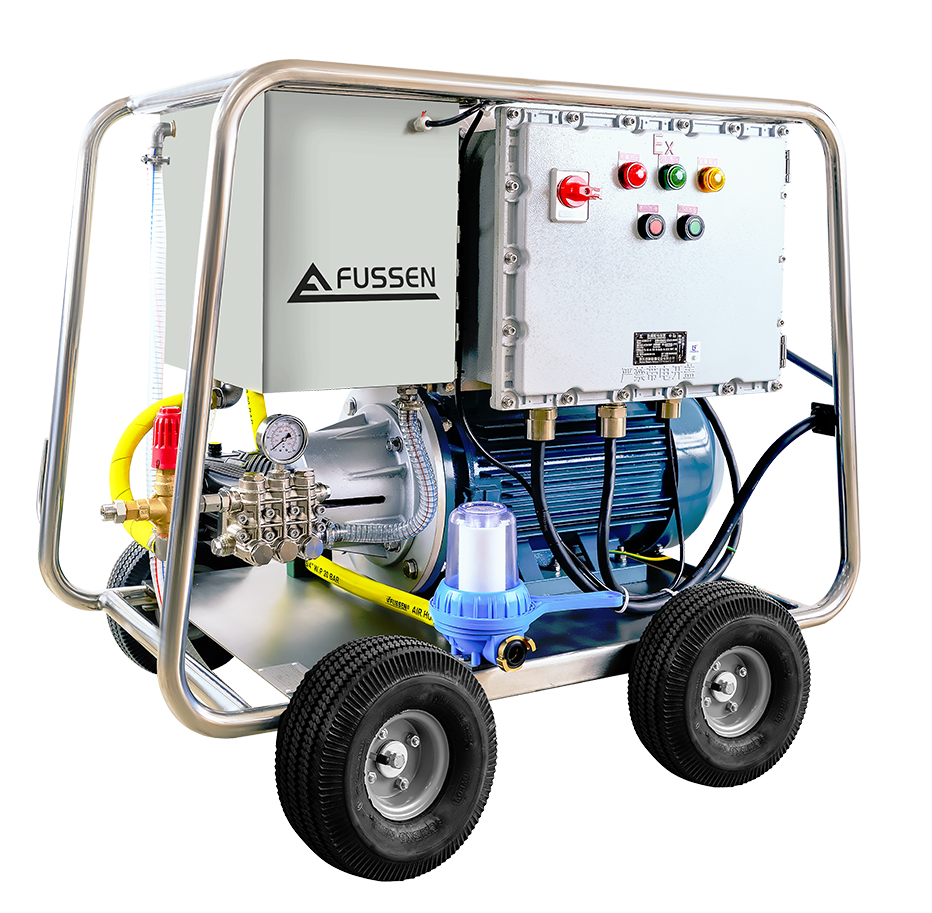
| Modelo | Tensão(Ph/V/Hz) | Vazão(L/min) | Pressão(Bar/MPa/PSI) | Poder( kC ) | RPM | Peso( kg ) | Dimensões(C x L x A mm) |
| FBE-EX 15/30 | 3/380/50 | 15 | 300/30/4350 | 9.2 | 1450 | 200 | 980 x 680 x 1080 |
| FBE-EX 15/35 | 3/380/50 | 15 | 350/35/5075 | 11.0 | 1450 | 215 | 980 x 680 x 1080 |
| FBE-EX 18/28 | 3/380/50 | 18 | 280/28/4060 | 11.0 | 1450 | 215 | 980 x 680 x 1080 |
| FBE-EX 21/25 | 3/380/50 | 21 | 250/25/3625 | 11.0 | 1450 | 215 | 980 x 680 x 1080 |

| Modelo | Tensão(Ph/V/Hz) | Vazão(L/min) | Pressão(Bar/MPa/PSI) | Poder( kC ) | RPM | Peso( kg ) | Dimensões(C x L x A mm) |
| FCE-EX 21/35 | 3/380/50 | 21 | 350/35/5075 | 15 | 1450 | 310 | 1250 x 580 x 1250 |
| FCE-EX 15/50 | 3/380/50 | 15 | 500/50/7250 | 15 | 1450 | 310 | 1250 x 580 x 1250 |
| FCE-EX 22/50 | 3/380/50 | 22 | 500/50/7250 | 22 | 1450 | 310 | 1250 x 580 x 1250 |
| FCE-EX 18/60 | 3/380/50 | 18 | 600/60/8700 | 22 | 1450 | 310 | 1250 x 580 x 1250 |
Graxa, lubrificantes, resíduos de combustível e contaminação por óleo pesado podem ser difíceis de remover apenas com água fria. Nessas situações, as lavadoras de alta pressão com água quente proporcionam resultados de limpeza significativamente melhores.
O Série FHE-P da Füssen e Série FHE-S A combinação da limpeza de alta pressão com temperaturas da água de até 90°C permite que os operadores removam graxa e óleo com mais eficiência.
Essas máquinas são comumente usadas em:
Ao combinar calor com pressão, reduzem o tempo de limpeza, melhoram os resultados e minimizam o uso de detergente.
Aplicações de preparação de superfícies frequentemente exigem pressão significativamente maior do que a limpeza industrial padrão. Tarefas como remoção de tinta, ferrugem e revestimentos, recuperação de concreto e hidrojateamento demandam tecnologia de jato de água de ultra-alta pressão.
O Série Fussen FRE e Série FKD são projetados especificamente para essas aplicações exigentes. Esses sistemas de ultra-alta pressão podem fornecer pressões de até 2.800 bar e vazões de até 1.000 L/min, tornando-os adequados para projetos industriais de grande escala e operações especializadas de tratamento de superfície.

| Modelo | Tensão(Ph/V/Hz) | Vazão(L/min) | Pressão(Bar/MPa/PSI) | Poder( kC ) | RPM | Peso( kg ) | Dimensões(C x L x A mm) |
| FRE 120/100 | 3/380/50 | 120 | 1000/100/14500 | 252 | 400 | 2800 | 3300 x 1900 x 2100 |
| FRE 90/140 | 3/380/50 | 90 | 1400/140/20300 | 150 | 400 | 2800 | 3300 x 1900 x 2100 |
| FRE 50/150 | 3/380/50 | 50 | 1500/150/21755 | 300 | 400 | 2800 | 3300 x 1900 x 2100 |
| FRE 45/280 | 3/380/50 | 45 | 2800/280/40000 | 250 | 400 | 2800 | 3300 x 1900 x 2100 |
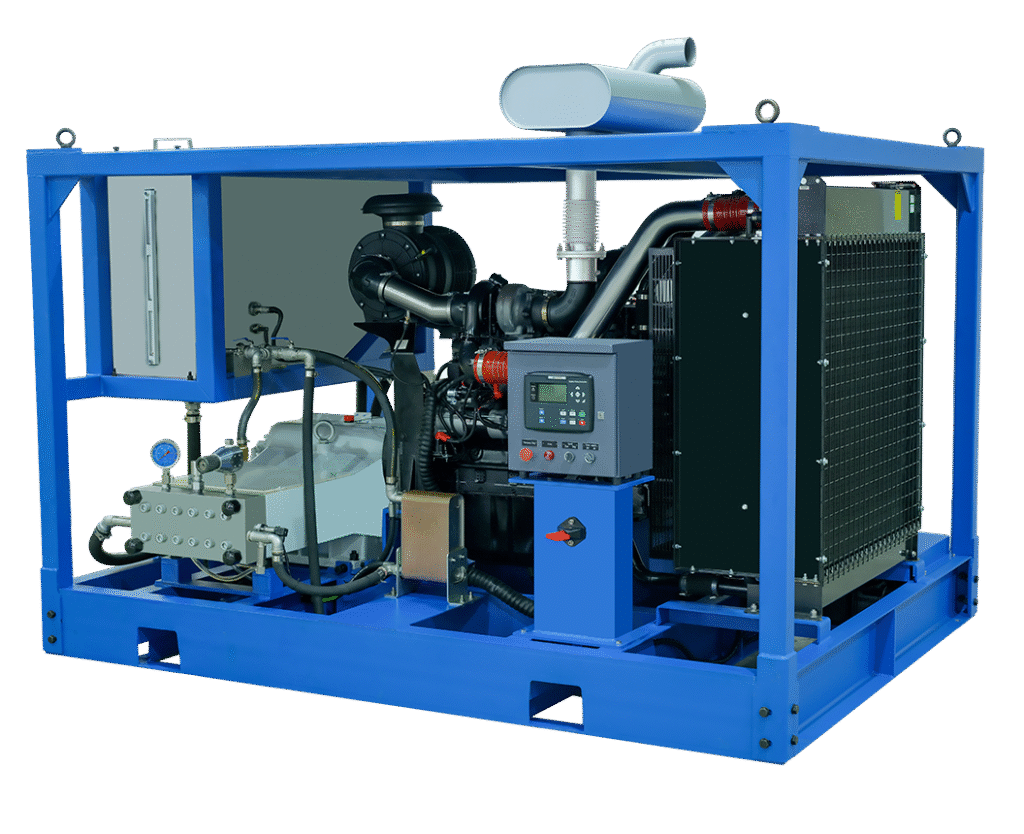
| Modelo | Vazão(L/min) | Pressão(Bar/MPa/PSI) | Poder( kC ) | RPM | Peso( kg ) | Dimensões(C x L x A mm) |
| FKD 120/100 | 120 | 1000/100/14500 | 264 | 400 | 3500 | 2700 x 1800 x 1900 |
| FKD 90/140 | 90 | 1400/90/20305 | 264 | 400 | 3500 | 2700 x 1800 x 1900 |
| FKD 30/250 | 30 | 2500/250/36260 | 160 | 400 | 3500 | 2700 x 1800 x 1900 |
| FKD 30/280 | 30 | 2800/280/40000 | 168 | 400 | 3500 | 2700 x 1800 x 1900 |
Aplicações típicas incluem:
Para empreiteiros e operadores industriais que buscam o máximo poder de limpeza e produtividade, os sistemas de ultra-alta pressão representam a solução mais eficaz para tarefas complexas de preparação de superfícies.
Os requisitos de limpeza industrial variam significativamente dependendo do tipo de contaminação, do material da superfície e do objetivo da limpeza. Selecionar o nível de pressão adequado é essencial para obter resultados de limpeza eficientes, evitando o desgaste desnecessário dos equipamentos ou danos às superfícies. O guia a seguir descreve os desafios comuns da limpeza industrial e as faixas de pressão normalmente recomendadas para cada aplicação.
| Tarefa de limpeza | Pressão recomendada |
|---|---|
| Pisos de fábrica e manutenção geral | 150–250 bar |
| Limpeza de armazéns e instalações | 150–250 bar |
| Limpeza de equipamentos de produção | 200–350 bar |
| Limpeza de máquinas pesadas | 250–500 bar |
| Lavagem de veículos e frotas | 150–300 bar |
| Remoção de graxa e óleo industrial | 200–300 bar (Recomenda-se água quente) |
| Limpeza de navios e manutenção marítima | 300–600 bar |
| Preparação da superfície antes da aplicação do revestimento | 500–1.500 bar |
| Remoção de ferrugem | 500–1.500 bar |
| Remoção de tinta e revestimento | 1.000–2.800 bar |
| Preparação da superfície de concreto | 1.000–2.800 bar |
| Hidrodemolição | 1.500–2.800 bar |
Tarefas rotineiras de limpeza, como a remoção de poeira, sujeira, lama e resíduos industriais leves, normalmente exigem pressões entre 150 e 250 bar. Essa faixa proporciona poder de limpeza suficiente, minimizando o consumo de água e os custos operacionais.
Equipamentos de construção, máquinas de mineração, veículos agrícolas e equipamentos industriais frequentemente acumulam sujeira compactada, graxa e detritos. Pressões entre 250 e 500 bar podem remover esses contaminantes de forma eficaz, reduzindo o esforço de limpeza manual.
A remoção de graxa pesada, lubrificantes e contaminantes à base de petróleo exige mais do que apenas pressão. Na maioria dos casos, as lavadoras de alta pressão com água quente, operando entre 200 e 300 bar, proporcionam um desempenho de limpeza superior, pois o calor ajuda a decompor óleos e graxas com mais eficiência.
Antes de repintar ou aplicar revestimentos protetores, as superfícies devem ser devidamente preparadas. Níveis de pressão entre 500 e 1.500 bar são comumente usados para remover ferrugem, incrustações, revestimentos antigos e outros contaminantes superficiais, criando ao mesmo tempo uma base ideal para novos revestimentos.
Algumas aplicações industriais exigem jateamento de água de ultra-alta pressão. Remoção de tinta, revestimentos, recuperação de concreto e hidrojateamento geralmente requerem pressões acima de 1.000 bar. Essas tarefas especializadas frequentemente utilizam sistemas de ultra-alta pressão capazes de fornecer até 2.800 bar para máxima eficiência e precisão. As séries FRE e FKD da Fussen são projetadas especificamente para essas aplicações exigentes, oferecendo desempenho de ultra-alta pressão para projetos industriais de preparação de superfícies e demolição.
Embora a pressão seja importante, selecionar a vazão correta é igualmente crucial. Uma pressão mais alta aumenta a força de limpeza, enquanto vazões mais altas melhoram a velocidade de limpeza, removendo contaminantes soltos mais rapidamente. Os sistemas de limpeza industrial mais eficazes combinam o nível de pressão adequado com uma vazão de água suficiente para maximizar a produtividade e minimizar o tempo de inatividade.
Compreender a relação entre os desafios de limpeza e os requisitos de pressão ajuda os compradores a escolher equipamentos que ofereçam o melhor equilíbrio entre desempenho, eficiência e valor a longo prazo.
À primeira vista, as lavadoras de alta pressão para uso doméstico podem parecer uma solução mais econômica para tarefas de limpeza. No entanto, ambientes industriais exigem muito mais dos equipamentos do que aplicações residenciais. As lavadoras de alta pressão profissionais são projetadas especificamente para oferecer maior desempenho, confiabilidade e custos operacionais reduzidos a longo prazo. Para empresas que dependem de operações de limpeza eficientes, investir em equipamentos de nível industrial geralmente proporciona vantagens significativas.
As lavadoras de alta pressão industriais são construídas para suportar condições de trabalho exigentes e operação contínua. Ao contrário dos modelos para consumidores, projetados para uso ocasional, as máquinas profissionais utilizam componentes robustos, como motores de nível industrial, bombas de pistão de alta pressão, estruturas reforçadas e vedações de alta qualidade.
Muitos sistemas industriais também apresentam êmbolos de cerâmica ou aço-liga, componentes de bomba em aço inoxidável e sistemas de filtragem avançados que ajudam a reduzir o desgaste e prolongar a vida útil. Esses projetos robustos permitem que as lavadoras de alta pressão profissionais operem de forma confiável por muitos anos, mesmo em ambientes industriais severos.
O tempo é um fator crítico nas operações de limpeza industrial. As lavadoras de alta pressão profissionais geralmente oferecem maior pressão, vazões mais elevadas e desempenho mais consistente do que as alternativas de uso doméstico.
Esse poder de limpeza aprimorado permite que os operadores:
Maior produtividade não só melhora a eficiência operacional, como também ajuda as empresas a minimizar interrupções nos cronogramas de produção e nas operações das instalações.
Falhas em equipamentos podem resultar em atrasos dispendiosos, especialmente em fábricas, canteiros de obras e instalações industriais onde a limpeza faz parte das operações de rotina.
As lavadoras de alta pressão profissionais são projetadas para uso contínuo e incorporam recursos que melhoram a confiabilidade, tais como:
Esses recursos ajudam a reduzir a probabilidade de falhas inesperadas, permitindo que as empresas mantenham um desempenho de limpeza consistente e, ao mesmo tempo, minimizem o tempo de inatividade relacionado à manutenção.
Embora as lavadoras de alta pressão industriais geralmente exijam um investimento inicial maior, elas costumam apresentar um custo total de propriedade significativamente menor ao longo de sua vida útil.
Equipamentos profissionais podem gerar um retorno sobre o investimento mais robusto por meio de:
Para empresas que realizam limpeza, manutenção, preparação de superfícies ou lavagem de equipamentos regularmente, uma lavadora de alta pressão profissional pode rapidamente compensar o custo de aquisição por meio do aumento da produtividade e da economia operacional. Com o tempo, a combinação de durabilidade, desempenho e confiabilidade torna os equipamentos de nível industrial uma opção mais econômica do que a substituição constante de modelos de consumo mais baratos.
Fundada em 2001, Füssen Possui mais de 25 anos de experiência em tecnologia de jato de água de alta pressão, atendendo indústrias em todo o mundo com soluções de limpeza confiáveis.
Com mais de 200 patentes e investimento contínuo em P&D, a Fussen permanece na vanguarda da tecnologia de limpeza de alta pressão e jato de água de ultra-alta pressão.
A Fussen opera sob o sistema de gestão da qualidade ISO9001, e todos os principais produtos possuem certificação CE para atender aos padrões internacionais de qualidade e segurança.
As bombas Fussen apresentam êmbolos de cerâmica e aço-liga, sistemas de vedação avançados e fabricação de precisão para oferecer longa vida útil, desempenho estável e custos de manutenção reduzidos.
Desde vedações resistentes à corrosão até sistemas de ultra-alta pressão, a Fussen oferece soluções personalizadas para setores como manufatura, indústria naval, petroquímica e construção civil.
Os produtos Fussen são exportados para a Europa, Oriente Médio, Sudeste Asiático e América do Sul, conquistando uma sólida reputação em qualidade, durabilidade e suporte profissional.
A pressão ideal depende da aplicação. Para limpeza industrial geral, 2.000–4.000 PSI (140–275 bar) costumam ser suficientes. Limpezas pesadas podem exigir 4.000–7.500 PSI (275–500 bar), enquanto a remoção de tinta, ferrugem e preparação de superfícies frequentemente requerem sistemas de ultra-alta pressão que excedem 14.500 PSI (1.000 bar).
Ambos são importantes. A pressão (PSI) determina a força de limpeza, enquanto a vazão (LPM/GPM) determina a velocidade de limpeza. Para grandes projetos de limpeza industrial, uma combinação equilibrada de pressão e vazão proporciona o melhor desempenho e produtividade.
As lavadoras de alta pressão com água fria são adequadas para sujeira, lama e tarefas de limpeza em geral. Já as lavadoras de alta pressão com água quente são recomendadas para remover graxa, óleo, resíduos de combustível e outros contaminantes industriais persistentes, pois o calor ajuda a decompor essas substâncias com mais eficácia.
Uma lavadora de alta pressão industrial é projetada para operação contínua e cargas de trabalho pesadas. Normalmente, possui motores de nível industrial, bombas de pistão de alto desempenho, estruturas duráveis e pressões de operação que variam de 150 bar a mais de 2.800 bar, dependendo da aplicação.
Uma lavadora de alta pressão industrial de alta qualidade pode durar 10 anos ou mais com a manutenção adequada. Fatores como a qualidade dos componentes, as condições de operação, as práticas de manutenção e a frequência de uso influenciam a vida útil do equipamento.
Para ferrugem superficial leve, lavadoras de alta pressão na faixa de 500 a 1.000 bar podem ser suficientes. Para ferrugem pesada, remoção de tinta, remoção de revestimentos e preparação de superfícies, sistemas de jato de água de ultra-alta pressão operando entre 1.000 e 2.800 bar proporcionam os resultados mais eficazes. Esses sistemas são comumente usados em estaleiros, manutenção industrial e projetos de hidrojateamento.

 English
  Spanish
  French
  Russian
  Japanese
  Portuguese
  Arabic
  Korean