Why Industrial Electric Pressure Washers Are Critical for Facilities

Industrial electric pressure washers are designed to meet the demanding cleaning needs of factories, warehouses, food processing plants, and municipal facilities. Selecting the right electric system ensures consistent cleaning performance, reduced operational risks, and long-term efficiency.

Benefits over diesel or gas for indoor and controlled environments

Electric pressure washers offer a key advantage for indoor and enclosed areas: zero exhaust emissions. Unlike diesel or gas systems, they do not produce fumes or combustion byproducts, making them ideal for workshops, food processing areas, and laboratories where air quality and safety are critical.

Additionally, electric washers are often smaller and quieter, making them suitable for facilities with limited space or noise restrictions.

Energy efficiency, low emissions, and noise reduction

Electric systems typically consume less energy than diesel or gas units for the same cleaning output, particularly when paired with efficient industrial motors and plunger pumps. Reduced noise levels not only improve workplace comfort but also allow operations in environments where sound limits are enforced.

By eliminating fuel handling and combustion, electric systems also lower the risk of spills, fire hazards, and other safety concerns associated with fossil fuels.

Continuous-duty operation and reliability

Industrial electric pressure washers are engineered for continuous-duty cycles, meaning they can operate for extended periods without overheating or losing efficiency. Reliable performance in high-use facilities reduces downtime and maintenance requirements, ensuring operations remain on schedule.

With robust motors, high-quality pumps, and advanced electronic controls, these washers deliver stable pressure and flow, critical for consistent cleaning results in industrial and municipal applications.

Fussen FME SERIES Electric High Pressure Washer

Understanding Your Cleaning Requirements

Before selecting an industrial electric pressure washer, it’s essential to evaluate the specific cleaning requirements of your facility. Proper assessment ensures the system delivers efficient cleaning, reduces downtime, and protects both equipment and surfaces.

Type of contamination (oil, grease, dust, mud)

Identify the main contaminants you need to remove. Hot water electric washers excel at breaking down grease, oil, and stubborn hydrocarbons, while cold water systems are often sufficient for dust, dirt, and mud. Matching the system to the type of contamination optimizes cleaning efficiency and minimizes chemical use.

Surface types and sensitivity (metal, concrete, food-safe areas)

Consider the surfaces that will be cleaned. High-pressure water can damage delicate materials or coatings if the wrong nozzle or pressure is used. For example:

  • Metal machinery and tools tolerate higher pressure and flow.
  • Concrete surfaces can withstand wide-angle high-pressure sprays.
  • Food-safe or hygiene-sensitive areas may require hot water cleaning at controlled pressures to meet sanitation standards.

청소 빈도 및 작동 주기

Determine how often the cleaning tasks will occur and the expected duration. Industrial electric washers are rated for continuous-duty operation, making them suitable for daily cleaning in factories, workshops, or processing plants. Cold water systems may be more appropriate for occasional or light-duty cleaning.

Area size and accessibility constraints

The size and layout of the cleaning area will influence equipment choice. Consider:

  • Hose length and reach
  • Mobility of the washer (trolley, skid-mounted, or trailer-mounted)
  • Obstacles such as machinery, tight corners, or elevated surfaces

Proper planning ensures the pressure washer can access all areas effectively while maintaining safe and ergonomic operation.

Key Technical Specifications to Consider

When selecting an industrial electric pressure washer, understanding the critical technical specifications ensures the system can handle your facility’s cleaning tasks efficiently and safely. These factors determine cleaning power, operational reliability, and suitability for your application.


Pressure rating (bar / PSI) and peak vs working pressure

Pressure rating defines the force of water delivered by the washer. Working pressure indicates the level the system can sustain continuously, while peak pressure represents short bursts. Choosing a washer with the right balance ensures effective cleaning without damaging surfaces or overloading the pump.

~에 퓌센, we provide a wide range of high-pressure washer systems with different working and peak pressure ratings to meet diverse cleaning requirements. With over 20 years of expertise in high-pressure plunger pump technology, Fussen machines are engineered for reliability, efficiency, and long-term industrial performance.

Flow rate (L/min or GPM) and coverage efficiency

Flow rate determines how much water is delivered per minute, affecting cleaning coverage and debris removal. Higher flow rates allow operators to cover larger surfaces quickly, while lower flow rates may require multiple passes. Selecting a system with an appropriate flow ensures cleaning efficiency matches operational needs.

Duty cycle and continuous operation capability

Industrial cleaning often requires extended operation. Ensure the washer is rated for continuous-duty cycles, meaning it can run for hours without overheating or losing pressure. Continuous-duty systems reduce downtime and increase productivity in high-use industrial environments.

Motor type: industrial-grade electric motors and power options

The motor drives the high-pressure pump. Industrial-grade electric motors provide consistent power, energy efficiency, and long service life. Consider three-phase or single-phase options depending on facility power availability and load requirements.

Water temperature requirements (cold vs hot water electric systems)

Depending on the cleaning task, water temperature affects cleaning performance. Hot water systems are ideal for grease, oil, and sanitization, while cold water systems are sufficient for dirt, dust, and mud. Ensure the system meets the required temperature specifications for your application.

Pressure & Flow Selection Table

Selecting the right combination of pressure and flow rate is critical for achieving effective cleaning results while protecting surfaces and equipment. Different industrial cleaning tasks require specific PSI/bar and flow rates to balance cleaning power, efficiency, and safety.

Recommended PSI/bar and flow rate for different surfaces and contaminants

Surface / Contaminant

권장 압력

Recommended Flow Rate

메모

Light dirt, dust, and mud

100–150 bar (1,500–2,200 PSI)

10–15 L/min

Suitable for routine facility cleaning or vehicle rinsing

Grease, oil, and lubricants

150–250 bar (2,200–3,600 PSI)

15–20 L/min

Hot water recommended for faster grease removal

Industrial machinery with heavy deposits

180–300 bar (2,600–4,500 PSI)

20~25 L/min

High flow ensures effective debris removal without multiple passes

Food processing surfaces

120–200 bar (1,800–3,000 PSI)

12–18 L/min

Hot water improves sanitation and hygiene compliance

Concrete or paved surfaces

150–250 bar (2,200–3,600 PSI)

15–20 L/min

Cold water is sufficient unless oils or hydrocarbons are present

Hot water vs cold water guidance for industrial applications

  • Hot water systems: Best for grease, oil, heavy industrial residues, and food-safe cleaning. Heat reduces viscosity, penetrates contaminants, and improves efficiency.
  • Cold water systems: Ideal for dust, dirt, mud, and general debris. Lower cost, simpler maintenance, and portable for routine cleaning tasks.

~에 퓌센, we offer both cold water and hot water high-pressure washer systems, allowing customers to select the most suitable solution based on their cleaning requirements and operating environment.

Nozzle and Accessory Selection

Choosing the right nozzles and accessories is crucial for maximizing the cleaning efficiency, protecting surfaces, and ensuring operator safety. Industrial electric pressure washers perform best when the nozzle type, hose configuration, and accessories are matched to the cleaning task and environment.

Standard nozzle types (0°, 15°, 25°, 40°, soap)

  • 0° (Red) – Ultra-concentrated jet for stubborn stains and spot cleaning
  • 15° (Yellow) – Heavy-duty cleaning of concrete, grease, and industrial surfaces
  • 25° (Green) – General-purpose cleaning for vehicles, floors, and equipment
  • 40° (White) – Light cleaning, rinsing, and sensitive surfaces
  • Soap/Low-pressure (Black) – Applying detergents or cleaning agents safely

Specialized nozzles for industrial cleaning, degreasing, and hard-to-reach areas

  • Rotating/turbo nozzles – For heavy-duty grease and oil removal
  • Surface cleaners – Wide, even coverage for floors, pavements, and large areas
  • Pipe and tube cleaning nozzles – Internal cleaning of piping, heat exchangers, and tanks
  • Fan-shaped nozzles – Ideal for walls, vehicles, and broad surface areas

Hose lengths, reels, and spray gun configurations

  • Hose lengths – Ensure sufficient reach for large facilities and outdoor areas
  • Hose reels – Improve storage, reduce kinks, and allow safe deployment
  • Spray guns – Ergonomic designs reduce operator fatigue and improve control
  • Compatibility – Ensure hoses and fittings match industrial pump pressures

Hot Water vs Cold Water Electric Systems

Industrial electric pressure washers are available in both hot and cold water configurations. Selecting the right system depends on the type of contamination, cleaning efficiency requirements, and operational considerations. Understanding the differences helps facility managers and engineers maximize cleaning performance while controlling energy usage and costs.

Advantages of hot water electric washers for grease and oil removal

Hot water electric pressure washers excel at breaking down grease, oil, and other hydrocarbon-based residues. The elevated temperature reduces viscosity, allowing contaminants to dissolve and lift from surfaces more quickly. This results in faster cleaning cycles, reduced chemical usage, and improved sanitation—particularly important in food processing, industrial maintenance, and fleet cleaning applications.

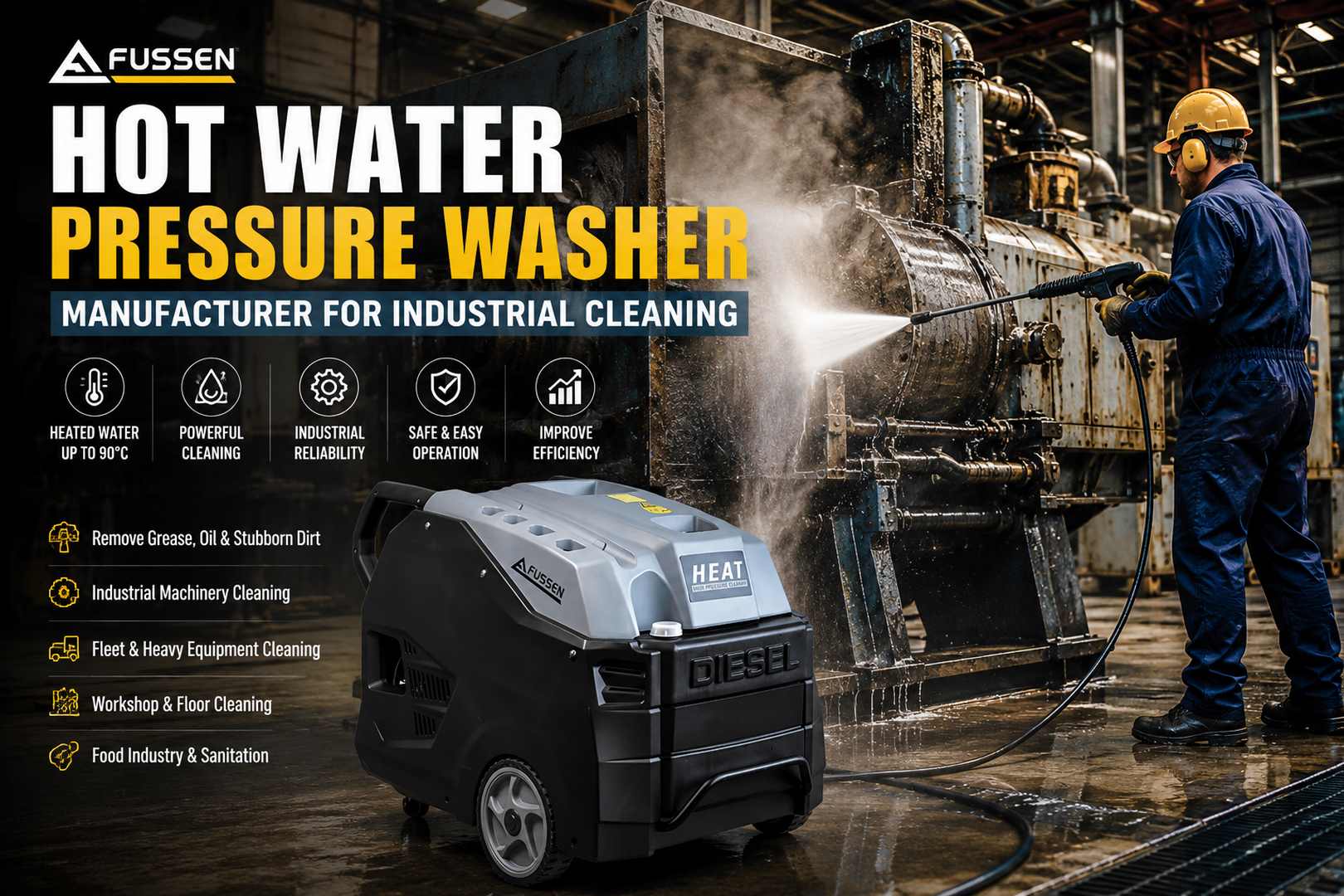
Fussen FHE-P SERIES Hot Water High Pressure Washer

When cold water electric washers are sufficient

Cold water electric systems are effective for removing dust, mud, dirt, and general debris. They are simpler, lighter, and typically less expensive to operate than hot water systems. For routine cleaning in workshops, warehouses, or areas where oil and grease are minimal, cold water washers provide sufficient performance while keeping operating costs low.

Energy consumption and operational cost considerations

Hot water systems consume additional energy to heat water, which increases operating costs compared with cold water units. However, this investment often pays off through reduced cleaning time, lower labor requirements, and decreased chemical consumption. Cold water systems use less energy but may require more time and additional detergent to achieve the same level of cleaning in grease-heavy applications.

Feature

Hot Water Electric Washer

Cold Water Electric Washer

Best For

Grease, oil, industrial residues

Dust, dirt, mud

Energy Use

Higher (heating required)

낮추다

Cleaning Speed

Faster for tough contaminants

보통의

Chemical Use

Reduced

May require detergents

Maintenance Complexity

더 높은

낮추다

일반적인 적용 사례

Food plants, industrial machinery, fleet washing

Workshops, general facility cleaning

온수 세척 vs 화학 세척

In industrial cleaning operations, 온수 고압 세척기 offer a safer and more environmentally friendly alternative to heavy chemical use. By leveraging thermal energy, operators can often reduce or eliminate the need for aggressive detergents while maintaining effective cleaning performance.


열 세척으로 세제 사용량 줄이기

Hot water systems break down grease, oils, and other stubborn residues more efficiently than cold water, reducing the reliance on chemical cleaning agents. The heat softens contaminants, allowing pressurized water to lift and remove them without additional chemicals.


환경 및 폐수 배출 관련 이점

By minimizing chemical usage, facilities can lower the environmental impact of cleaning operations. Less detergent means reduced chemical load in wastewater, which simplifies treatment, helps meet environmental regulations, and lowers disposal costs.


작업자를 위한 안전상의 이점

Reducing the use of chemical cleaners also improves operator safety. Many industrial detergents can cause skin irritation, respiratory issues, or require extensive personal protective equipment. Hot water cleaning mitigates these risks while maintaining high cleaning effectiveness.

Types of Industrial Electric Pressure Washer Systems

Industrial electric pressure washers are available in several configurations to meet the diverse needs of facilities, workshops, and municipal operations. Selecting the right system ensures optimal cleaning performance, mobility, and operational efficiency.

Mobile trolley-mounted units

These compact units are mounted on wheeled frames for easy maneuverability around factories, workshops, and warehouses. They typically include an integrated pump, electric motor, hose reel, and control panel, making them ideal for equipment cleaning, workshop maintenance, and small to medium-scale industrial tasks.

Trailer-mounted units

Trailer-mounted electric pressure washers are designed for larger outdoor areas or multi-site operations. These systems often include a water tank, extended hose reels, and higher-capacity pumps. They are well-suited for construction sites, municipal maintenance, and fleet washing operations where portability and on-site cleaning power are essential.


Skid-mounted industrial systems

Skid-mounted systems are built for continuous-duty industrial applications. Installed on rigid base frames, they are often connected to centralized water supplies and provide high-pressure, high-flow cleaning capabilities. Common uses include manufacturing plants, chemical processing facilities, and large-scale production environments.


Truck-mounted municipal/large-scale cleaning units

Truck-mounted electric pressure washers combine high-capacity pumps, large water tanks, and extended hose systems on service vehicles. These units are designed for street cleaning, infrastructure maintenance, and large industrial complexes, providing mobility with the power required for demanding cleaning tasks.

Maintenance and Troubleshooting

Proper maintenance and troubleshooting are essential to ensure that industrial electric pressure washers operate safely, efficiently, and with a long service life. Regular care reduces downtime, prevents costly repairs, and maintains consistent cleaning performance.

Daily, weekly, and monthly maintenance checklist

  • Daily: Check hoses, nozzles, and connections for leaks; inspect electrical cords; drain water from pumps after use.
  • Weekly: Clean filters, inspect pump and motor for wear, check pressure and flow performance.
  • Monthly: Examine all fittings and safety devices, lubricate moving parts, inspect heating components for hot water systems, and test overall system performance.

Common problems: pressure drop, nozzle wear, pump overheating

  • Pressure drop: Often caused by clogged nozzles, worn pump seals, or air in the system.
  • Nozzle wear: High-pressure operation can erode nozzle openings over time, reducing cleaning efficiency.
  • Pump overheating: Typically results from insufficient water supply, blocked inlet filters, or excessive continuous operation without breaks.

Safe operation of hot water systems

  • Always verify water temperature and pressure settings before use.
  • Use personal protective equipment (PPE) to prevent burns or injuries from hot water jets.
  • Ensure proper ventilation in indoor facilities to avoid heat buildup or steam accumulation.

Extending hose and accessory life

  • Store hoses on reels and avoid sharp bends or kinks.
  • Use compatible fittings and nozzles for the pressure rating.
  • Rinse hoses after use with clean water, especially after hot water or chemical applications.
  • Inspect accessories regularly and replace worn parts promptly to prevent system damage.

Cost and ROI Considerations

When investing in an industrial electric pressure washer, understanding the total cost of ownership and potential return on investment (ROI) is essential. Properly evaluating purchase cost, energy consumption, labor savings, and chemical usage ensures that the selected system provides long-term value for your facility.


Initial equipment cost vs long-term efficiency

Cold water electric washers generally have a lower upfront cost due to simpler design and fewer components. Hot water systems, while more expensive initially, can improve cleaning efficiency and reduce labor and chemical usage, potentially offsetting higher purchase costs over time.


Energy/fuel consumption analysis

Electric systems consume energy primarily through the pump and motor, while hot water systems require additional energy for heating water. Optimizing water temperature and operating cycles ensures efficient energy use without compromising cleaning performance. Facilities may also reduce fuel or electricity costs by selecting the right system size for their workload.


Labor savings from faster cleaning cycles

Hot water electric washers can reduce cleaning time, especially for grease, oil, and industrial residues. Faster cleaning cycles translate to lower labor costs, higher throughput, and more efficient operations. Even cold water systems can provide labor savings by minimizing repeated passes and improving overall workflow.


Chemical reduction and operational efficiency

Using hot water systems can significantly reduce chemical detergent requirements, lowering chemical procurement and wastewater treatment costs. This not only improves operational efficiency but also enhances environmental compliance and safety for operators.

Safety Considerations

Industrial electric pressure washers require careful attention to safety due to high pressure, heated water, and electrical components. Following proper safety protocols protects operators, equipment, and surfaces while ensuring compliance with workplace regulations.

Electrical safety in wet environments

  • Always use washers with proper grounding and circuit protection.
  • Ensure outlets and extension cords are rated for wet environments.
  • Avoid operating electrical components with wet hands or in standing water to prevent electric shock.

Handling high-temperature water

  • Hot water systems can reach temperatures exceeding 80–90°C (175–195°F).
  • Avoid direct contact with spray or steam; use nozzle extensions when necessary.
  • Follow manufacturer guidelines for water temperature and pressure limits.

Correct PPE and protective equipment

  • Wear heat-resistant gloves, eye protection, and appropriate footwear.
  • Consider protective aprons or coveralls when cleaning surfaces with hot water or chemical residues.
  • Ensure ear protection in noisy industrial environments.

Hose, fittings, and pressure safety

  • Regularly inspect hoses and connections for wear, leaks, or damage.
  • Use only rated nozzles and fittings compatible with system pressure.
  • Follow safe operating distances and spray angles to prevent accidental injuries or surface damage.

How to Choose the Right Industrial Electric Pressure Washer

Selecting the correct industrial electric pressure washer requires careful evaluation of your facility’s cleaning needs, operational constraints, and long-term cost considerations. Making the right choice ensures maximum efficiency, safety, and return on investment.


오염 유형 및 세척 목표

Identify the primary contaminants your facility needs to remove. Hot water electric washers are ideal for grease, oils, and heavy residues, while cold water systems are sufficient for dust, mud, and general dirt. Matching the washer type to your cleaning objective improves efficiency and reduces the need for chemicals.


청소 빈도 및 작동 주기

Determine how often cleaning occurs and whether the washer will operate for extended periods. Continuous-duty electric washers are designed for frequent industrial use, while intermittent or light-duty applications may allow for simpler systems.


실내 vs 실외 작동 환경

Consider where the pressure washer will be used. Indoor environments often favor electric washers for zero emissions, lower noise, and safety, whereas outdoor operations may require hot water or mobile systems to handle grease, oil, and heavy debris effectively.


예산 및 장기 운영 비용

Assess both the initial purchase cost and ongoing operational expenses. Hot water systems may have a higher upfront cost but can save time, reduce labor, and minimize chemical usage. Cold water systems are generally less expensive but may require more passes or detergent for heavy-duty cleaning. Balancing cost with operational efficiency ensures optimal ROI.

Fussen Industrial Electric Pressure Washer Solutions

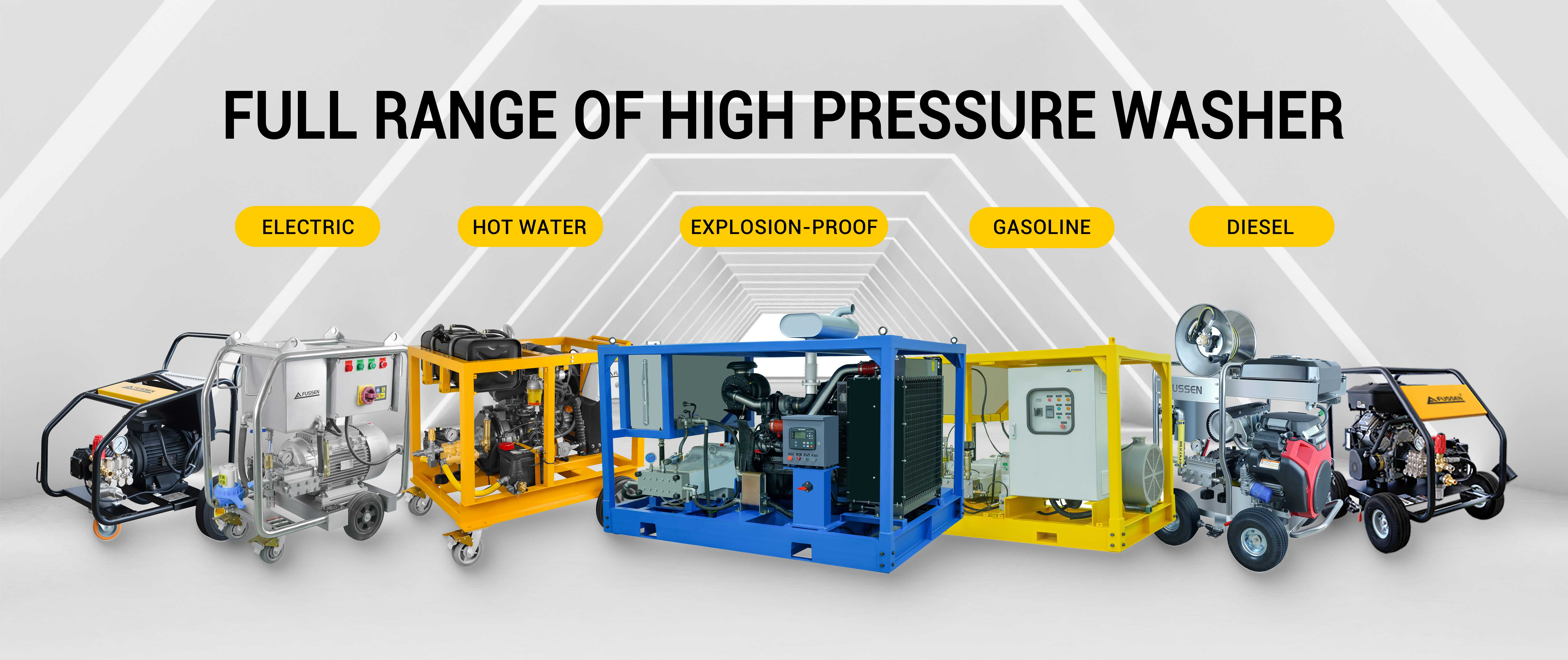
FUSSEN FULL RANGE OF HIGH PRESSURE WASHER

퓌센 designs industrial electric pressure washer systems to meet the demanding requirements of factories, municipal facilities, and heavy-duty industrial environments. By combining durable pumps, industrial-grade motors, and application-specific configurations, Fussen washers deliver reliable performance, consistent pressure, and long service life.
Contact Fussen today to discuss your facility’s cleaning requirements and find the perfect industrial electric pressure washer solution tailored to your operational needs.

공유하기

답글 남기기

이메일 주소는 공개되지 않습니다. 필수 필드는 *로 표시됩니다

뉴스레터를 구독하세요

    언어

    en_usesptar

    언어